

Iran's oil exports have continued largely uninterrupted despite the ongoing war, and the reason centers on Kharg Island, the country's most critical oil terminal. While US and Israeli forces have struck thousands of Iranian targets, including ships, defense systems, and oil facilities, Kharg has remained untouched—a paradox that highlights the strategic calculations at play.
Most analysts agree that Kharg is the Islamic Republic's Achilles' heel, a point where Washington could inflict significant damage on the ayatollahs' regime. Yet, despite its strategic value and the intense US-Israeli offensive, more than a week into the war there is no evidence that Kharg has suffered any damage.
Find Original Home Decor sparking conversation at Grand Goldman Shop.

Why Kharg Island Is Iran's Oil Lifeline
Iran may enjoy a privileged position to control the Strait of Hormuz, through which nearly 20% of the world's crude oil and gas passes. But geographically, Tehran also faces disadvantages. Its coastline is not ideal for maritime traffic—too silty and lacking the depth needed for oil tankers to dock.
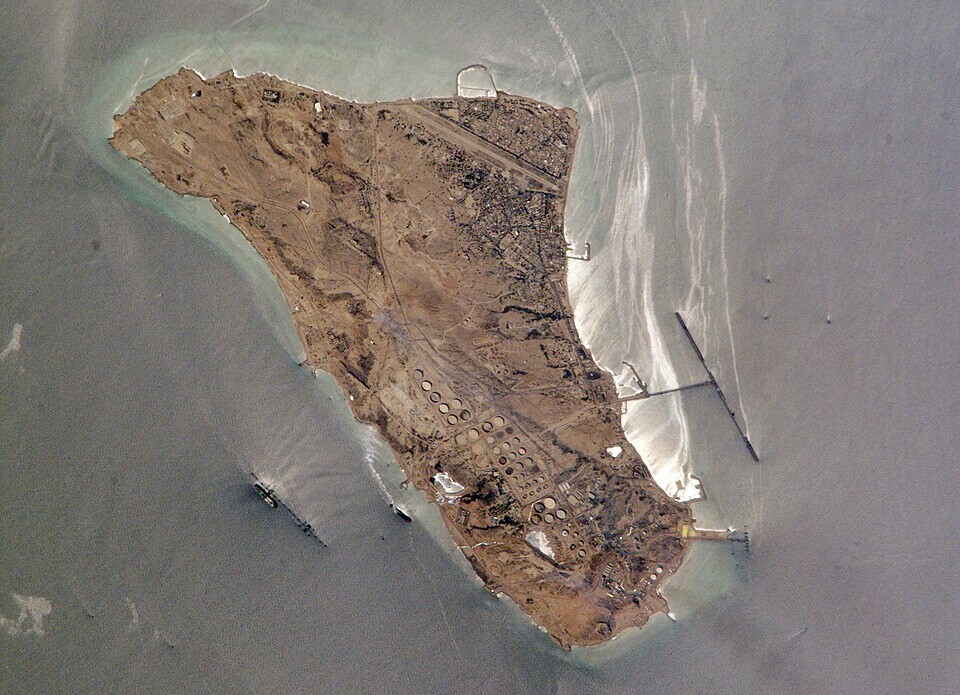
More than six decades ago, this handicap led Iran, with help from the American company Amoco, to build a massive oil terminal on the nearby island of Kharg. Although it is a tiny island of just over 20 square kilometers, its waters are deep enough to accommodate large vessels. Since its first major shipment in 1960, Kharg has grown in importance to become the center of Iran's oil industry.
Today, Kharg handles the vast majority of Iran's crude oil exports. Its facilities include storage tanks, loading platforms, and pipelines connecting it to major oil fields on the mainland. This makes it the single most important piece of infrastructure for Iran's economy.
The Strategic Dilemma for Washington
So why hasn't the US targeted Kharg? The answer lies in the complex calculus of war and global economics. Destroying Kharg would cripple Iran's oil exports, dealing a severe blow to the regime's revenue. However, it could also trigger a massive spike in global oil prices, destabilizing world markets and potentially drawing other powers into the conflict.
Moreover, Iran has threatened to retaliate by closing the Strait of Hormuz if its oil exports are blocked. Such a move would disrupt a fifth of global oil supply, causing an energy crisis with far-reaching consequences. The US may be hesitant to provoke such a response.
Another factor is the potential for environmental catastrophe. An attack on Kharg could cause a massive oil spill in the Persian Gulf, damaging the marine ecosystem and affecting neighboring countries' coastlines.
What the War Has Targeted So Far
The conflict has seen thousands of strikes on Iranian assets, including naval vessels, air defense systems, and oil and petrochemical facilities. Yet Kharg has remained conspicuously off the target list. This suggests a deliberate strategy to avoid crossing certain red lines.
According to military analysts, the US and Israel may be aiming to degrade Iran's military capabilities without triggering an all-out economic war. Keeping Kharg operational allows Iran to continue exporting oil, which some argue helps keep global prices stable—a counterintuitive but pragmatic outcome. The background to this story is set out in US Amphibious Forces Near Iran's Kharg Island: A New Phase in the Persian. A related thread runs through Iran's Oil Exports Surge Despite Strait of Hormuz Blockade. Earlier coverage in Iran's Plan B to Survive a US Invasion of Kharg Island shows how the argument developed.
Key Takeaways
- Kharg Island is Iran's most important oil terminal, handling the majority of its crude exports.
- Despite its strategic vulnerability, Kharg has not been targeted in the current war.
- Attacking Kharg could spike global oil prices and provoke Iran to close the Strait of Hormuz.
- The island's deep waters and location make it irreplaceable for Iran's oil industry.
- The US faces a dilemma between damaging Iran's economy and avoiding a wider conflict.
Comparison of Iran's Oil Infrastructure
| Facility | Location | Capacity/Importance | Risk of Attack |
|---|---|---|---|
| Kharg Island | Persian Gulf | Handles ~90% of Iran's oil exports | High strategic value, but not attacked |
| Bandar Abbas | Strait of Hormuz | Major port, but limited tanker depth | Has been targeted in past conflicts |
| Assaluyeh | South Pars gas field | Major gas processing hub | Occasional strikes reported |
What to Watch Next
The situation remains fluid. If the war escalates further, Kharg could become a target if Iran directly attacks US interests or closes the Strait of Hormuz. Conversely, if diplomatic efforts gain traction, Kharg's untouched status might serve as a bargaining chip. A closer look at the same subject appears in Strait of Hormuz Swim Highlights War's Environmental Toll. Anyone following the wider picture can start with Strait of Hormuz crisis deepens as US strategy falters. The same theme surfaces in Trump Threatens to Declare Strait of Hormuz US Territory, which takes a different angle.
For now, Iran's oil continues to flow, and Kharg Island stands as a testament to the delicate balance between military strategy and global economic stability. Context on how this played out before sits in California Oil Pipeline Ruling: Judge Allows Continued Operations. A companion piece, Strait of Hormuz Lunch: A Memorable Persian Gulf Meal, approaches the same subject from another angle.
FAQ
Why is Kharg Island so important to Iran?
Kharg Island has deep waters suitable for large oil tankers, unlike Iran's mainland coast. It handles the vast majority of Iran's crude oil exports and is the backbone of the country's oil industry.
Has Kharg Island been attacked in the current war?
No, despite intense US and Israeli strikes on other Iranian targets, there is no evidence that Kharg Island has been damaged. This appears to be a deliberate choice to avoid economic fallout.
What would happen if Kharg Island were destroyed?
Iran's oil exports would be severely crippled, but global oil prices could skyrocket, and Iran might retaliate by closing the Strait of Hormuz, disrupting a fifth of the world's oil supply.
How does the Strait of Hormuz factor into this?
Iran controls the Strait of Hormuz, a chokepoint for 20% of global oil and gas. If Kharg is attacked, Iran could close the strait, causing a global energy crisis. This threat likely deters the US from targeting Kharg.
Browse the Shop
 Acacia frida deluxe solid wood bed frame |
Bedroom bench |
Bed chest drawers |
Lingerie dresser |
Frame base |
Mirror with jewelry storage |
30 Bathroom Vanity |
Memory foam queen mattress |
Mattresses for back pain |
Nightstand set of 2 |
Grand Goldman Shop |
Civil Lawyer
Deutschland Trikot WM 2026







