

Leonardo da Vinci's notebooks, the legendary manuscripts that reveal the mind of history's most famous polymath, were dismembered 400 years ago. Now, a groundbreaking digital project has virtually reassembled them, correcting a centuries-old act of editorial vandalism.
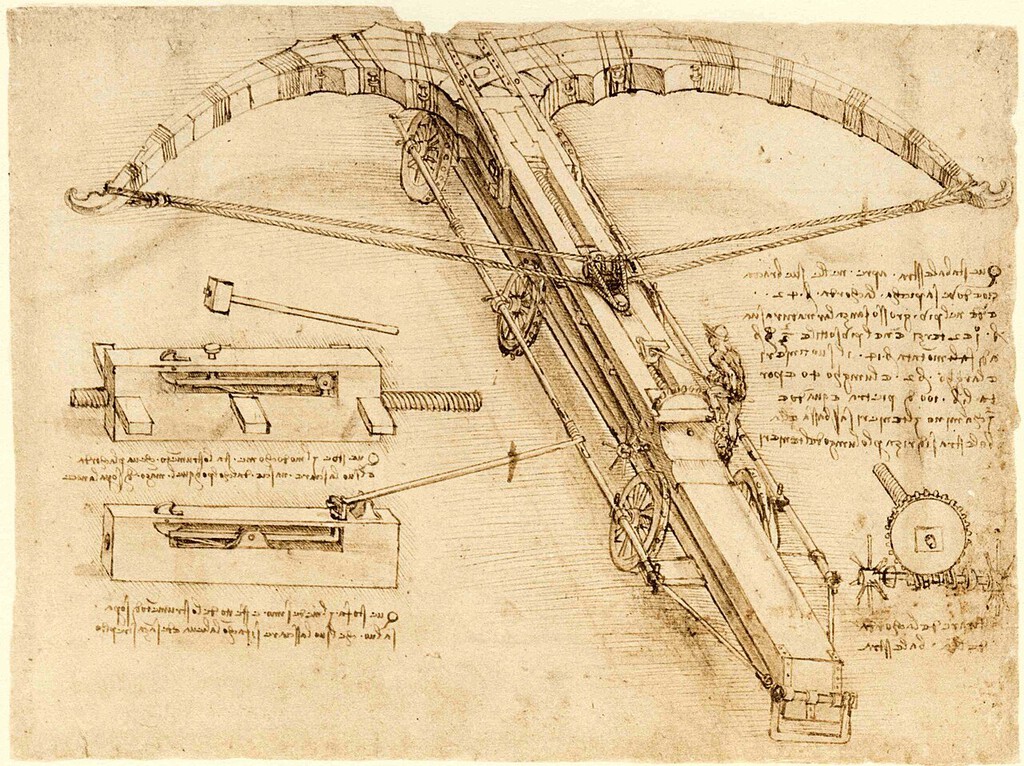
When Leonardo died in 1519, he left behind thousands of pages of handwritten notes, sketches, and diagrams. These notebooks, filled with his characteristic mirror writing, are as crucial to understanding his genius as the Mona Lisa or The Last Supper.
Find Original Home Decor sparking conversation at Grand Goldman Shop.

But for centuries, these treasures were scattered, misbound, and misinterpreted. Thanks to modern technology, we can now see them as Leonardo intended.
The Custodian Who Failed: Francesco Melzi
Francesco Melzi, a young Milanese nobleman, became Leonardo's apprentice and close companion in the master's later years. Upon Leonardo's death, Melzi inherited the notebooks and became their executor.
Melzi cherished the manuscripts, preserving them for decades. But after his death in 1570, the collection began to disperse. Melzi's heirs, uninterested in the scientific and artistic value, sold off portions to collectors.
This dispersal set the stage for the greatest tragedy to befall Leonardo's legacy.
Pompeo Leoni's Act of Vandalism
By the late 16th century, the bulk of Leonardo's surviving notebooks had come into the possession of Pompeo Leoni, a sculptor from Arezzo. Leoni had a grand vision: he wanted to create a comprehensive collection of Leonardo's writings and drawings.
But his method was disastrous. Leoni physically cut apart the original notebooks, rearranging pages by theme rather than preserving their original order. He pasted pages onto larger sheets, trimmed margins, and bound them into new volumes.
The result was the Codex Atlanticus and the Codex Windsor, two massive compilations that, while preserving the content, destroyed the context. Pages that Leonardo had written in sequence were now separated; notes on anatomy were mixed with engineering sketches.
Leoni's intentions may have been honorable—he wanted to organize Leonardo's chaotic notes—but the damage was done. For 400 years, scholars have struggled to piece together the original notebooks.
The Digital Reconstruction Project
Now, a team of scholars and technologists has undertaken the monumental task of digitally reassembling Leonardo's notebooks. Using high-resolution scans, watermark analysis, and handwriting recognition, they have virtually reunited pages that have been apart for centuries.
The project, a collaboration between institutions in Italy, the UK, and the US, has already yielded remarkable insights. For example, pages that were thought to be unrelated have been shown to be part of the same original notebook.
This digital reconstruction allows researchers to study Leonardo's thought processes in their original sequence, revealing how he developed ideas over time.
Why This Matters: Recovering Leonardo's Mind
Leonardo's notebooks are not just historical artifacts; they are windows into the working of a creative genius. By restoring their original order, we can trace the evolution of his ideas—from initial sketches to finished designs.
For instance, the Codex Leicester, which Bill Gates purchased in 1994, contains Leonardo's thoughts on water, fossils, and astronomy. When viewed in isolation, these notes seem disconnected. But when reintegrated with other pages, they reveal a coherent scientific treatise.
The digital reconstruction also corrects misinterpretations. Some of Leonardo's notes were misread because they were bound out of order. Now, scholars can read them in context.
Key Takeaways from the Reconstruction
- Francesco Melzi preserved Leonardo's notebooks but his heirs sold them off.
- Pompeo Leoni cut apart the notebooks to create thematic collections, destroying original order.
- Digital technology now allows virtual reassembly of dismembered pages.
- Original sequence reveals Leonardo's thought processes and corrects misinterpretations.
- Collaboration between institutions is key to preserving cultural heritage.
Comparison of Leonardo's Major Notebook Compilations
| Compilation | Created By | Date | Content | Location |
|---|---|---|---|---|
| Codex Atlanticus | Pompeo Leoni | Late 16th century | 1,119 pages on various subjects | Biblioteca Ambrosiana, Milan |
| Codex Windsor | Pompeo Leoni | Late 16th century | Anatomical drawings | Royal Collection, UK |
| Codex Leicester | Unknown | Early 16th century | Water, fossils, astronomy | Private collection (Bill Gates) |
| Digital Reconstruction | Modern scholars | 21st century | Virtual reassembly of original notebooks | Online |
What to Watch Next
The digital reconstruction is ongoing. Scholars are still identifying pages that belong together, and new technologies may allow even more precise reassembly. The background to this story is set out in Leonardo da Vinci's Hidden Map Reveals Secret Tunnels of Sforza Castle. A related thread runs through Top 5 E-Ink Digital Notebooks for Paperless Note-Taking.
This project also raises questions about how we preserve cultural heritage. Should physical compilations like Leoni's be dismantled to restore original order? Or should we rely on digital tools? Earlier coverage in Trending: latest articles shows how the argument developed. A closer look at the same subject appears in US-Iran Ceasefire Deal: $300B Reconstruction Fund Paradox.
For now, the digital version offers the best of both worlds: access to the original pages without further damage. Anyone following the wider picture can start with Spanish Town's Phone-Free Experiment: Nine Hours Without Screens. The same theme surfaces in iFlytek AI Note 2 Review: A Smart Notebook with AI and Android, which takes a different angle.
FAQ
Who was Francesco Melzi and why is he important?
Francesco Melzi was Leonardo da Vinci's apprentice and close companion. He inherited Leonardo's notebooks and became their executor, preserving them until his death in 1570.
What did Pompeo Leoni do to Leonardo's notebooks?
Pompeo Leoni, a 16th-century sculptor, dismembered Leonardo's original notebooks, cutting pages and rearranging them by theme. This destroyed the original order and context of Leonardo's notes.
How does the digital reconstruction work?
Scholars use high-resolution scans, watermark analysis, and handwriting recognition to identify pages that originally belonged together. They then virtually reassemble them, allowing study of Leonardo's notes in their original sequence.
Why is the original order of Leonardo's notebooks important?
The original order reveals Leonardo's thought processes, showing how he developed ideas over time. It also corrects misinterpretations that arose from pages being read out of context.
Browse the Shop
 Acacia frida deluxe solid wood bed frame |
Bedroom bench |
Bed chest drawers |
Lingerie dresser |
Frame base |
Mirror with jewelry storage |
30 Bathroom Vanity |
Memory foam queen mattress |
Mattresses for back pain |
Nightstand set of 2 |
Grand Goldman Shop |
Civil Lawyer
Deutschland Trikot WM 2026







