

SQD-Mini LED is emerging as a key technology that TV buyers should not overlook when shopping for a new television. Traditionally, buying a TV meant performing a kind of technological juggling act, weaving together different panel types, backlight technologies, zone dimming control, and screen sizes, not to mention the price. OLED was considered the gold standard for cinematic quality thanks to its self-emissive pixels, capable of delivering extraordinary contrast and pure blacks in dark rooms. However, the challenge in picture quality has always been in the everyday living room: a space with variable natural light where you need a perfect balance between contrast, color fidelity, and sufficient brightness, especially on large screens.
To complicate the task of choosing a TV even further, some manufacturers have been abusing the term "Mini LED" on their TV models, labeling backlight types as Mini LED that do not actually meet the reality of this technology. TCL, for its part, has consistently adopted the Mini LED nomenclature correctly on its televisions, avoiding confusion among users. For example, some manufacturers call TVs Mini LED when they use lighting based on conventional LEDs (not Mini) located at the edges of the screen (Edge), or when they use direct LED backlighting without full-array local dimming (FALD). This misuse of the term can mislead buyers who are trying to compare specifications accurately.
Find Original, High-end Home Decor that spark conversation at Grand Goldman Shop.
What Is SQD-Mini LED and Why Does It Matter?
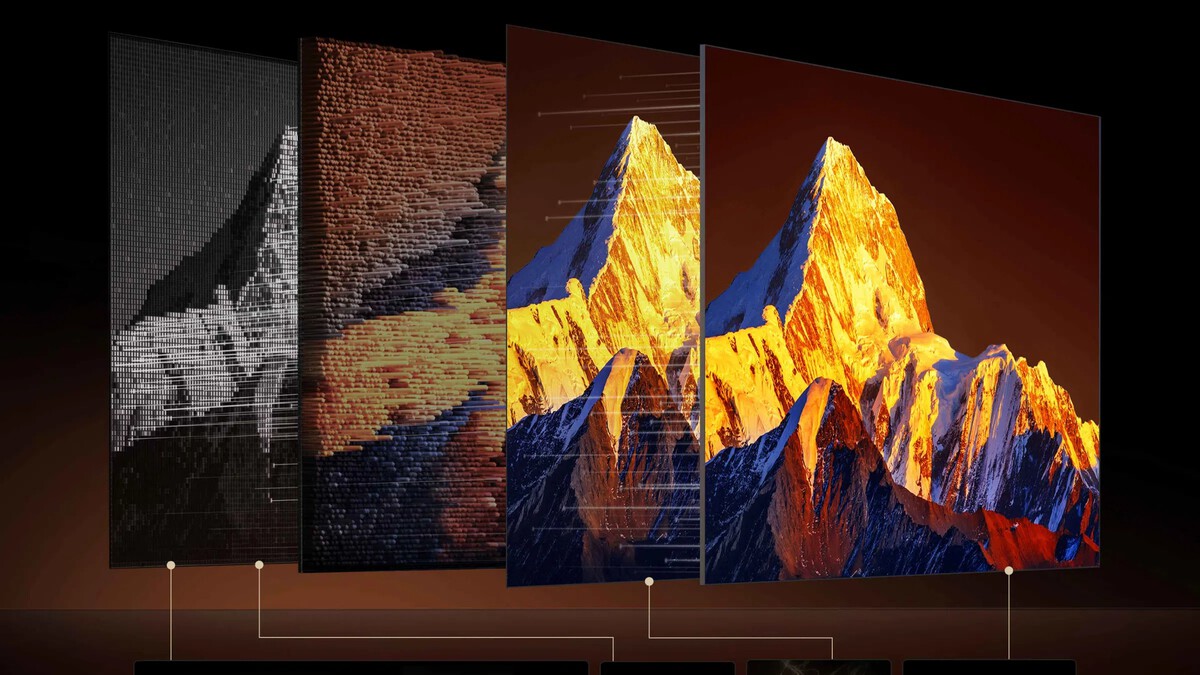
SQD-Mini LED is a specific implementation of Mini LED backlighting that aims to deliver superior brightness and color performance. Unlike conventional edge-lit or direct-lit LED TVs, SQD-Mini LED uses many small LEDs arranged in a full array behind the screen, allowing for precise local dimming. This means the TV can dim dark areas while keeping bright areas vibrant, resulting in deeper blacks and less blooming around bright objects. For the living room, where ambient light is often uncontrollable, this technology offers a compelling balance between the deep blacks of OLED and the high brightness needed to combat glare.
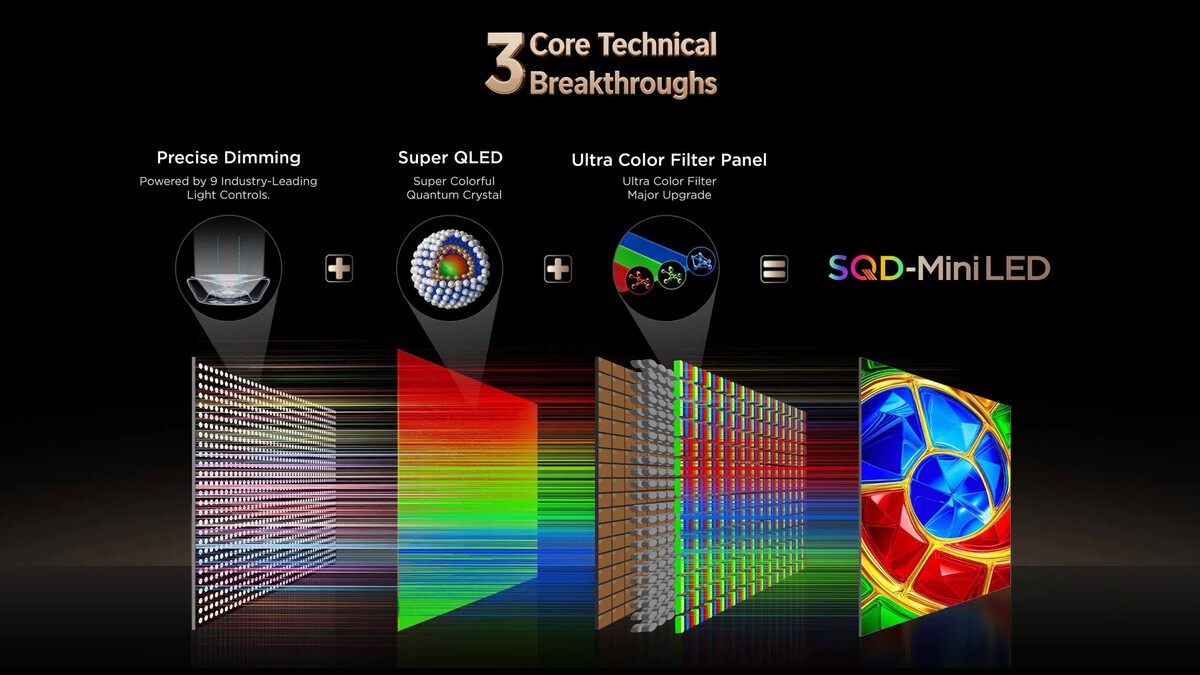
The key advantage is that SQD-Mini LED can maintain high brightness across the screen without sacrificing contrast. This is particularly important for large-screen TVs, where even illumination and consistent color are harder to achieve. As a result, viewers can enjoy a more immersive experience with HDR content, where both shadows and highlights are rendered with greater accuracy.
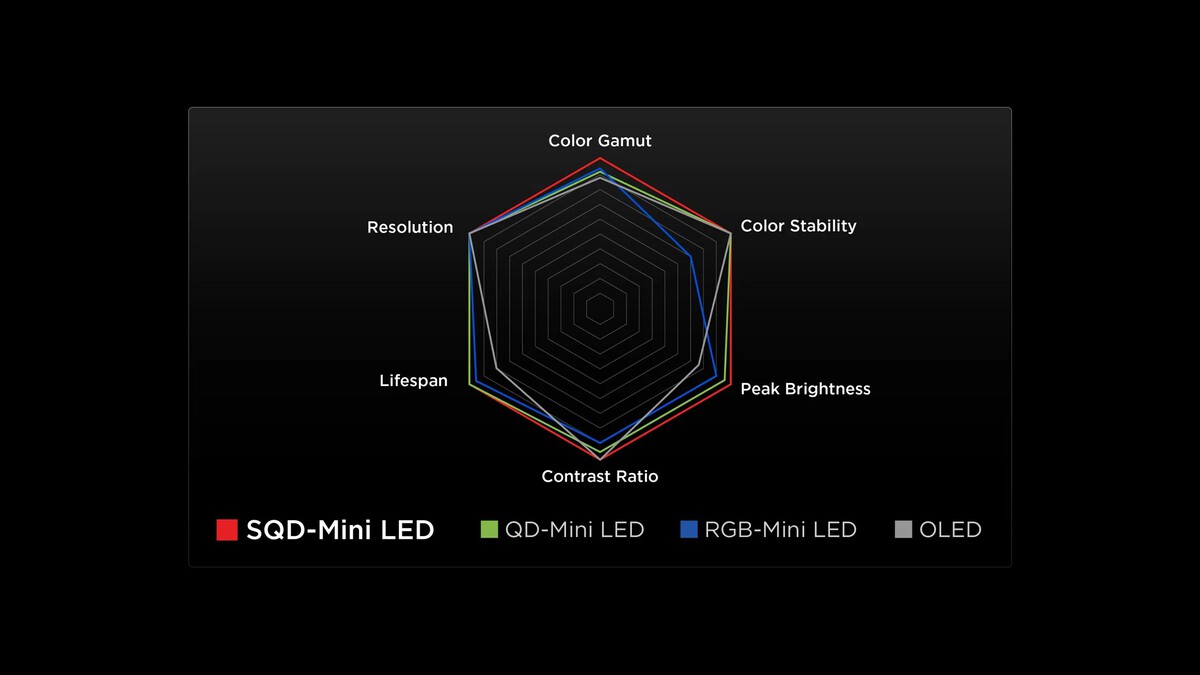
SQD-Mini LED vs. OLED: A Living Room Comparison
While OLED excels in dark rooms with perfect blacks and wide viewing angles, it may struggle in bright rooms where reflections and glare can wash out the picture. SQD-Mini LED, on the other hand, can reach higher peak brightness levels, making it more suitable for well-lit living spaces. Additionally, SQD-Mini LED does not suffer from the risk of burn-in that can affect OLED panels over time, which is a relief for users who watch static content like news tickers or game HUDs.
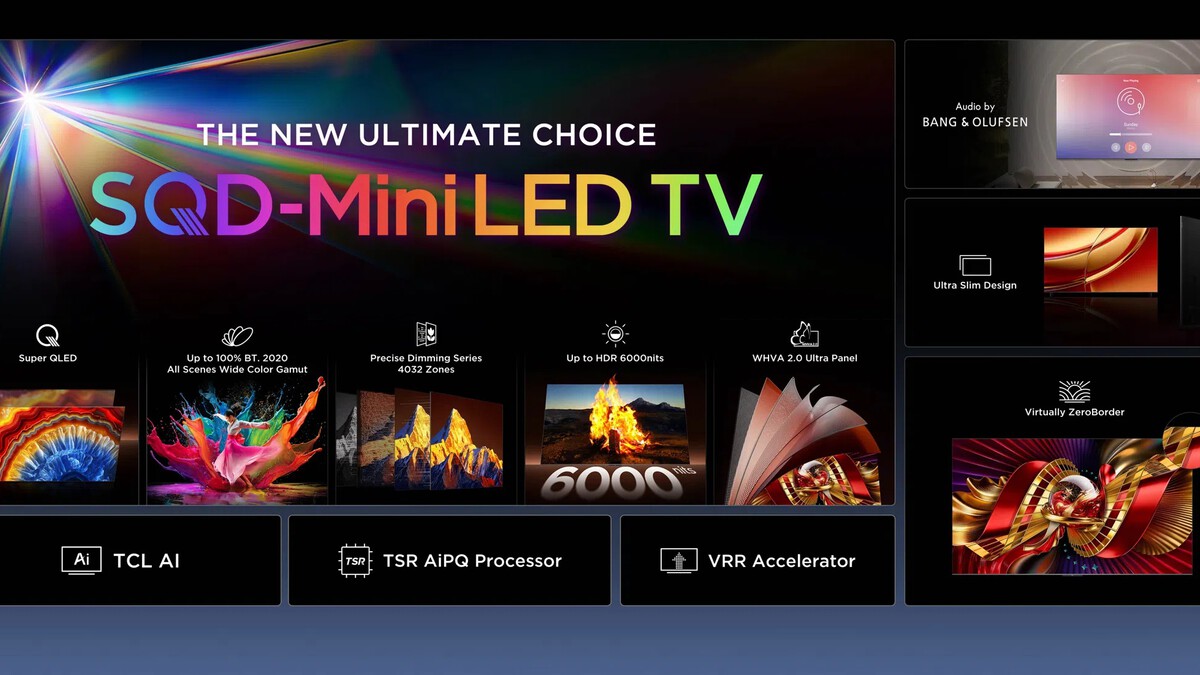
However, OLED still holds an edge in per-pixel dimming, which eliminates blooming entirely. SQD-Mini LED relies on zones, so there can be some light bleed around bright objects on dark backgrounds, though advances in dimming algorithms have minimized this. The choice ultimately depends on your viewing environment and priorities: if you watch movies in a dark room, OLED may be preferable; if your TV is in a bright living room and you want vibrant HDR, SQD-Mini LED is a strong contender.
Why Proper Mini LED Labeling Matters
The confusion around Mini LED labeling is not just a matter of semantics; it affects the actual performance you get. A true Mini LED TV should have LEDs that are significantly smaller than conventional LEDs (typically less than 0.2 mm) and a full array with local dimming. When manufacturers use the term loosely, consumers may end up with a TV that has edge-lit backlighting or limited dimming zones, resulting in inferior contrast and brightness uniformity. This is why TCL's adherence to correct nomenclature is important: it allows buyers to make informed comparisons based on real specifications.
When shopping, look for the number of dimming zones, peak brightness, and whether the backlight is full-array. These specs will tell you more about performance than a marketing label. SQD-Mini LED TVs typically advertise high zone counts and brightness levels, which are indicators of their capability.
Key Takeaways for TV Buyers
- SQD-Mini LED offers high brightness and good contrast, making it ideal for bright living rooms.
- OLED still provides perfect blacks and wide viewing angles, best for dark rooms.
- Be wary of misleading Mini LED labels; check for full-array local dimming and zone count.
- Consider burn-in risk if you watch static content; SQD-Mini LED avoids this issue.
- For large screens, SQD-Mini LED can maintain uniformity better than edge-lit alternatives.
SQD-Mini LED vs. Other TV Technologies
| Feature | SQD-Mini LED | OLED | Conventional LED |
|---|---|---|---|
| Contrast | High (with local dimming) | Perfect (per-pixel) | Moderate |
| Peak Brightness | Very high | Moderate | Low to moderate |
| Viewing Angles | Good | Excellent | Fair |
| Burn-in Risk | None | Yes | None |
| Best For | Bright rooms, large screens | Dark rooms, critical viewing | Budget setups |
What to Watch Next in TV Technology
The TV market is evolving rapidly, with new technologies like RGB Mini LED and wireless screens emerging. As manufacturers continue to push the boundaries, buyers should stay informed about the latest advancements. For instance, TCL has recently introduced models like the TCL 55C7L SQD-Mini LED TV at liquidation price with Bang & Olufsen audio, which brings high-end features to a more accessible price point. This shows that SQD-Mini LED is not just a future concept but a present reality. A closer look at the same subject appears in WLTP Range and Consumption Explained for EV Buyers in 2026.
Similarly, LG has been making strides with its Mini LED offerings, such as the LG 65MRGB87B6B Mini LED TV dropping to 888 Euros at MediaMarkt, indicating that competition is driving prices down. These developments make it an exciting time for consumers looking to upgrade their home entertainment systems. Earlier coverage in Shark FlexStyle IonCurl Takes On Frizz With Air Power Alone shows how the argument developed.
Looking ahead, the industry is moving toward TV tech 2026: RGB Mini LED, wireless screens and AI interfaces, which promises even better color accuracy and convenience. As these technologies mature, SQD-Mini LED will likely become more prevalent, offering a compelling alternative to OLED for many households. The background to this story is set out in Trending: latest articles.
Retailers are also getting in on the action, with promotions like Carrefour dropping TCL 65-inch RGB Mini LED Google TV to under $1,000, making advanced TV technology more affordable than ever. This trend suggests that SQD-Mini LED and similar technologies will continue to gain traction among budget-conscious buyers who refuse to compromise on picture quality. A related thread runs through HP OmniBook X Flip 14 Outlet Deal: 32GB RAM, 1TB SSD, OLED.
FAQ
What is SQD-Mini LED?
SQD-Mini LED is a type of Mini LED backlight technology that uses a full array of small LEDs with local dimming to deliver high brightness and strong contrast. It is designed to perform well in bright rooms while maintaining good black levels.
Is SQD-Mini LED better than OLED?
It depends on your viewing environment. SQD-Mini LED excels in bright rooms with high brightness and no burn-in risk, while OLED offers perfect blacks and wide viewing angles for dark rooms. Both have their strengths.
How can I tell if a TV is truly Mini LED?
Look for specifications like full-array local dimming, a high number of dimming zones, and LED size (typically less than 0.2 mm). Be cautious of vague marketing terms and check detailed specs from reputable sources.
Why do some manufacturers misuse the Mini LED term?
Some manufacturers label edge-lit or direct-lit LED TVs as Mini LED to capitalize on the hype, even though they lack the small LEDs and full-array dimming that define true Mini LED. This can mislead consumers into thinking they are getting superior performance.
Browse the Shop
 Acacia frida deluxe solid wood bed frame |
Bedroom bench |
Bed chest drawers |
Lingerie dresser |
Frame base |
Mirror with jewelry storage |
30 Bathroom Vanity |
Memory foam queen mattress |
Mattresses for back pain |
Nightstand set of 2 |
Grand Goldman Shop |
Civil Lawyer
Deutschland Trikot WM 2026







