

Israeli forces have sharply increased military operations in the Gaza Strip, focusing assaults on positions tied to Hamas’ internal security and police infrastructure. The escalation comes amid stalled ceasefire talks, deepening regional tensions, and efforts by the Islamist group to consolidate governance in areas it controls despite ongoing conflict with Israel and broader geopolitical pressures.
After more than two years of intermittent war and temporary truces, the latest flare‑up is aggravating humanitarian suffering and complicating international peace efforts. Both sides remain deeply entrenched, and the ripple effects are reverberating across the region.
Find Bleeding Edge Supplements at Scandalous Prices on iHerb.


Why the Fighting Escalated
Ceasefire Talks and Stalled Negotiations
Efforts to extend a fragile ceasefire have faltered, in part due to disagreements over security arrangements and governance in Gaza. Washington’s proposed peace plan—a blueprint that envisages disarmament of Hamas and the installation of Palestinian technocrats to manage public security—is at the center of the impasse.
Hamas insists that its roughly 10,000 police officers be included in any future security force. Israel rejects any role for those officers, viewing them as extensions of Hamas’ militant apparatus. The dispute over policing in Gaza has become symbolic of broader disagreements over authority and power sharing.
Renewed Military Pressure
Over the past week, Israeli strikes have targeted vehicles, compounds, and personnel associated with the Hamas‑run Gaza police. Gaza health officials report nearly a dozen police officers killed in recent days, while broader figures suggest thousands have died since the conflict’s dramatic escalation in late 2023.
Israeli military statements frame these operations as necessary to disrupt threats and prevent Hamas from regrouping and strengthening. Analysts see this as a strategic effort to fragment Hamas’ institutional hold on governance.
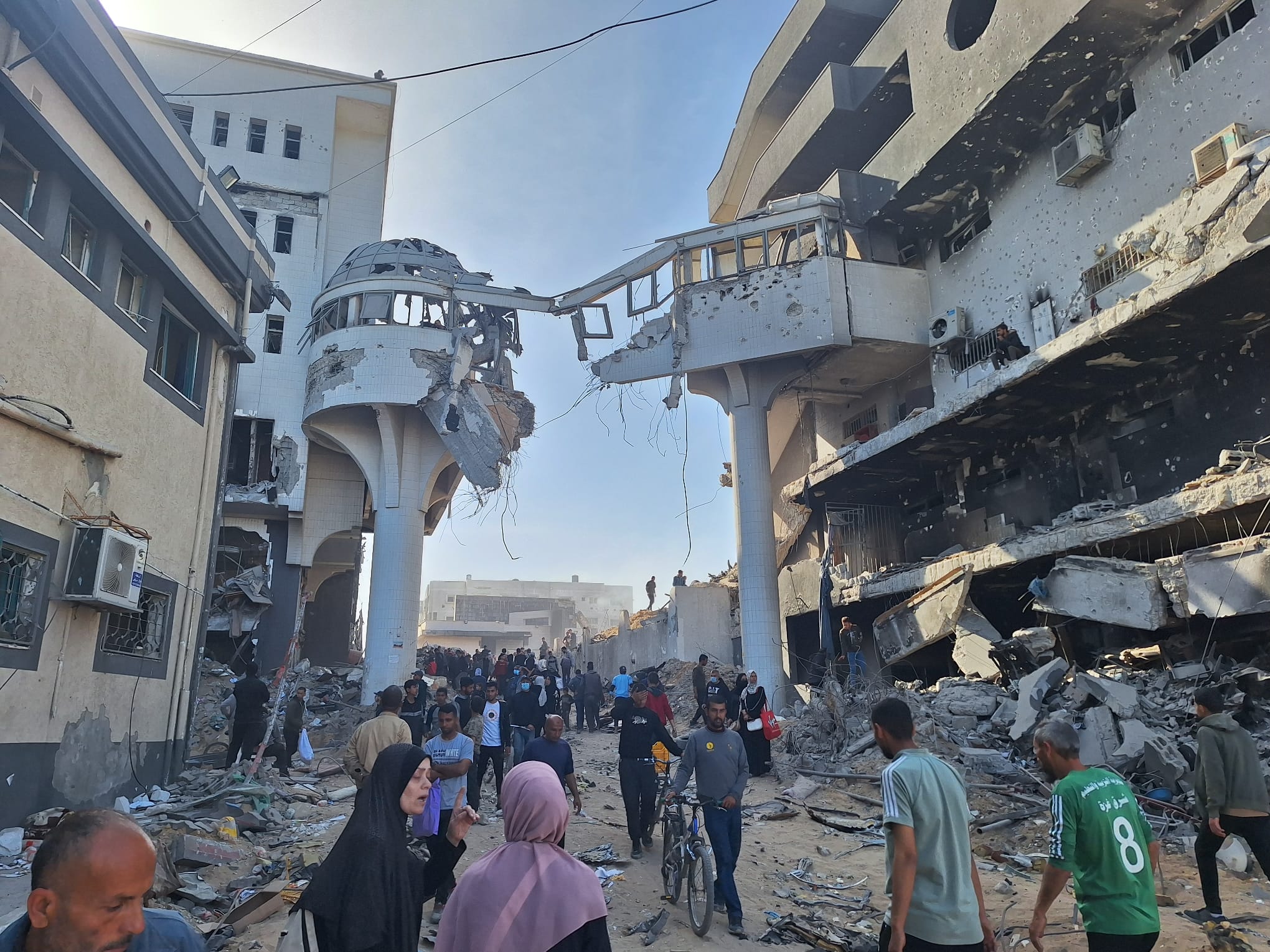
Ground Realities in Gaza
Hamas’ Governance and Security Role
Despite relentless conflict, Hamas remains the de facto authority in parts of the Gaza Strip not under full Israeli control. Its police force patrols markets, directs traffic, and attempts to maintain order where millions of displaced civilians live in cramped tent encampments due to destruction from earlier phases of the war.
Hamas officials argue their personnel are fulfilling essential civil security duties, even while denying they should be classified solely as militants. They claim to be upholding public safety amid chaos.
Impact of Strikes on Civilian Life
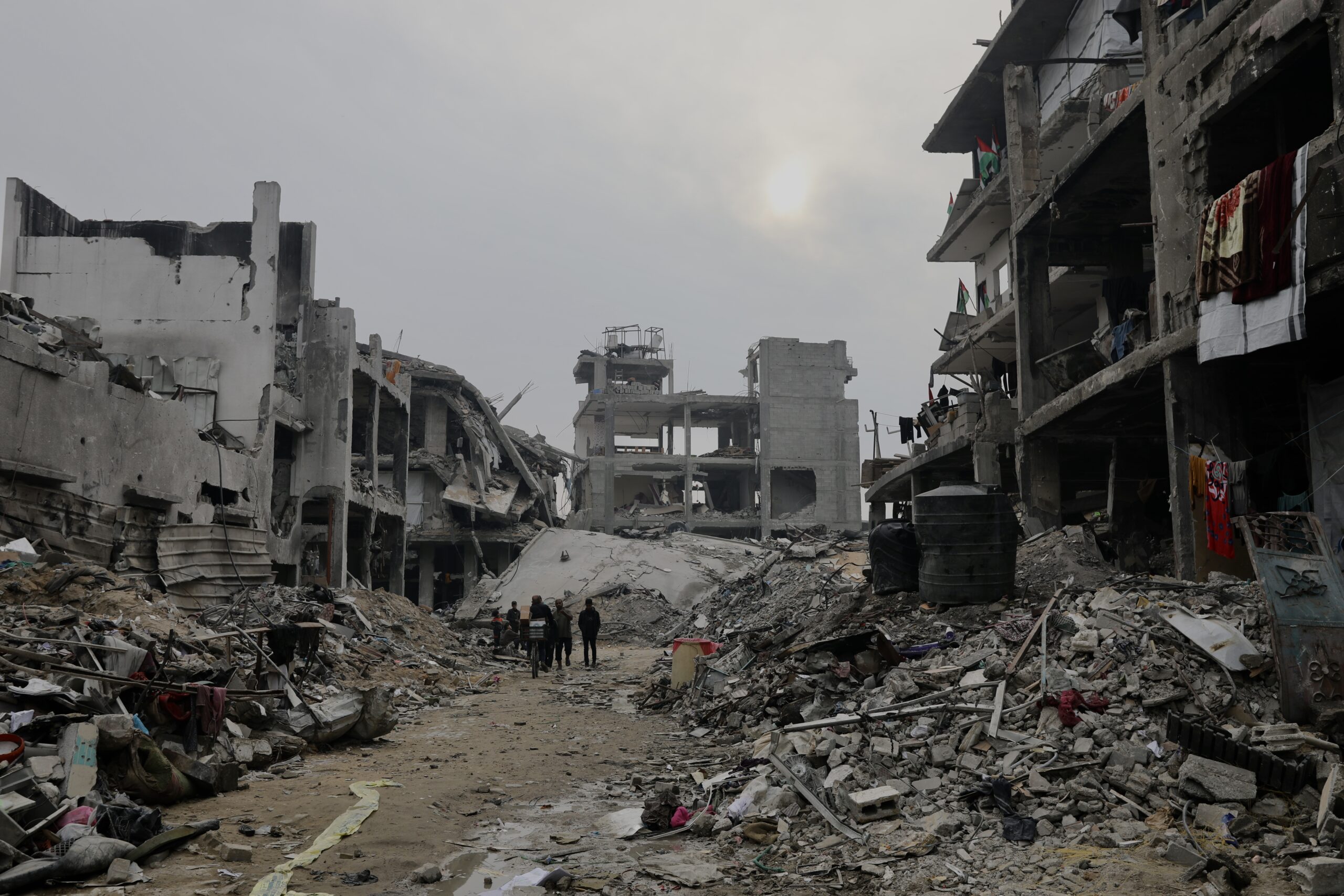
The escalation is occurring against a backdrop of already dire humanitarian conditions. Repeated bombardments, limited access to basic supplies, and displacement have eroded livelihoods and deepened civilian suffering across Gaza. Independent health ministry figures indicate thousands of deaths since the war began, with disproportionate casualties among women and children.
Families have lost homes, and medical facilities strain under mass casualties. The bombardments underscore the challenge of protecting civilian life in dense urban environments amid asymmetric warfare. Independent sources and human rights groups repeatedly highlight concerns about civilian harm and violations of international humanitarian law by all parties.
Regional Dimensions and External Pressures
Iran and the Broader Conflict Spectrum
The escalation in Gaza overlaps with heightened tensions between Israel and Iran, marking a multi‑theater security challenge. Israeli officials view Iran’s influence in Gaza—through funding, logistics, and military support for allied groups—as central to the conflict’s persistence.
Iran’s posture, including recent leadership shifts and defiance of Western pressure, adds complexity to diplomatic efforts. Tehran’s continued backing for militant factions reinforces Israel’s framing of the Gaza struggle as part of a larger confrontation with its regional adversary.
International Diplomatic Discontent
Security Council meetings and regional diplomacy have highlighted global unease over ongoing violence. Many nations and UN officials criticize violations of ceasefires and call for renewed negotiations to prevent further civilian casualties and humanitarian collapse.
The United States has a central diplomatic role, mediating between Israeli objectives and broader calls for de‑escalation. However, diplomatic initiatives remain mired in distrust and divergent goals on both sides.
What This Means for the Future
Possibility of Wider Conflict
The current phase marks one of the most intense bouts of fighting since October 2023, when Hamas’ large‑scale incursion into southern Israel triggered a major Israeli military response. That conflict fractured decades of uneasy boundary conditions and entered a prolonged, destabilizing cycle of violence.
Analysts warn that without a viable diplomatic solution or compromise on key issues—such as policing arrangements and governance—the conflict could expand beyond periodic skirmishes and deepen into further territorial operations.
Internal Palestinian Dynamics
Inside Gaza, internal tensions and alliances are fluid. Other armed factions and local militias operate alongside or independent of Hamas, complicating any attempt to establish unified governance. Some groups have even clashed with Hamas elements, revealing fractures within local political and security landscapes.
These dynamics pose obstacles to external peace plans that assume coherent, centralized Palestinian leadership willing to negotiate and implement agreements.
Key Conflict Indicators: Who’s Who
| Actor | Role | Interests |
|---|---|---|
| Hamas | De facto authority in parts of Gaza | Maintain governance, resist disarmament |
| Israel Defense Forces (IDF) | Military operations in Gaza and buffer zones | Neutralize security threats, prevent rearmament |
| United States | Diplomatic intermediary | Seeks cease‑fire extension and negotiated solution |
| Iran | Regional backer of militant groups | Strengthen influence against Israel |
| Palestinian Civil Population | Civilians bearing humanitarian impact | Safety, aid access, stability |
Conclusion: A Conflict at Crossroads
The recent surge in Israeli strikes and Hamas’ efforts to entrench its control represent a critical juncture in the long‑running Israel‑Palestine crisis. Talks over ceasefires, security forces, and territorial governance stall while violence deepens civilian misery. Absent a breakthrough in negotiations or a strategic shift by the parties, both local populations and regional stability face prolonged exposure to conflict’s destructive toll.
The international community continues to monitor, but solutions remain elusive amid competing narratives of security, sovereignty, and self‑determination.
Read next
Iran energy warning | Meningitis outbreak | Europe rejects Trump | Colombia-Ecuador tensions | Israel-Gaza strikes
Home Decor Shop
 Acacia frida deluxe solid wood bed frame |
Bedroom bench |
Bed chest drawers |
Lingerie dresser |
Frame base |
Mirror with jewelry storage |
30 Bathroom Vanity |
Memory foam queen mattress |
Mattresses for back pain |
Nightstand set of 2 |
Grand Goldman Shop |
Civil Lawyer
Deutschland Trikot WM 2026
Acacia frida deluxe solid wood bed frame |
Bedroom bench |
Bed chest drawers |
Lingerie dresser |
Frame base |
Mirror with jewelry storage |
30 Bathroom Vanity |
Memory foam queen mattress |
Mattresses for back pain |
Nightstand set of 2 |
Grand Goldman Shop |
Civil Lawyer
Deutschland Trikot WM 2026










