

China's hypersonic engine program has reached a significant milestone after 30 years of development, with researchers claiming a prototype that operates from startup to beyond Mach 6. The contra-rotary ramjet engine, led by Xu Jianzhong at the Chinese Academy of Sciences (CAS), promises continuous air-breathing propulsion across the entire speed range.
This breakthrough could reshape high-speed flight and missile technology, eliminating the need for complex multi-engine systems. But what exactly does it mean, and how close is it to reality?
Find Original Home Decor sparking conversation at Grand Goldman Shop.

What Is the Contra-Rotary Ramjet Engine?
The contra-rotary ramjet is an air-breathing engine designed to function from takeoff to hypersonic speeds above Mach 6. Unlike traditional designs that switch between turbine and ramjet modes, this engine uses contra-rotating components to maintain stable airflow and combustion across all speeds.
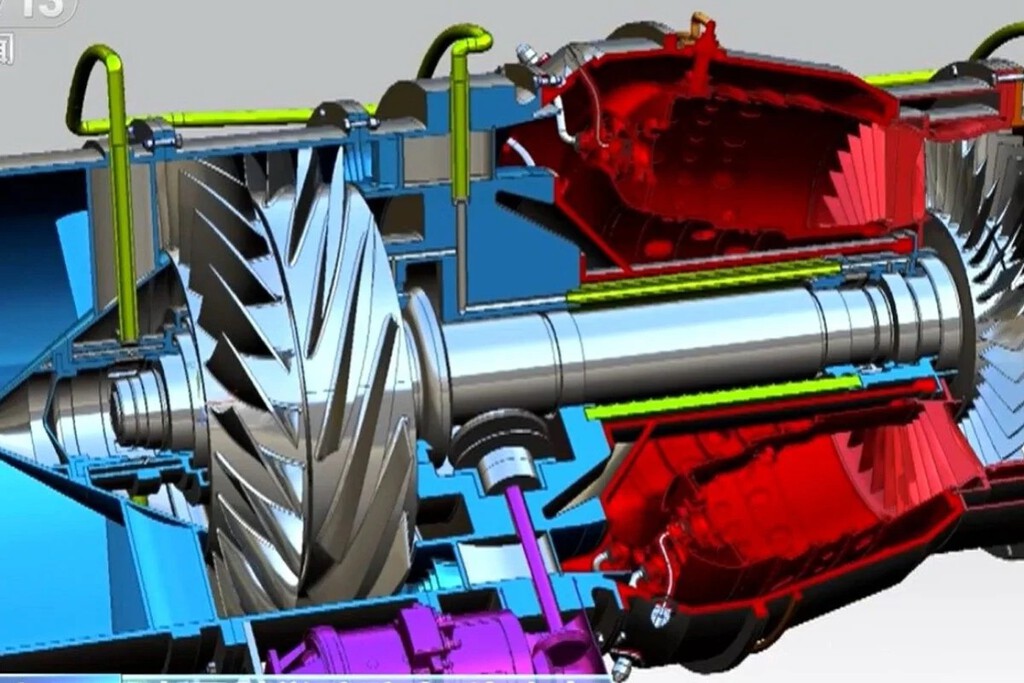
According to the CAS team, the prototype has been experimentally verified after more than three decades of work. However, it remains in a preliminary phase, with flight tests and platform adaptation still needed.
How It Works
The engine's contra-rotary design likely involves rotating blades that compress incoming air efficiently at low speeds and manage shockwaves at high speeds. This continuous operation avoids the complexity and weight of dual-system propulsion.
Why This Hypersonic Engine Matters
Hypersonic flight—speeds above Mach 5—has long been limited by propulsion challenges. Traditional systems use a turbine for takeoff and low speeds, then transition to a ramjet or scramjet for hypersonic flight. This switch is complex, adds weight, and creates vulnerability. Context on how this played out before sits in China's Hypersonic Engine Breakthrough: 30 Years in the Making.
A single engine covering all speeds simplifies design, reduces costs, and could enable more maneuverable missiles or reusable spaceplanes. For China, it represents a leap in aerospace autonomy and strategic capability. The background to this story is set out in Trending: latest articles. A related thread runs through China's YJ-20 Hypersonic Missile: Naval Warfare Game Changer.
Key Takeaways
- China's contra-rotary ramjet engine operates from startup to Mach 6+ without mode switching.
- The prototype has been experimentally verified after 30 years of research.
- It could simplify hypersonic vehicle design and improve performance.
- Flight tests and platform integration are still pending.
- This technology may impact both civilian aerospace and military systems.
Comparison with Traditional Propulsion
| Feature | Traditional Turbine-Ramjet | Contra-Rotary Ramjet |
|---|---|---|
| Speed Range | 0 to Mach 5+ (with mode switch) | 0 to Mach 6+ (continuous) |
| Complexity | High (multiple systems) | Lower (single system) |
| Weight | Heavier | Potentially lighter |
| Transition | Requires careful management | Seamless |
| Development Status | Mature | Prototype verified |
What's Next for China's Hypersonic Program?
The CAS team plans to adapt the engine to different platforms and conduct real flight tests. These tests will validate laboratory results and reveal practical challenges such as thermal management and durability. Earlier coverage in China's Nuclear Expansion: Satellite Images Reveal New Facilities shows how the argument developed. A closer look at the same subject appears in China's 40-Day Airspace Closure Larger Than Taiwan Explained.
If successful, the engine could power hypersonic missiles, unmanned aerial vehicles, or even future spaceplanes. However, significant engineering hurdles remain before deployment. Anyone following the wider picture can start with China's CAS Space Opens Rocket Superfactory for Kinetica-2. The same theme surfaces in China Mass-Produces T1200 Carbon Fiber: Global Impact, which takes a different angle.
FAQ
What is a contra-rotary ramjet engine?
It's an air-breathing engine that uses contra-rotating components to operate continuously from startup to hypersonic speeds, eliminating the need for multiple propulsion systems.
How fast can this engine go?
Researchers claim it can operate beyond Mach 6, though exact performance data is not yet public.
When will we see this engine in use?
No timeline is given, but flight tests are the next step. Deployment could take years.
Does this affect commercial aviation?
Initially, it's likely for military and experimental vehicles. Commercial applications may follow much later.
While China's hypersonic engine advances, other energy innovations are also making waves. The development of China's 582-ton magnet for artificial sun fusion energy shows how large-scale science projects push technological boundaries. Such breakthroughs in energy and propulsion often share underlying principles and engineering challenges.
As with fusion research, the path from prototype to practical application is long. The contra-rotary ramjet engine must prove its reliability and cost-effectiveness. Yet the progress signals China's growing prowess in advanced aerospace.
For now, the hypersonic engine remains a promising laboratory success. Its real-world impact will depend on upcoming flight tests and integration efforts. Keep an eye on this space as China continues to push the limits of speed and propulsion.
Browse the Shop
 Acacia frida deluxe solid wood bed frame |
Bedroom bench |
Bed chest drawers |
Lingerie dresser |
Frame base |
Mirror with jewelry storage |
30 Bathroom Vanity |
Memory foam queen mattress |
Mattresses for back pain |
Nightstand set of 2 |
Grand Goldman Shop |
Civil Lawyer
Deutschland Trikot WM 2026







