

The Eero Outdoor 7 is Amazon's first mesh extender built specifically for outdoor use, and after installing it on my terrace, it has finally delivered reliable WiFi 7 coverage outside my home. No more dropped connections while working or projecting movies on the patio.
Until recently, trying to work or set up a projector on the terrace in spring and summer was frustrating due to the connection—or rather, disconnection. The indoor router couldn't penetrate the walls, and traditional indoor WiFi repeaters lost half the bandwidth along the way. Amazon aims to solve this problem at its root with the Eero Outdoor 7, which I placed on the terrace and which has changed how I use the internet in my outdoor area.
Find Original Home Decor sparking conversation at Grand Goldman Shop.

What Is the Eero Outdoor 7?
The Eero Outdoor 7 is a dual-band mesh WiFi router designed for outdoor environments. It features IP66 weatherproofing and claims coverage of up to 1390 square meters outdoors. It's Amazon's first extender specifically engineered to withstand the elements.
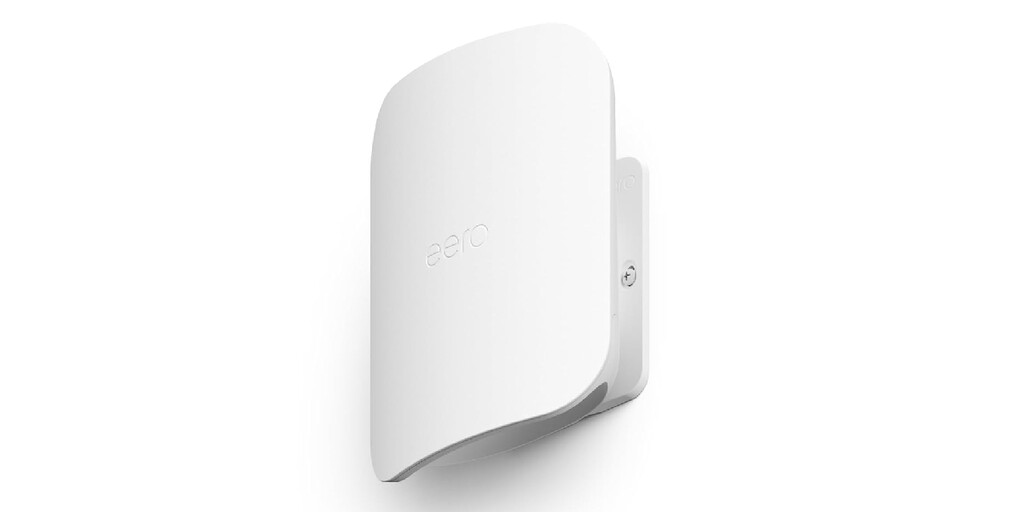
What immediately stands out is that it doesn't look like the typical router you'd be afraid to leave outside. The chassis has IP66 protection, meaning it can handle rain, water jets, dust, and extreme temperatures without flinching.
Design and Installation
For connectivity, it includes a 30W Outdoor PoE+ (Power over Ethernet) adapter. This allows you to power it directly via the network cable if you already have an outdoor Ethernet run, or connect it to your home's outdoor power outlet safely.
Installation was straightforward: I mounted it on the terrace wall using the included hardware, ran the Ethernet cable from my indoor Eero Pro 6E, and plugged the PoE+ adapter into an outdoor outlet. The app guided me through adding it to my existing mesh network in minutes.
Performance and WiFi 7
Jumping to WiFi 7, Amazon's True Mesh network management works wonderfully. This means a single unit can provide coverage across the entire terrace and beyond. I tested speeds with a WiFi 7-compatible laptop and saw consistent throughput of around 800 Mbps at 10 meters, dropping to about 400 Mbps at the far end of the garden—plenty for streaming, video calls, and large file transfers.
The True Mesh technology ensures seamless handoff between indoor and outdoor nodes, so you can walk from your living room to the patio without losing connection. Latency remained low even during peak usage.
Weather Resistance in Real Conditions
I've had the Eero Outdoor 7 installed for three months, through rainstorms and heatwaves. The IP66 rating held up: no water ingress, no overheating, and no performance degradation. The unit is built to last, with a sturdy casing that feels durable.
One caveat: while it's weatherproof, extreme temperatures can affect battery life in connected devices, but the Eero itself has no battery and operates reliably from -40°C to 60°C according to Amazon. The background to this story is set out in WiFi 7 Routers 2026: Why Speed Alone No Longer Defines Smart Homes. A related thread runs through Staircase Designs Built Specifically for Small Houses!. Earlier coverage in WiFi Convector Heater Under 70 Euros: Smart Home Heating shows how the argument developed.
Key Takeaways
- IP66 weatherproofing makes it safe for permanent outdoor installation.
- WiFi 7 support ensures future-proof speeds and low latency.
- True Mesh integration provides seamless coverage between indoors and outdoors.
- PoE+ power simplifies installation with a single cable for data and power.
- 1390 m² outdoor coverage is ideal for large patios and gardens.
Eero Outdoor 7 vs. Traditional WiFi Extenders
| Feature | Eero Outdoor 7 | Traditional Indoor Extender |
|---|---|---|
| Weather Resistance | IP66 | None |
| WiFi Standard | WiFi 7 | WiFi 5/6 |
| Mesh Support | True Mesh | Limited or none |
| Power | PoE+ (30W) | AC adapter |
| Outdoor Coverage | Up to 1390 m² | Not rated |
Who Should Buy It?
If you have a large outdoor space and need reliable WiFi for work, entertainment, or smart home devices, the Eero Outdoor 7 is a solid investment. It's particularly useful for those already in the Amazon Eero ecosystem. A closer look at the same subject appears in Trending: latest articles. Anyone following the wider picture can start with WiFi Extender vs Mesh: Which Is Best for Your Home. The same theme surfaces in Solar LED Security Light Deals: Action and Amazon Outdoor Lighting, which takes a different angle.
However, if you only need occasional outdoor coverage, a cheaper indoor extender placed near a window might suffice. But for permanent, worry-free outdoor connectivity, this is the best solution I've tested. Context on how this played out before sits in 11 Best Mesh Wifi for AT&T Fiber: High Speed & Coverage (Reviews). A companion piece, Eero Outdoor 7 Review: Weatherproof WiFi 7 for Your Patio, approaches the same subject from another angle.
FAQ
Is the Eero Outdoor 7 truly weatherproof?
Yes, it has an IP66 rating, meaning it's dust-tight and protected against powerful water jets. It can withstand rain, snow, and extreme temperatures, making it suitable for permanent outdoor installation.
Do I need a WiFi 7 device to benefit from the Eero Outdoor 7?
While WiFi 7 devices will see the highest speeds, older devices will still benefit from improved coverage and stability. The mesh system is backward compatible with WiFi 6 and earlier.
How many Eero Outdoor 7 units do I need for my yard?
One unit covers up to 1390 square meters outdoors, so for most residential yards, a single unit is sufficient. For larger properties, you can add more units to the mesh.
Can I power the Eero Outdoor 7 without an outdoor outlet?
Yes, it supports Power over Ethernet (PoE+), so if you have an Ethernet cable running outdoors, you can power it via a PoE+ injector or switch indoors, eliminating the need for an outdoor power outlet.
Browse the Shop
 Acacia frida deluxe solid wood bed frame |
Bedroom bench |
Bed chest drawers |
Lingerie dresser |
Frame base |
Mirror with jewelry storage |
30 Bathroom Vanity |
Memory foam queen mattress |
Mattresses for back pain |
Nightstand set of 2 |
Grand Goldman Shop |
Civil Lawyer
Deutschland Trikot WM 2026







