

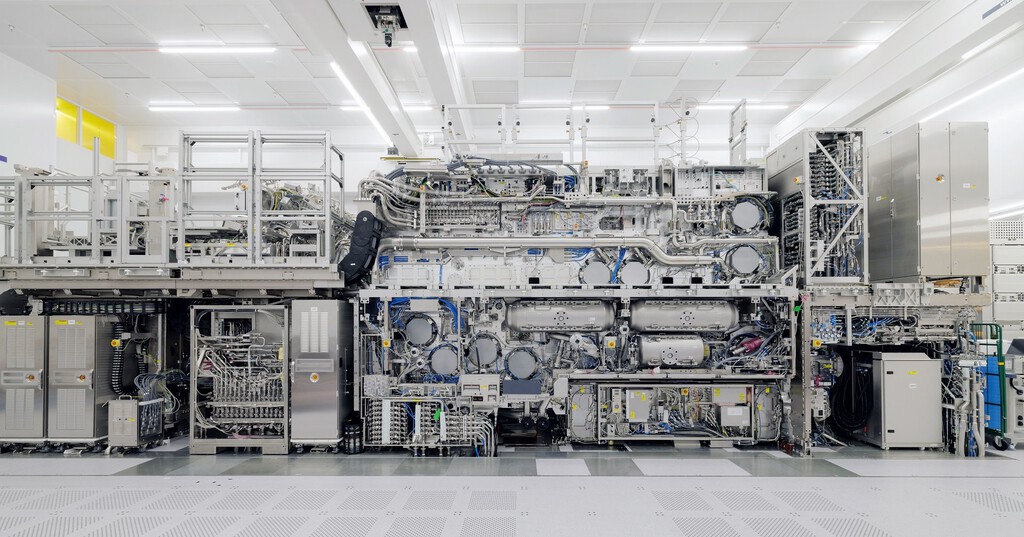
ASML, the European semiconductor equipment maker, will produce at least 60 extreme ultraviolet (EUV) lithography machines this year—a number that seems tiny compared to the massive scale of the AI industry. Yet these machines are the hidden engine behind the most advanced AI chips, and their scarcity underscores a critical bottleneck in the AI supply chain.
Why 60 Machines a Year Is Actually a Lot
In the world of AI, we're used to staggering figures: billions of dollars in investment, data centers spanning acres, and models with trillions of parameters. But the physical infrastructure that makes AI possible is often overlooked. ASML's EUV machines are among the most complex pieces of equipment ever built, and each one takes months to assemble and calibrate.
Find Original Home Decor sparking conversation at Grand Goldman Shop.

These machines are essential for producing chips at the most advanced nodes—the kind needed for AI accelerators from Nvidia, AMD, and others. Without them, the entire AI hardware ecosystem would grind to a halt. That's why 60 units a year is not a sign of weakness, but a testament to the incredible precision and complexity involved.
The AI Spending Boom and Its Ripple Effects
Just days ago, Reuters reported that Microsoft, Meta, Amazon, and Alphabet plan to spend over $600 billion on capital expenditures in 2026 to expand their AI infrastructure. This staggering sum highlights the insatiable demand for compute power.
But these tech giants don't build chips themselves; they rely on semiconductor manufacturers like TSMC, Samsung, and Intel. And those manufacturers, in turn, depend on ASML's lithography machines to produce the most advanced chips. This chain of dependency means that ASML's production capacity directly influences the pace of AI innovation.
ASML's Unique Position in the Global Market
ASML is currently the sole global supplier of EUV lithography equipment. This monopoly is both a strength and a vulnerability. On one hand, it gives the company immense pricing power and strategic importance. On the other, it makes the entire industry reliant on a single source.
China is accelerating its own efforts to develop advanced chipmaking capabilities, but it remains years behind in EUV technology. For now, ASML's dominance is unchallenged, but the geopolitical implications are significant. Export restrictions, particularly those imposed by the Netherlands and the US, have already limited ASML's ability to sell to Chinese customers.
What This Means for the Future of AI
The AI boom shows no signs of slowing down, and the demand for advanced chips will only increase. ASML's ability to scale production—or lack thereof—could become a critical factor in how quickly AI technologies advance. The background to this story is set out in ASML: The Single Machine Behind Every Advanced Chip. A related thread runs through ASML's EUV Light Could Write All of The Lord of the Rings on a Paper Edge. Earlier coverage in China's Lithography Breakthrough Sinks ASML Stock shows how the argument developed.
In the coming years, we can expect ASML to invest in expanding its manufacturing capacity, but the lead times and technical challenges mean that supply will remain tight. This scarcity will likely drive further innovation in chip design and manufacturing, as companies seek to squeeze more performance out of available hardware. A closer look at the same subject appears in ASML Taiwan Expansion: 1,000 New Hires for AI Chip Demand. Anyone following the wider picture can start with ASML and Zeiss Name Hyper-NA as Next EUV Lithography Step. The same theme surfaces in SMIC Matches TSMC Chip Density Without EUV Machines, Redefining Foundry Race, which takes a different angle.
- ASML will produce at least 60 EUV machines this year, essential for advanced AI chips.
- Tech giants plan to spend over $600 billion on AI infrastructure by 2026, driving demand for chips.
- ASML is the sole global supplier of EUV lithography equipment, giving it a strategic monopoly.
- China is accelerating its chipmaking efforts but remains dependent on older technology for now.
- Supply constraints could impact the pace of AI innovation in the near term.
Comparing ASML's EUV Machines to Other Lithography Tools
To understand why EUV machines are so special, it helps to compare them to previous generations of lithography equipment. The table below highlights key differences. Context on how this played out before sits in ASML Chip Equipment Price Hikes: What It Means for Tech. A companion piece, ASML CEO Warns: Squeezing China May Create a Competitor, approaches the same subject from another angle.
| Feature | EUV Lithography | DUV Lithography |
|---|---|---|
| Wavelength | 13.5 nm | 193 nm |
| Resolution | Higher (enables smaller nodes) | Lower |
| Complexity | Extremely high (requires vacuum, specialized mirrors) | Moderate |
| Cost per machine | Over $150 million | Tens of millions |
| Throughput | Lower | Higher |
FAQ
What exactly does ASML make?
ASML produces lithography machines used to manufacture semiconductor chips. Its most advanced machines use extreme ultraviolet (EUV) light to print tiny features on silicon wafers, enabling the most powerful chips for AI and other applications.
Why are only 60 machines produced per year?
EUV machines are incredibly complex, requiring thousands of components and precise engineering. Each machine takes months to build and test, and ASML's production capacity is limited by its specialized supply chain and manufacturing facilities.
How does ASML impact the AI industry?
ASML's machines are essential for producing the advanced chips that power AI models. Without them, companies like Nvidia couldn't manufacture their AI accelerators, and the entire AI infrastructure buildout would be delayed.
Is China a threat to ASML's dominance?
China is investing heavily in semiconductor technology, but it lags years behind in EUV lithography. For now, ASML's monopoly remains secure, though export restrictions and geopolitical tensions could shape future developments.
Browse the Shop
 Acacia frida deluxe solid wood bed frame |
Bedroom bench |
Bed chest drawers |
Lingerie dresser |
Frame base |
Mirror with jewelry storage |
30 Bathroom Vanity |
Memory foam queen mattress |
Mattresses for back pain |
Nightstand set of 2 |
Grand Goldman Shop |
Civil Lawyer
Deutschland Trikot WM 2026







