

When comparing ChatGPT vs Claude for token efficiency, the answer is clear: using English is more efficient and saves tokens compared to Spanish. This isn't just a minor detail—it directly affects your costs when using AI chatbots.
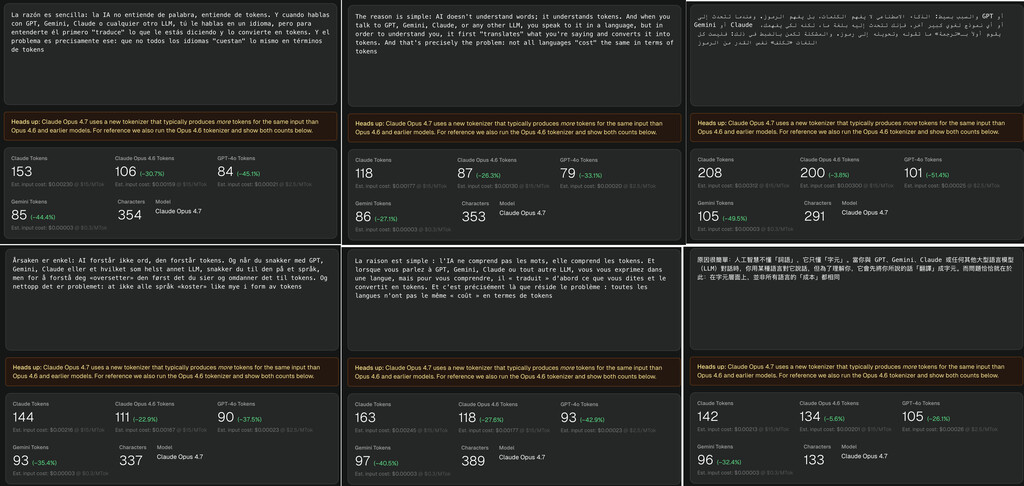
Most users don't realize that speaking Spanish to AI is more expensive than English. The reason lies in how these models process language: they don't understand words, they understand tokens.
Find Original Home Decor sparking conversation at Grand Goldman Shop.

What Are Tokens and Why Do They Matter?
Tokens are the basic units of text that AI models process. When you type a message to GPT, Gemini, Claude, or any other LLM, the model first converts your text into tokens. The catch is that not all languages cost the same in tokens.
Each language model uses its own tokenizer—a translator from human language to the token language the model understands. These tokenizers favor the languages in which the models were primarily trained.
The Tokenization Gap Between English and Spanish
English has become the unofficial language of AI, not for cultural reasons but architectural ones. About 95% of the training data for frontier models like GPT-5, Gemini 3.1, and Claude Opus/Sonnet 4.7 is in English.

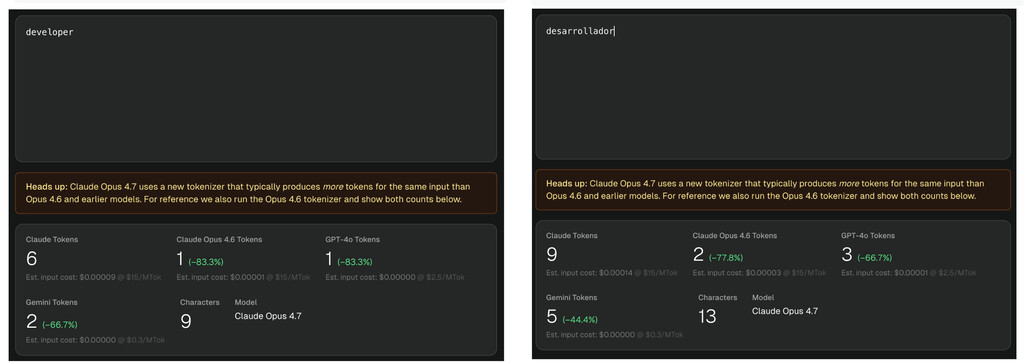
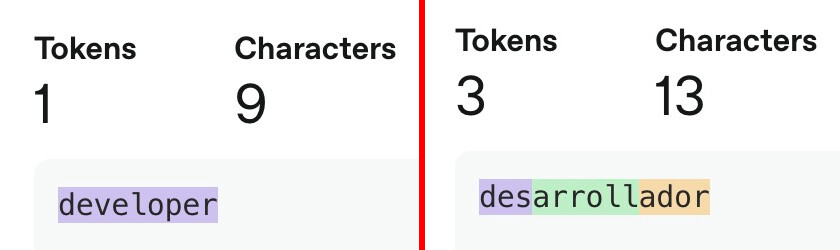
As a result, English words often map to fewer tokens than their Spanish equivalents. For example, the word "developer" might be a single token in English, while "desarrollador" could be split into multiple tokens.
How Tokenizers Favor English
Tokenizers are designed to break text into chunks that are common in the training data. Since English dominates, English words and phrases are more likely to be represented as single tokens. Spanish words, being less frequent, are often split into smaller pieces.
This means that expressing the same idea in Spanish typically requires more tokens than in English. More tokens mean higher costs, as API pricing is based on token usage.
Real-World Example: "Developer" vs. "Desarrollador"
Using tools like ClaudeTokenizer, you can see the difference. In English, "developer" might be one token, while in Spanish, "desarrollador" could be three or four tokens. This discrepancy adds up quickly in longer conversations.
The version of the model also matters—newer models may have more efficient tokenizers, but the English advantage persists.
Why English Saves You Money
If you're using AI for tasks like content generation, coding, or data analysis, every token counts. By switching to English, you reduce the number of tokens per request, lowering your overall costs.
Moreover, English prompts often yield better results because the models are more trained on English data. This means you get higher quality outputs with fewer tokens—a double win.
Key Takeaways for Cost-Conscious Users
- English is generally more token-efficient than Spanish in AI models.
- Tokenizers favor English due to training data dominance.
- Using English can reduce your API costs by 20-30% or more.
- Model version affects tokenization, but English remains advantageous.
- Consider English for prompts even if you're a Spanish speaker.
Token Efficiency Comparison: English vs. Spanish
Here's a comparison of token counts for common words and phrases in English and Spanish, based on typical tokenizers like those used in GPT and Claude models.
| Word/Phrase | English Tokens | Spanish Tokens | Token Increase |
|---|---|---|---|
| Developer | 1 | 3-4 (desarrollador) | 200-300% |
| Artificial Intelligence | 2 | 4-5 (inteligencia artificial) | 100-150% |
| Machine Learning | 2 | 4 (aprendizaje automático) | 100% |
| Hello, how are you? | 4 | 6 (Hola, ¿cómo estás?) | 50% |
As shown, Spanish often requires significantly more tokens for the same meaning. The background to this story is set out in AI Subscriptions: $200/Month for $14,000 in Tokens Is Unsustainable. A related thread runs through OpenAI Ethically Hacked Using Anthropic's Claude Chatbot. Earlier coverage in ChatGPT, Gemini, Grok and Claude All Down: Claude Still Not Recovered shows how the argument developed.
Should You Switch to English for AI Interactions?
If cost and efficiency are priorities, yes. But consider your audience and context. For personal use, English can save money. For customer-facing applications in Spanish, you might need to balance cost with user experience. A closer look at the same subject appears in China's AI Token Rewards: Free Tokens for Coffee and Credit Cards. Anyone following the wider picture can start with Don't Date Brandon: True Crime Podcast Exposes Ex's Lies. The same theme surfaces in Don't Date Brandon: Podcast Exposes Ex-Partner's Lies on TV, which takes a different angle.
Ultimately, understanding tokenization helps you make informed decisions about how you interact with AI. Context on how this played out before sits in Claude Banned in China: Black Market for AI Tokens Thrives. A companion piece, OpenAI's Invisible Watermark for ChatGPT Text in Europe, approaches the same subject from another angle.
FAQ
Why is English more token-efficient than Spanish in AI models?
Because AI models are trained predominantly on English data, their tokenizers are optimized for English, resulting in fewer tokens per word compared to Spanish.
Does using English really save money with ChatGPT and Claude?
Yes, since API pricing is based on token usage, using English reduces the number of tokens per request, leading to lower costs.
Can I still get good results in Spanish?
Absolutely, but it may cost more tokens and sometimes yield slightly less accurate responses due to less training data in Spanish.
Is the token difference significant for long conversations?
Yes, the gap accumulates over longer texts, potentially increasing costs by 20-30% or more for Spanish compared to English.
Browse the Shop
 Acacia frida deluxe solid wood bed frame |
Bedroom bench |
Bed chest drawers |
Lingerie dresser |
Frame base |
Mirror with jewelry storage |
30 Bathroom Vanity |
Memory foam queen mattress |
Mattresses for back pain |
Nightstand set of 2 |
Grand Goldman Shop |
Civil Lawyer
Deutschland Trikot WM 2026







