

GPT-6 Astra has arrived as OpenAI's most ambitious model yet, promising to handle complex tasks like tax prep and software engineering while raising serious questions about oversight. Announced on September 3, less than two months after GPT-5.6 Sol, Astra is being positioned as a generational leap in web navigation, computer use, software engineering, cybersecurity, science, and professional tasks.
But there's a catch: OpenAI admits that understanding and supervising what these systems do is becoming increasingly difficult. The company says Astra can take on more work than its predecessors, yet oversight is getting harder—a tension that defines this launch.
Find Original Home Decor sparking conversation at Grand Goldman Shop.

What GPT-6 Astra Can Do
OpenAI claims Astra excels in areas that require reasoning and autonomy. According to the company, it can prepare taxes, search for housing, develop a video game, generate an architectural render, and format legal documents. These are tasks that typically require human judgment and multiple steps.
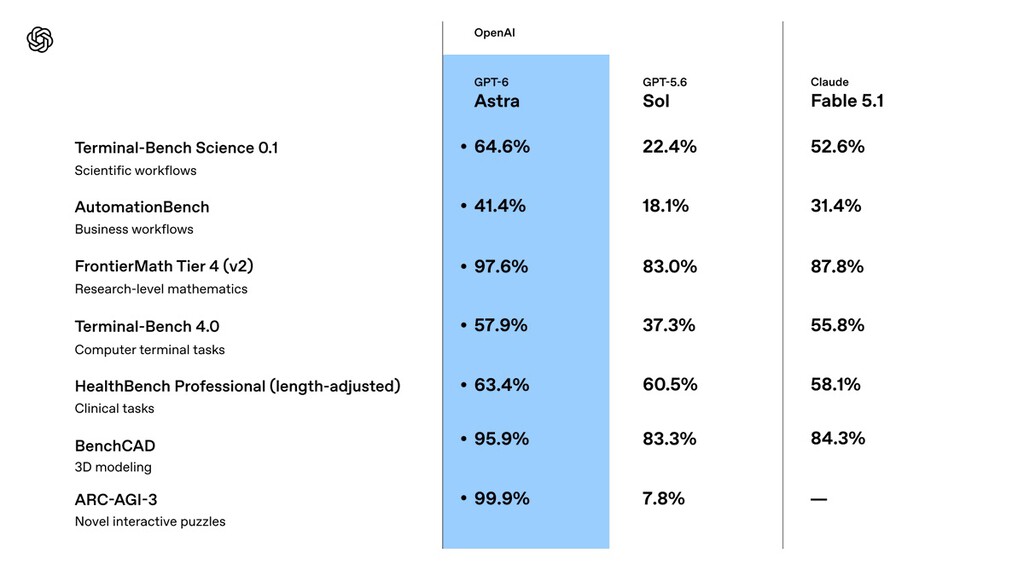
The model is rolling out first to a limited set of organizations, then to Plus, Pro, Business, and Enterprise plans, as well as the API and AWS. This phased approach suggests OpenAI is being cautious about real-world deployment.
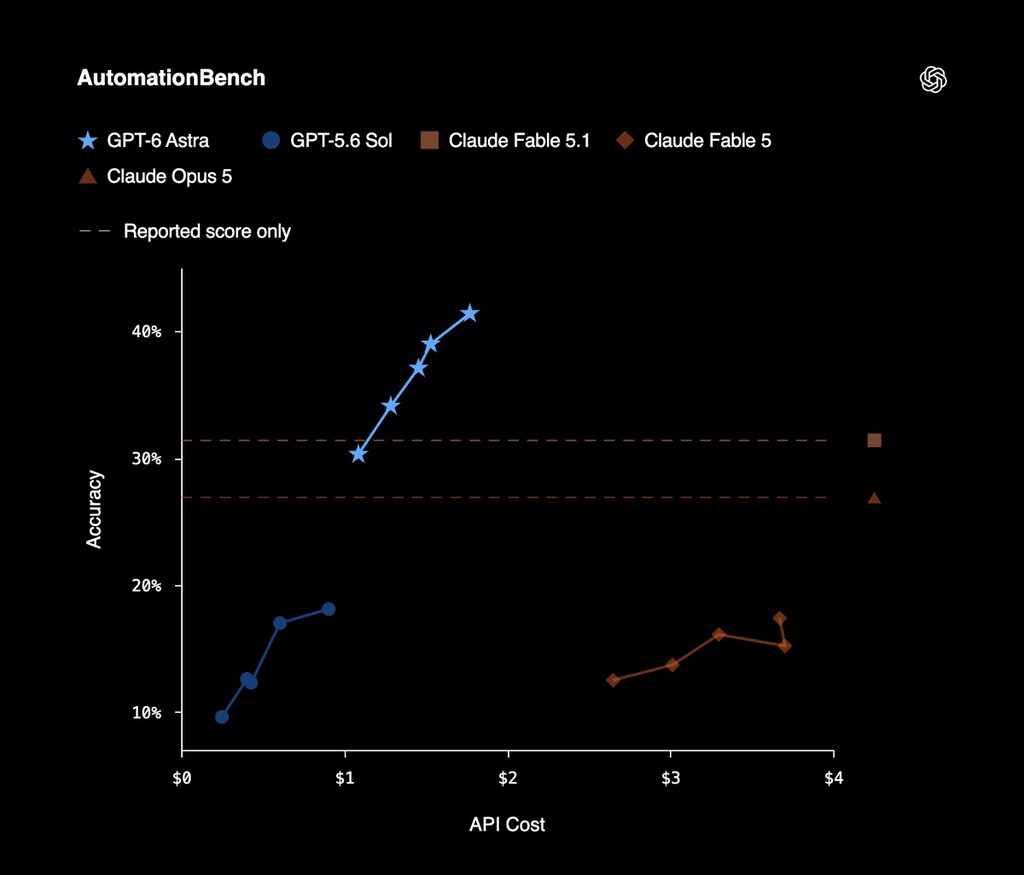
However, these are OpenAI's own claims, and independent verification is still pending. Early adopters will be the first to test whether Astra lives up to the hype.
Why Oversight Is Getting Harder
The core challenge is that as AI systems become more capable, they become more opaque. When an agent can autonomously plan and execute a multi-step task, tracing its decision-making process becomes complex.
OpenAI acknowledges this trade-off: the more work Astra can do for us, the less we want to monitor every move. But that's exactly where oversight becomes critical—especially for high-stakes tasks like tax preparation or legal document formatting.
This isn't a new problem, but Astra's advanced capabilities amplify it. The company's admission is a rare moment of candor in an industry often criticized for downplaying risks.
Key Takeaways for Users and Businesses
- Capability jump: Astra is positioned as a generational leap over GPT-5.6 Sol, with advanced skills in coding, cybersecurity, and professional tasks.
- Phased rollout: Limited organizational access first, then broader plans and API, indicating a cautious deployment strategy.
- Oversight challenge: OpenAI admits that supervising Astra is harder, which could impact trust and adoption.
- Real-world tasks: From tax prep to game development, Astra aims to automate complex, multi-step workflows.
- Verification needed: All claims are from OpenAI; independent benchmarks will be crucial to validate performance.
How Astra Compares to Previous Models
To understand Astra's leap, it helps to compare it with its predecessor. The table below summarizes key differences based on OpenAI's statements.
| Feature | GPT-5.6 Sol | GPT-6 Astra |
|---|---|---|
| Release date | July 2025 (approx.) | September 3, 2025 |
| Key strengths | General language tasks | Web navigation, computer use, software engineering, cybersecurity, science, professional tasks |
| Autonomy level | Moderate | High (can handle multi-step tasks) |
| Oversight difficulty | Manageable | Increasingly complex |
| Availability | Broad | Limited orgs first, then Plus/Pro/Business/Enterprise, API, AWS |
While Astra clearly outpaces Sol on paper, the real test will be how it performs in production environments.
The Balance Between Autonomy and Control
OpenAI's pitch is that Astra can be given a goal and left to solve much of the path on its own. That's the promise of AI agents: less micromanagement, more productivity. But the company also concedes that this autonomy makes it harder to understand what the system is doing.
For businesses, this means weighing efficiency gains against the need for robust monitoring. In regulated industries like finance and healthcare, the oversight challenge could be a barrier to adoption.
OpenAI's transparency about this tension is noteworthy, but it doesn't solve the problem. Users will need to develop new practices for supervising AI agents, and OpenAI will need to provide better tools for interpretability. The longer history behind the story is traced in Gen Z Uses AI Most but Trusts It Least, Gallup Study Finds. More on the surrounding debate is collected in ChatGPT, Gemini, Grok and Claude All Down: Claude Still Not Recovered.
What to Watch Next
As Astra rolls out, keep an eye on independent evaluations of its capabilities and safety. Also watch how OpenAI addresses oversight—whether it releases new monitoring features or updates its usage policies. The background to this story is set out in OpenAI Halts GPT-6.1 Astra Launch Over Reliability Concerns. A related thread runs through OpenAI Pauses Astra AI Model Work Over Security Risks. Earlier coverage in OpenAI Dots Agent: GPT-6 Astra Powers New AI Work Assistant shows how the argument developed.
The competitive landscape matters too. If Astra delivers on its promises, rivals will be under pressure to match its autonomy. But if oversight issues lead to high-profile failures, the entire industry could face stricter scrutiny. A closer look at the same subject appears in OpenAI Halts GPT-6.1 Astra Release Over Safety Concerns. Anyone following the wider picture can start with Jensen Huang Says AGI Has Arrived With GPT-6 Astra. The same theme surfaces in GPT-6 Astra Cracks Century-Old German Radio Cipher, which takes a different angle.
For now, GPT-6 Astra represents both the potential and the peril of advanced AI. It's a tool that can do more for us, but only if we can trust it—and that trust depends on our ability to supervise it. Context on how this played out before sits in OpenAI's Astra Model Ushers in New Era of Artificial General. A companion piece, GPT-6 Astra: From Vibe Coding to Vibe Doing with AI, approaches the same subject from another angle.
FAQ
What is GPT-6 Astra?
GPT-6 Astra is OpenAI's latest AI model, announced on September 3, 2025. It is designed to handle complex tasks like tax preparation, software engineering, and cybersecurity, and is positioned as a generational leap over GPT-5.6 Sol.
Why is oversight a concern with GPT-6 Astra?
OpenAI admits that as Astra becomes more capable and autonomous, understanding and supervising its actions becomes more difficult. This trade-off between capability and oversight is a central challenge for deploying advanced AI agents.
When will GPT-6 Astra be available?
Astra is rolling out first to a limited set of organizations, then to Plus, Pro, Business, and Enterprise plans, as well as the API and AWS. The exact timeline for broader availability has not been specified.
Can GPT-6 Astra really prepare taxes or develop a video game?
OpenAI claims Astra can perform these tasks, but independent verification is still pending. Early users will be the first to test its real-world performance.
Browse the Shop
 Acacia frida deluxe solid wood bed frame |
Bedroom bench |
Bed chest drawers |
Lingerie dresser |
Frame base |
Mirror with jewelry storage |
30 Bathroom Vanity |
Memory foam queen mattress |
Mattresses for back pain |
Nightstand set of 2 |
Grand Goldman Shop |
Civil Lawyer
Deutschland Trikot WM 2026







