

The C919, China's homegrown narrow-body airliner, has officially entered international service, marking a significant step in the country's long-standing ambition to challenge Airbus and Boeing. On August 12, an Air China C919 departed Beijing Capital International Airport and landed in Ulaanbaatar, Mongolia, where it was greeted with a traditional water salute. This was the first commercial international flight of the model between China and another country since it began carrying passengers in 2023.
The new route, designated CA723/CA724, is scheduled for daily round-trip service. While the C919 has been flying regularly between Shanghai and Hong Kong since January 2025, this new connection represents a true international commercial operation, not a demonstration flight. According to Xinhua, the aircraft has met the bilateral civil aviation standards required for this service, making Mongolia the first foreign country to receive regular C919 passenger flights.
Find Original Home Decor sparking conversation at Grand Goldman Shop.

Why the C919's International Debut Matters
For years, the single-aisle commercial aircraft market has been dominated by two names: Airbus and Boeing. The C919, developed by COMAC (Commercial Aircraft Corporation of China), is designed to compete directly with the Airbus A320neo and Boeing 737 MAX families. Until now, its commercial life has been essentially confined to the Chinese domestic market, limiting its global impact.
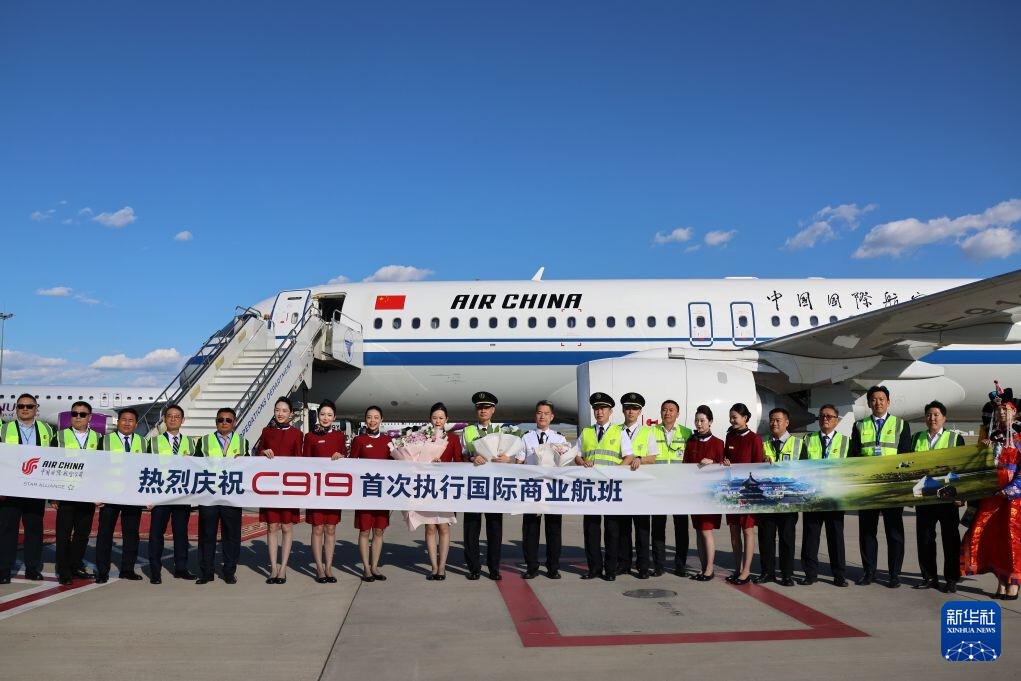
This international debut signals that China is serious about exporting its aviation ambitions. It also demonstrates that the C919 can meet regulatory requirements outside China, albeit initially with a neighboring country that has close ties. The move could pave the way for broader international acceptance and eventually challenge the duopoly.
- First international route: Air China's C919 now flies daily between Beijing and Ulaanbaatar, Mongolia.
- Regulatory milestone: The aircraft has met bilateral civil aviation standards for regular passenger service.
- Competitive segment: The C919 targets the same market as the Airbus A320neo and Boeing 737 MAX.
- Domestic foundation: The C919 has been flying domestically since 2023 and between Shanghai and Hong Kong since January 2025.
- Future outlook: Success in Mongolia could lead to more international routes and eventually challenge the Airbus-Boeing duopoly.
How the C919 Compares to Airbus and Boeing
The C919 is a narrow-body aircraft with a typical capacity of 158-192 passengers, depending on configuration. It is powered by CFM International LEAP-1C engines, the same engine family used on the Airbus A320neo and Boeing 737 MAX. However, the C919 still relies on many foreign suppliers for key systems, which could be a vulnerability as China seeks to expand globally.
Below is a comparison of the C919 with its main competitors:
| Aircraft | Manufacturer | Seats (typical) | Engines | First Commercial Flight |
|---|---|---|---|---|
| C919 | COMAC | 158-192 | CFM LEAP-1C | 2023 |
| A320neo | Airbus | 150-194 | CFM LEAP-1A or PW1100G | 2016 |
| 737 MAX | Boeing | 138-230 | CFM LEAP-1B | 2017 |
While the C919's specifications are competitive, its global reach is still limited by certification from major aviation authorities like the FAA and EASA. So far, the C919 has only been certified by China's CAAC, which restricts its ability to fly in most countries. The Mongolia route is a small but important step toward broader acceptance.
What This Means for the Global Aviation Market
The C919's international expansion could disrupt the long-standing Airbus-Boeing duopoly, but significant challenges remain. COMAC must secure certifications from Western regulators to sell the aircraft globally, and it must build a robust support network for airlines outside China. Additionally, the C919's reliance on foreign suppliers could complicate its export prospects amid geopolitical tensions. Context on how this played out before sits in Florida Police Deploy One-Person Drone Patrol at 101 km/h.
For now, the Mongolia route is a symbolic victory for China's aviation industry. It shows that the C919 can operate internationally and that COMAC is willing to push boundaries. If the aircraft proves reliable and efficient on this route, it could attract interest from other airlines in Asia, Africa, and Latin America—regions where Chinese influence is growing and where cost-sensitive carriers might welcome a new option. The background to this story is set out in China's C919 Jet Takes First International Flight to Mongolia. A related thread runs through China's C919 Jet Prepares for First International Flight.
What to Watch Next
Several developments will determine whether the C919 becomes a true global competitor. First, COMAC's ability to ramp up production and deliver aircraft on time will be crucial. Second, the outcome of certification efforts with the FAA and EASA will dictate access to major markets. Third, the response from Airbus and Boeing—both of which have decades of experience and established supply chains—will shape the competitive landscape. Earlier coverage in JetZero's Blended Wing Body Z4 Aims to Break the Airbus-Boeing Mold shows how the argument developed. A closer look at the same subject appears in Airbus Tests Folding Wings for Next-Generation A320 Planes.
In the near term, expect COMAC to announce more international routes, likely with airlines in countries that have strong diplomatic ties with China. The C919's performance on the Beijing-Ulaanbaatar route will be closely watched by industry analysts and potential customers alike. Anyone following the wider picture can start with Qantas Record Flight: 24 Hours Nonstop in New Airbus A350. The same theme surfaces in Airbus Folding Wings Test: Next-Gen Plane Breakthrough, which takes a different angle.
FAQ
What is the C919 and who makes it?
The C919 is a narrow-body commercial airliner developed by COMAC, China's state-owned aircraft manufacturer. It is designed to compete with the Airbus A320neo and Boeing 737 MAX in the single-aisle market.
When did the C919 first fly internationally?
The C919's first international commercial flight took place on August 12, with an Air China flight from Beijing to Ulaanbaatar, Mongolia. This marked the first regular international passenger service for the model.
Why is this flight significant?
It demonstrates that the C919 can meet international regulatory standards and operate outside China, signaling China's ambition to challenge the Airbus-Boeing duopoly in the global aviation market.
Will the C919 be certified by the FAA or EASA?
So far, the C919 has only been certified by China's CAAC. COMAC has not yet obtained certification from the FAA or EASA, which is required for operations in the US and Europe. The timeline for such certification remains uncertain.
Browse the Shop
 Acacia frida deluxe solid wood bed frame |
Bedroom bench |
Bed chest drawers |
Lingerie dresser |
Frame base |
Mirror with jewelry storage |
30 Bathroom Vanity |
Memory foam queen mattress |
Mattresses for back pain |
Nightstand set of 2 |
Grand Goldman Shop |
Civil Lawyer
Deutschland Trikot WM 2026







