

Silent ship propellers are the goal of a new German research project called MinKav, which aims to reduce the continuous underwater noise that vessels generate. This noise, caused primarily by propeller cavitation, has been recognized as a problem for marine ecosystems since 2004, but the phenomenon itself was first analyzed back in 1893. Now, a team at Kiel University of Applied Sciences is working on a solution.
What Is Propeller Cavitation and Why Is It So Loud?
When a ship's propeller spins at high speed, the blades create a pressure difference between their surfaces. On the rear face, the pressure drops so much that water changes from liquid to gas, forming thousands of tiny vapor bubbles. This process is known as cavitation.
Find Original Home Decor sparking conversation at Grand Goldman Shop.

The real problem occurs when these bubbles leave the low-pressure zone and violently implode back into liquid. This implosion generates pressure waves that travel rapidly through the water. If these waves hit a surface, they can cause considerable damage—not just to the propeller itself but also to the surrounding marine environment.
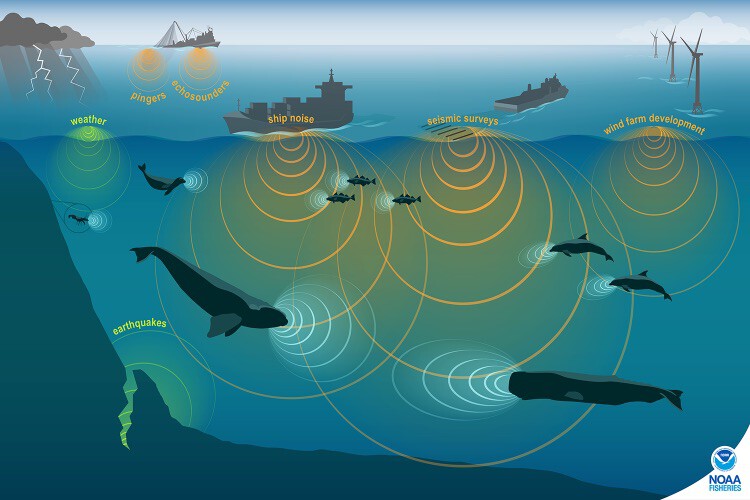
The Silent Threat to Marine Life
The low-frequency noise produced by cavitation propagates for kilometers underwater, interfering with the communication, navigation, and foraging of fish, cetaceans, and other marine animals. Unlike chemical pollution, this acoustic pollution is invisible and often overlooked.
According to the source article, the problem has been academically identified since 2004, yet no effective solution has been available—until now. The MinKav project is specifically designed to address this disruptive sound at its source.
How the MinKav Project Aims to Quiet the Seas
The team at Kiel University of Applied Sciences is taking on the challenge of developing silent propellers. While the exact technical approach is not detailed in the source, the project's name—MinKav—suggests a focus on minimizing cavitation. By reducing or controlling the formation of vapor bubbles, the resulting noise could be significantly lowered.
This research is timely: as global shipping continues to grow, the cumulative impact of underwater noise on marine ecosystems is becoming harder to ignore. Regulatory bodies and environmental groups are increasingly calling for quieter ships. The background to this story is set out in Car: latest articles. A related thread runs through China's Floating Island: Nuclear-Resistant Deep-Sea Research Hub.
Key Takeaways
- Cavitation is the formation and implosion of vapor bubbles on propeller blades, creating loud underwater noise.
- The noise travels kilometers and disrupts marine life, from fish to whales.
- The problem was first analyzed in 1893 and recognized as an ecological issue in 2004.
- Germany's MinKav project is developing silent propellers to mitigate the noise.
- Solutions are urgently needed as shipping traffic increases.
Comparing Noise Sources and Solutions
| Source of Noise | Frequency | Impact on Marine Life | Potential Solution |
|---|---|---|---|
| Propeller cavitation | Low frequency | Disrupts communication, navigation, foraging | Silent propeller design (MinKav) |
| Ship engines and machinery | Broadband | Masking of natural sounds | Vibration isolation, acoustic insulation |
| Sonar | Mid to high frequency | Behavioral changes, strandings | Regulation, alternative technologies |
What to Watch Next
The MinKav project is still in development, and no timeline for commercial application has been announced. However, its progress will be closely watched by the shipping industry and environmental regulators. If successful, silent propellers could become a standard feature on new vessels, helping to reduce the acoustic footprint of global trade. Earlier coverage in Millionaire Lives on Cruise Ships for 26 Years: The Balance Issue shows how the argument developed. A closer look at the same subject appears in Whales in Strait of Gibraltar Are Drowning in Ship Noise.
For now, the focus is on understanding and mitigating cavitation at the design stage. As research advances, we may see quieter seas—and healthier marine ecosystems—as a result. Anyone following the wider picture can start with Whale Poop: The Natural Fertilizer That Sustains Ocean Life. The same theme surfaces in Silent Ship Propellers: Germany's Fix for Ocean Noise, which takes a different angle.
FAQ
What is cavitation and why is it a problem?
Cavitation is the formation of vapor bubbles on propeller blades due to low pressure. When these bubbles implode, they create pressure waves that generate loud underwater noise, which can harm marine life.
How does underwater noise affect marine animals?
Low-frequency noise from ships can travel for kilometers, interfering with the communication, navigation, and foraging of fish, whales, and other marine species.
What is the MinKav project?
MinKav is a research project by Kiel University of Applied Sciences in Germany that aims to develop silent ship propellers to reduce underwater noise pollution caused by cavitation.
When will silent propellers be available?
No timeline has been announced yet, as the project is still in the research and development phase. However, the technology could eventually become standard in the shipping industry.
Browse the Shop
 Acacia frida deluxe solid wood bed frame |
Bedroom bench |
Bed chest drawers |
Lingerie dresser |
Frame base |
Mirror with jewelry storage |
30 Bathroom Vanity |
Memory foam queen mattress |
Mattresses for back pain |
Nightstand set of 2 |
Grand Goldman Shop |
Civil Lawyer
Deutschland Trikot WM 2026







