

Toyota's 700-ton Komatsu press, a massive machine acquired when Toyota as we know it didn't even exist, has been brought back to life after 90 years and a journey of 13,000 kilometers. This story takes us back to the roots of one of the world's largest automakers and highlights the enduring legacy of its industrial past.
The press, originally purchased by Toyoda Automatic Loom Works, symbolizes the transition from textile machinery to automobile manufacturing. Its recent revival underscores Toyota's deep connection to its history and the value it places on preserving its heritage.
Find Original, High-end Home Decor that spark conversation at Grand Goldman Shop.

The Origins: From Looms to Automobiles
Toyota's story begins with Sakichi Toyoda, who founded Toyoda Automatic Loom Works in the 1920s. The company specialized in textile machinery, and its name was derived from the founder's surname. However, it was Sakichi's son, Kiichiro Toyoda, who saw the potential of the automobile industry and steered the company in a new direction.
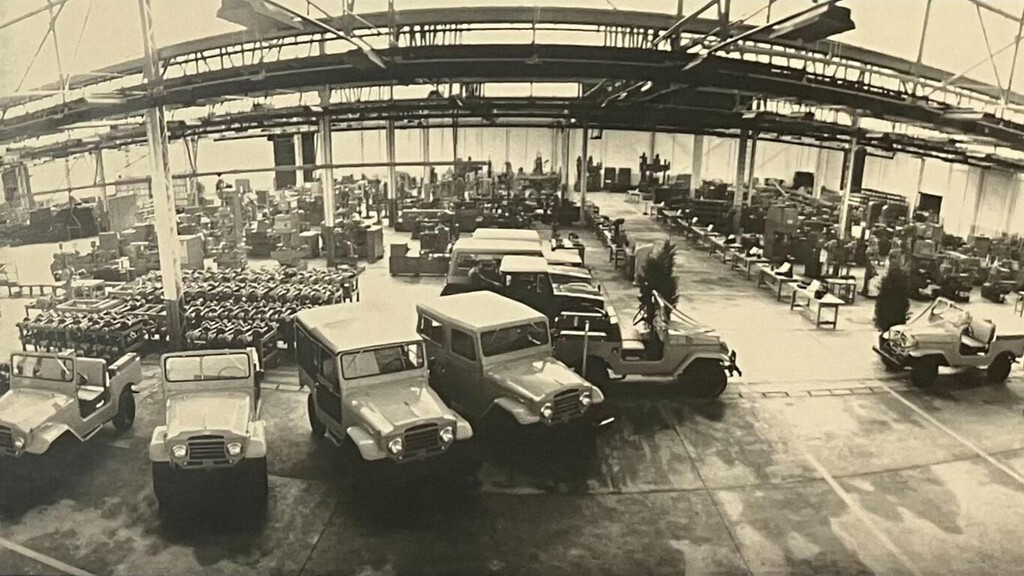
Kiichiro's vision led to the creation of Toyota Motor Corporation, with the name changed to Toyota because the kanji characters required eight strokes, a number considered lucky in Japan. This marked the beginning of Toyota's journey to becoming a global automotive giant.
The Komatsu Press: A Symbol of Transition
The 700-ton Komatsu press was acquired during this transformative period. It was a significant investment for a company that was still primarily known for its looms. The press was used to stamp metal parts for automobiles, representing the company's commitment to its new venture.
This machine, weighing 700 tons, was a testament to the scale of ambition that Toyota had. It played a crucial role in the early production of Toyota vehicles and became a symbol of the company's engineering prowess.
The Journey: 90 Years and 13,000 Kilometers
After decades of service, the press was eventually retired. However, its story didn't end there. The machine was moved to a new location, traveling an astonishing 13,000 kilometers, to be preserved as part of Toyota's historical collection.
Recently, the press was restored to working condition, marking its 90th anniversary. This revival is a tribute to the engineers who built and maintained it, and to the company's enduring spirit of innovation.
Why It Matters Today
The restoration of the Komatsu press is more than just a nostalgic exercise. It reflects Toyota's commitment to preserving its heritage and learning from its past. In an industry driven by rapid technological advancements, understanding where you came from can provide valuable insights for the future. The background to this story is set out in Car: latest articles.
Moreover, this story resonates with the broader theme of Japanese manufacturing excellence. Companies like Sharp and Nintendo also started with entirely different products, only to become global leaders in their respective fields. This adaptability and willingness to evolve are hallmarks of Japanese business culture. A related thread runs through Lenovo Yoga Laptops and Tablets Bring Local AI and 4K Screens to Creatives.
Key Takeaways
- Toyota's origins trace back to Toyoda Automatic Loom Works, a textile machinery company.
- The 700-ton Komatsu press was acquired during Toyota's transition to automobile manufacturing.
- The press was recently restored after 90 years and a 13,000-kilometer journey.
- This revival highlights Toyota's commitment to preserving its industrial heritage.
- The story exemplifies the adaptability and innovation of Japanese companies.
Comparing the Press: Then and Now
| Specification | Original (1930s) | Modern Equivalent |
|---|---|---|
| Weight | 700 tons | Up to 1,000 tons |
| Power Source | Mechanical | Hydraulic/Electrical |
| Control | Manual | Computerized |
| Production Speed | Slow | High |
| Function | Stamping metal parts | Stamping complex parts |
While modern presses are more advanced, the original Komatsu press laid the foundation for Toyota's manufacturing capabilities. Its restoration serves as a reminder of the company's humble beginnings and the importance of continuous improvement. Earlier coverage in Africa's True Size: UN Backs Map Projection Shake-Up shows how the argument developed. A closer look at the same subject appears in Toyota's 700-Ton Komatsu Press: 90 Years Old and Running Again.
FAQ
What is the significance of the 700-ton Komatsu press?
The press represents Toyota's transition from textile machinery to automobile manufacturing. It was a crucial investment in the company's early days and symbolizes its ambitious leap into a new industry.
How did the press travel 13,000 kilometers?
The press was relocated to a new site for preservation, involving a journey of 13,000 kilometers. This move was part of Toyota's efforts to maintain its historical artifacts.
Why was the press restored?
The restoration was undertaken to commemorate its 90th anniversary and to honor Toyota's engineering heritage. It now serves as a working monument to the company's past.
What does this story tell us about Toyota?
It highlights Toyota's respect for its history and its commitment to innovation. The company values its roots and uses them as a foundation for future advancements.
The revival of the Komatsu press is a fascinating chapter in Toyota's rich history. It reminds us that even the largest corporations have humble beginnings and that preserving one's heritage can be as important as looking to the future. As Toyota continues to lead the automotive industry, stories like this keep its legacy alive.
Browse the Shop
 Acacia frida deluxe solid wood bed frame |
Bedroom bench |
Bed chest drawers |
Lingerie dresser |
Frame base |
Mirror with jewelry storage |
30 Bathroom Vanity |
Memory foam queen mattress |
Mattresses for back pain |
Nightstand set of 2 |
Grand Goldman Shop |
Civil Lawyer
Deutschland Trikot WM 2026







