

Elon Musk's xAI has secured approval to install 41 methane gas turbines to power its new Colossus 2 data center, highlighting the growing environmental cost of artificial intelligence. The decision comes despite strong opposition from local communities and environmental activists.
What Happened: Approval for 41 Gas Turbines
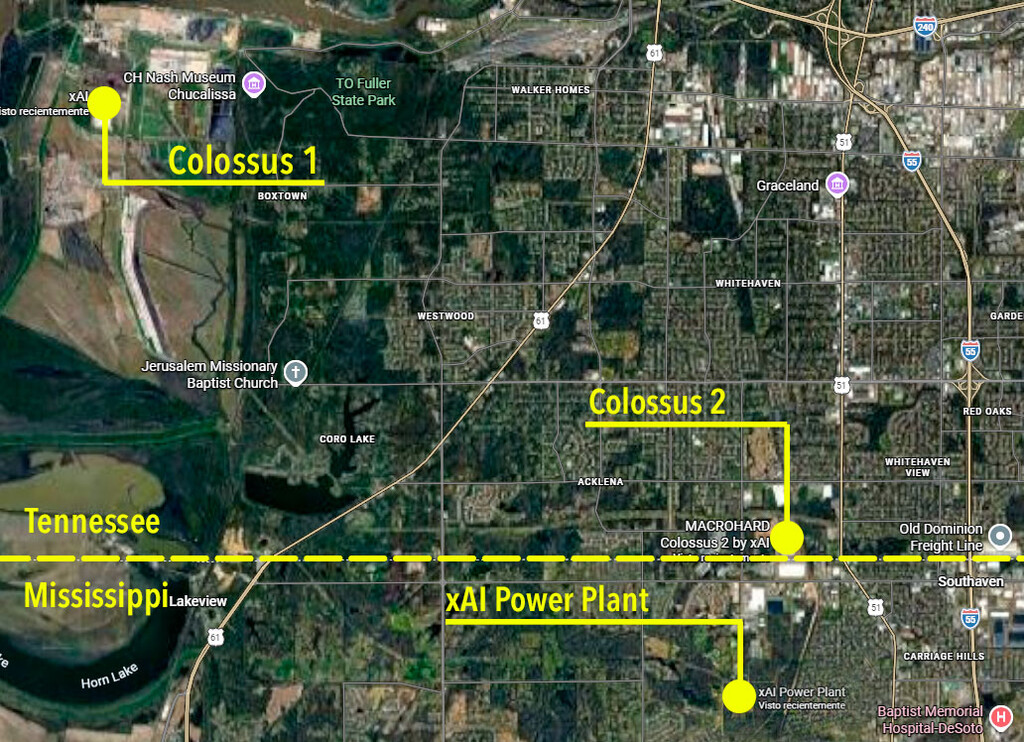
xAI, Elon Musk's artificial intelligence company, has received the green light to install 41 methane combustion turbines near the Tennessee-Mississippi border. These turbines will supply electricity to Colossus 2, the company's latest mega data center.
Find Original Home Decor sparking conversation at Grand Goldman Shop.

The approval was granted after a public hearing where, according to NBC, no speaker voiced support for the project. Nevertheless, the turbines were approved, doubling the number already in operation.
Why It Matters: Environmental and Community Impact
The decision has significant implications for air quality and noise pollution in the region. Activists argue that the additional turbines will exacerbate existing environmental burdens on nearby communities.
Methane gas turbines release nitrogen oxides and particulate matter, which can harm respiratory health. The noise from continuous operation also disrupts local residents.
Two Years of Controversy
The controversy began in 2024 with the construction of the original Colossus data center in Memphis, Tennessee. Months later, xAI received permission to connect to the power grid with a maximum capacity of 150 megawatts.
However, that wasn't enough. In the summer of last year, the Southern Environmental Law Center (SELC) revealed that xAI had been operating turbines without proper permits, sparking legal challenges and community outcry.
Key Takeaways
- Elon Musk's xAI obtained permits for 41 methane gas turbines to power Colossus 2.
- The decision faced unanimous opposition at a public hearing but was approved anyway.
- The turbines will double the existing number, increasing air and noise pollution.
- The project highlights the massive energy demands of AI and its environmental trade-offs.
- Community and environmental groups continue to fight the expansion.
Comparing Energy Sources for Data Centers
| Energy Source | Capacity | Environmental Impact | Status for xAI |
|---|---|---|---|
| Grid Connection | 150 MW | Depends on grid mix | Approved (2024) |
| Methane Gas Turbines | 41 turbines (capacity not specified) | High emissions, noise | Approved (2025) |
| Solar/Wind | Variable | Low | Not mentioned |
| Battery Storage | Variable | Low | Not mentioned |
What to Watch Next
Legal challenges from environmental groups are likely to continue. The SELC and other organizations may file lawsuits to block the turbines or require stricter emissions controls. The background to this story is set out in Elon Musk Turns to Gas Turbines as AI Power Demand Outpaces Solar. A related thread runs through Elon Musk Lives in a Trailer Near Memphis Data Center. Earlier coverage in Elon Musk Loses Lawsuit Against OpenAI and Sam Altman shows how the argument developed.
Meanwhile, xAI's energy needs will only grow as it scales up Colossus 2. The company's reliance on fossil fuels raises questions about the sustainability of AI development. A closer look at the same subject appears in Gas Turbine Shortage: How AI Demand Is Reshaping Energy. Anyone following the wider picture can start with Defund Elon Musk: Why Billionaire Power Threatens Democracy. The same theme surfaces in Aragon Approves Blackstone Data Center with Simplified Environmental Review, which takes a different angle.
As the debate over AI's environmental footprint intensifies, Elon Musk's approach may set a precedent for other tech giants. The balance between innovation and ecological responsibility remains a critical issue. Context on how this played out before sits in Meta's Talavera Data Center: A Boost for Local Economy.
FAQ
Why does xAI need so many gas turbines?
xAI's Colossus 2 data center requires massive amounts of electricity to run AI models. The 41 methane gas turbines provide on-site power generation to supplement the grid connection, which is insufficient for the facility's needs.
What are the environmental concerns with methane gas turbines?
Methane gas turbines emit nitrogen oxides, carbon dioxide, and particulate matter, contributing to air pollution and climate change. They also generate significant noise, impacting local communities.
How has the community responded to the approval?
The community and environmental activists have strongly opposed the project. At the public hearing, no one spoke in favor, and groups like the Southern Environmental Law Center have vowed to continue fighting the expansion.
What does this mean for the future of AI and energy?
This case highlights the tension between AI's immense energy demands and environmental sustainability. It may push companies to invest in cleaner energy solutions or face increasing regulatory and public pressure.
The approval of these turbines underscores the challenges of powering advanced AI. As Elon Musk warns on solar energy, the reliance on fossil fuels for data centers may have long-term consequences.
For a deeper look at Musk's views on renewable energy, see our analysis of Elon Musk Warns on Solar Energy — What You Missed.
Browse the Shop
 Acacia frida deluxe solid wood bed frame |
Bedroom bench |
Bed chest drawers |
Lingerie dresser |
Frame base |
Mirror with jewelry storage |
30 Bathroom Vanity |
Memory foam queen mattress |
Mattresses for back pain |
Nightstand set of 2 |
Grand Goldman Shop |
Civil Lawyer
Deutschland Trikot WM 2026







