

When you think of a petrified forest, you might imagine a dusty landscape of gray stone logs. But in Arizona's Petrified Forest National Park, the ancient trees that died over 200 million years ago have transformed into one of the most spectacular natural canvases on Earth. Here's the story of how wood became stone—and why those vivid colors are still revealing themselves today.
What Happened to the Trees of the Petrified Forest?
Around 220 million years ago, during the Late Triassic period, the area that is now the Arizona desert was a tropical floodplain crossed by rivers. Trees grew along the waterways, and when they fell, many were quickly buried under sediment and volcanic ash.
Find Original Home Decor sparking conversation at Grand Goldman Shop.

Buried without oxygen, the wood didn't rot. Instead, over millions of years, groundwater rich in silica seeped into the wood's cells. The silica slowly replaced the organic material, atom by atom, turning the wood into quartz. Today, what you see are not wooden logs but solid stone replicas—some so perfectly preserved that you can still see tree rings and bark textures.
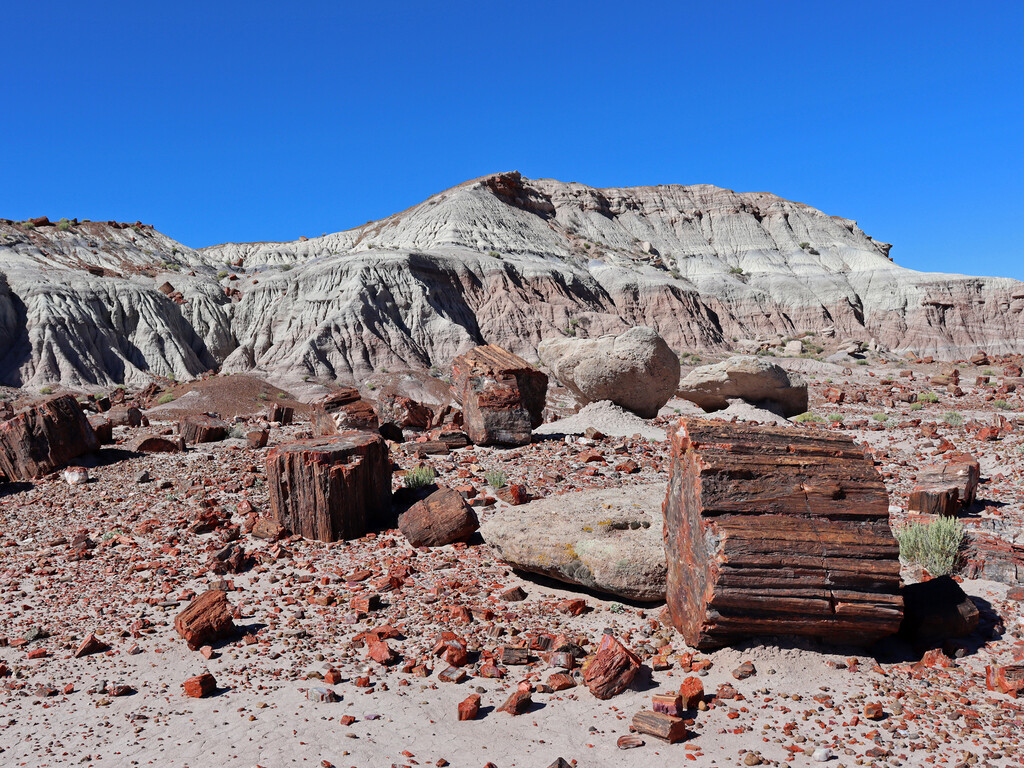
Why the Colors Look Like Paint (But Aren't)
The rainbow hues of the petrified wood—reds, oranges, yellows, purples, and blacks—are not a surface effect. They come from trace minerals that were present in the silica-rich water. Iron oxides create reds and yellows, manganese produces purples and blacks, and other elements add greens and blues.
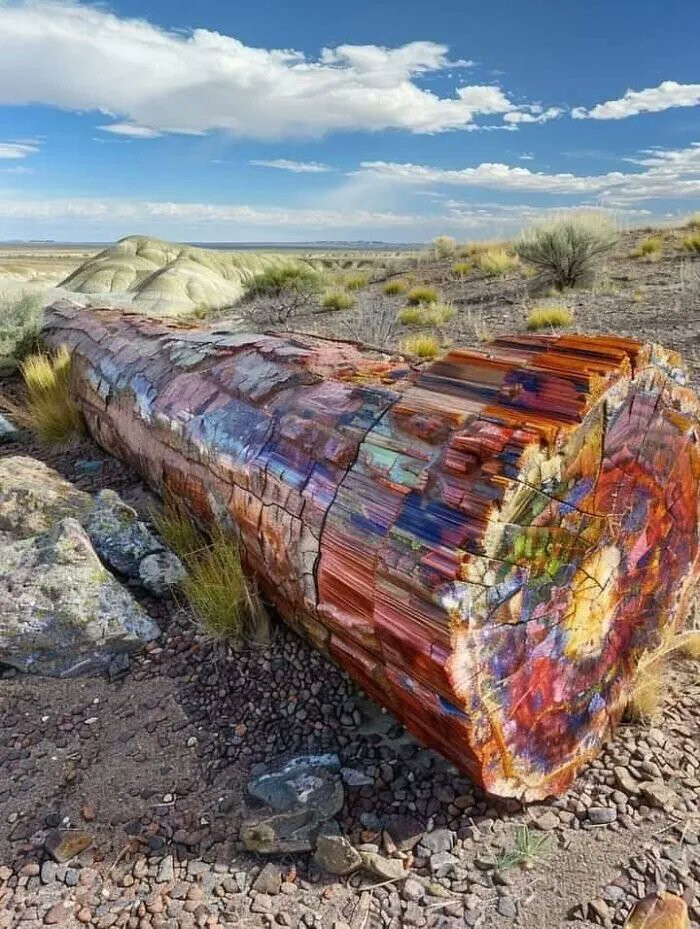
These colors are locked inside the quartz crystals themselves. When the stone is cut and polished, the colors shine through. So when you see a brightly colored petrified log, you're not looking at painted wood—you're looking at the mineral record of a tree that lived before the dinosaurs even walked the Earth.
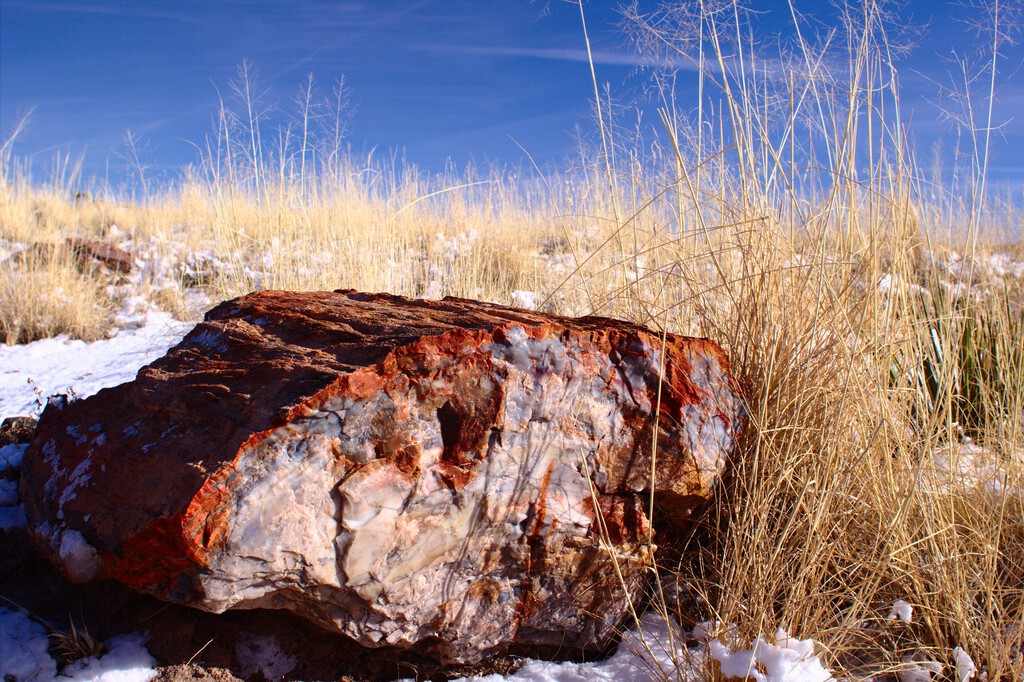
The Geological Journey: From Forest to Stone
The process of petrification is slow and delicate. It requires a specific sequence of events: rapid burial, silica-rich groundwater, and long-term stability. In the case of the Petrified Forest, the trees were buried by river sediments and volcanic ash, which sealed them off from decay.
Over millions of years, tectonic forces lifted and tilted the rock layers. Erosion by wind and rain has slowly exposed the petrified logs, which continue to emerge today. New logs are still being uncovered as the softer rock around them wears away.
What Makes This Petrified Forest Unique?
While petrified wood is found worldwide, the concentration and quality in Arizona's park are exceptional. The park contains one of the world's largest collections of petrified wood, with logs up to 200 feet long. The colors are unusually vibrant, and the preservation is so detailed that scientists can study the original tree species.
The park also preserves fossils of early dinosaurs, giant reptiles, and plants, offering a window into the Late Triassic ecosystem. It's a place where geology, paleontology, and natural beauty converge.
Visiting the Petrified Forest: What to Know
Petrified Forest National Park is located in northeastern Arizona, about 110 miles east of Flagstaff. The park is open year-round, and the main attractions are easily accessible via a 28-mile road that winds through the park.
Highlights include the Rainbow Forest Museum, the Giant Logs Trail, and the Blue Mesa Trail, where you can walk among the colorful badlands and see petrified logs in their natural setting. Remember that removing petrified wood from the park is illegal—help protect this irreplaceable resource. The background to this story is set out in When Dating Fossils, Precision Matters: 201 Million Years. A related thread runs through When Dating Fossils, Precision Matters for Scientific Accuracy. Earlier coverage in When Dating Fossils, Precision Matters: A Scientific Perspective shows how the argument developed.
Key Takeaways
- Petrified wood is formed when silica-rich water replaces organic material with quartz over millions of years.
- The vibrant colors come from trace minerals like iron and manganese, not from paint or surface staining.
- Arizona's Petrified Forest National Park preserves one of the world's most spectacular collections of petrified wood.
- The park offers a glimpse into the Late Triassic period, including fossils of early dinosaurs and giant reptiles.
- New petrified logs are still being exposed by erosion today, making it a dynamic geological site.
Petrified Wood vs. Regular Wood: A Comparison
| Feature | Petrified Wood | Regular Wood |
|---|---|---|
| Composition | Quartz (silica) | Cellulose and lignin |
| Age | Millions of years | Years to decades |
| Hardness | 7 on Mohs scale | 2-3 on Mohs scale |
| Colors | From trace minerals | Natural wood tones |
| Preservation | Requires rapid burial and silica-rich water | Decays without oxygen |
Why This Matters Today
The petrified forest is more than a tourist attraction; it's a record of deep time. Studying these fossils helps scientists understand past climates, ecosystems, and the processes that shape our planet. It also reminds us of the fragility of natural wonders and the importance of conservation. A closer look at the same subject appears in Borrow Dinosaur Fossils: California's Taxidermy Lending Library. Anyone following the wider picture can start with Energy Utilities: latest articles. The same theme surfaces in Solar Eclipse Crowds Raise Wildfire Risk, AEMET Warns, which takes a different angle.
As erosion continues to reveal new logs, each one offers a fresh glimpse into a world that existed long before humans. The colors may look like art, but they are the result of chemistry and time—a true masterpiece of nature. Context on how this played out before sits in Finland Criminal Probe Into Google Data Center Forest Clearing. A companion piece, Petrified Forest Arizona: 225-Million-Year-Old Trees Turned to Stone, approaches the same subject from another angle.
FAQ
How long does it take for wood to petrify?
Petrification typically takes millions of years. The process requires the wood to be buried in sediment, protected from decay, and exposed to silica-rich groundwater over a long period. In the case of the Petrified Forest, the wood is around 220 million years old.
Can you take petrified wood from the park?
No, removing petrified wood from Petrified Forest National Park is illegal. The park protects these resources for future generations, and visitors are asked to leave everything as they find it. There are designated areas outside the park where you can purchase legally collected petrified wood.
What is the best time to visit Petrified Forest National Park?
The park is open year-round. Spring and fall offer mild temperatures, making them ideal for hiking and exploring. Summers can be very hot, so plan to visit early in the morning or late in the afternoon. Winters are cold but the park is less crowded.
Are there dinosaurs in the Petrified Forest?
Yes, the park contains fossils of early dinosaurs and other Late Triassic animals. While the petrified wood is the main attraction, the park's fossil beds have yielded important dinosaur and reptile specimens that help scientists understand the era.
Browse the Shop
 Acacia frida deluxe solid wood bed frame |
Bedroom bench |
Bed chest drawers |
Lingerie dresser |
Frame base |
Mirror with jewelry storage |
30 Bathroom Vanity |
Memory foam queen mattress |
Mattresses for back pain |
Nightstand set of 2 |
Grand Goldman Shop |
Civil Lawyer
Deutschland Trikot WM 2026







