

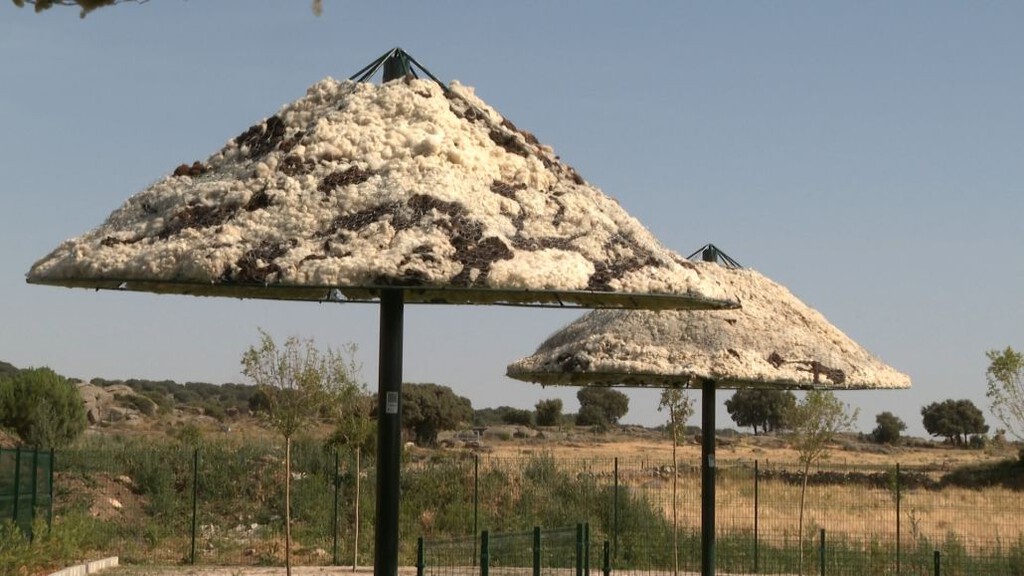
In the small town of Martiherrero, Ávila, an innovative project called 'Sombra de origen' is turning unwanted wool into shade for the municipal swimming pool. This initiative addresses the devaluation of wool while providing a practical solution for the community.
The project, backed by the Martiherrero town council and the Kerbest Foundation, uses over 160 kilograms of raw wool from local sheep farmers to cover pool umbrellas. It's a small-scale pilot that highlights the potential of natural materials in sustainable design.
Find Original Home Decor sparking conversation at Grand Goldman Shop.

Why Wool Is Losing Value
Wool was once a valuable commodity, but today it's often a burden for farmers. The cost of shearing a sheep is about 1.5 euros, while the price farmers receive for wool from common breeds like Assaf, Churra, or Castellana is only around 5 cents per kilo.
With an average of 2.3 kilos of wool per sheep, the numbers don't add up. Farmers often end up paying to dispose of the wool or simply discarding it. This devaluation is a growing concern for the livestock sector.
The 'Sombra de origen' project offers a creative way to use this surplus wool, giving it a new purpose and reducing waste.
How the Wool Umbrellas Work
The wool is first selected and conditioned before being used as a covering for the umbrellas. This process ensures the material is suitable for outdoor use, providing shade and possibly other benefits like insulation.
The umbrellas are now in use at the municipal pool, offering bathers a unique and eco-friendly shade solution. The project demonstrates how local resources can be repurposed to meet community needs.
While the project is small, it serves as a proof of concept for using wool in unconventional applications.
Benefits for the Community and Environment
This initiative not only helps local farmers by providing a use for their wool but also promotes sustainability. By using a natural, biodegradable material, the project reduces reliance on synthetic materials.
Moreover, it raises awareness about the value of wool and the challenges faced by sheep farmers. It's a conversation starter about agricultural economics and sustainable design.
The community benefits from a unique aesthetic and the knowledge that their pool is shaded by a locally sourced, environmentally friendly material.
Challenges and Future Prospects
Scaling up such projects could be challenging due to the processing required and the variability of wool quality. However, the success of this pilot could inspire similar initiatives in other regions.
For now, Martiherrero's project is a testament to innovation and local collaboration. It shows that even overlooked resources can be valuable when approached creatively. The background to this story is set out in Wool Blankets on Swiss Glacier Cut Melt by Half, Study Finds. A related thread runs through New Zealand Wool Industry Makes a Comeback: Key Insights. Earlier coverage in Ferrero's Responsible Sourcing: Tech-Driven Sustainability at Scale shows how the argument developed.
As the world seeks more sustainable solutions, projects like 'Sombra de origen' offer a glimpse into a future where waste is minimized and local resources are maximized. A closer look at the same subject appears in Peter Ackroyd Obituary: Wool Industry Leader Dies at 76. Anyone following the wider picture can start with Volkswagen's Solar Farm Experiment: 100 Sheep Maintain 31,000 Panels. The same theme surfaces in Energy Utilities: latest articles, which takes a different angle.
Key Takeaways
- Unwanted wool is being used to create shade at a municipal pool in Martiherrero, Ávila.
- The project addresses the devaluation of wool, which costs farmers more to shear than they earn from selling it.
- Over 160 kilograms of raw wool from local sheep were used for the umbrellas.
- The initiative is a collaboration between the town council and the Kerbest Foundation.
- It highlights the potential of natural materials in sustainable design and community projects.
Comparing Wool and Synthetic Materials for Shade
| Material | Cost | Environmental Impact | Durability |
|---|---|---|---|
| Wool | Low (using waste wool) | Biodegradable, renewable | Moderate, requires processing |
| Synthetic Fabric | Higher upfront cost | Non-biodegradable, petroleum-based | High |
| Cotton Canvas | Moderate | Biodegradable, water-intensive | Moderate |
While synthetic materials may offer better durability, wool provides a sustainable alternative that supports local agriculture and reduces waste. Context on how this played out before sits in Starlink Provides Free Satellite Internet to Fire-Ravaged Madrid, Ávila. A companion piece, Agentic AI Energy Use: 136.5x More Than Chatbots, approaches the same subject from another angle.
FAQ
What is the 'Sombra de origen' project?
'Sombra de origen' is an initiative in Martiherrero, Ávila, that uses unwanted sheep wool to cover umbrellas at the municipal swimming pool, providing shade while addressing wool devaluation.
Why is wool so cheap for farmers?
The cost of shearing (about 1.5 euros per sheep) exceeds the price farmers receive for wool (around 5 cents per kilo), making it unprofitable. This is due to low demand for wool from certain breeds and competition from synthetic fibers.
How much wool was used in the project?
Over 160 kilograms of raw wool from local sheep farmers were used to cover the umbrellas at the pool.
Who is behind the project?
The project is a collaboration between the Martiherrero town council and the Kerbest Foundation.
Browse the Shop
 Acacia frida deluxe solid wood bed frame |
Bedroom bench |
Bed chest drawers |
Lingerie dresser |
Frame base |
Mirror with jewelry storage |
30 Bathroom Vanity |
Memory foam queen mattress |
Mattresses for back pain |
Nightstand set of 2 |
Grand Goldman Shop |
Civil Lawyer
Deutschland Trikot WM 2026







