

China's Tianwen-2 probe has successfully reached the near-Earth asteroid Kamo'oalewa (469219 Kamo'oalewa, also known as 2016 HO3) after a 400-day journey, marking a significant milestone in asteroid exploration. The spacecraft arrived on July 4, a fact announced by the China National Space Administration (CNSA) on July 6, and has already begun capturing images that could help resolve a mystery that has puzzled astronomers for nearly a decade.
Kamo'oalewa, often described as a "mini-moon" because it orbits the Sun in a path that keeps it close to Earth, was discovered in 2016. Since then, scientists have debated its origin: is it a true asteroid, or is it a fragment ejected from the Moon? The Tianwen-2 mission aims to provide a definitive answer by collecting samples and returning them to Earth in 2027.
Find Original Home Decor sparking conversation at Grand Goldman Shop.

Why Kamo'oalewa Matters to Astronomers
Kamo'oalewa is a small object, roughly 40 to 100 meters in diameter, but its peculiar orbit and spectral properties have made it a subject of intense study. Some observations suggest its composition is similar to lunar material, fueling the hypothesis that it was blasted off the Moon by an ancient impact.
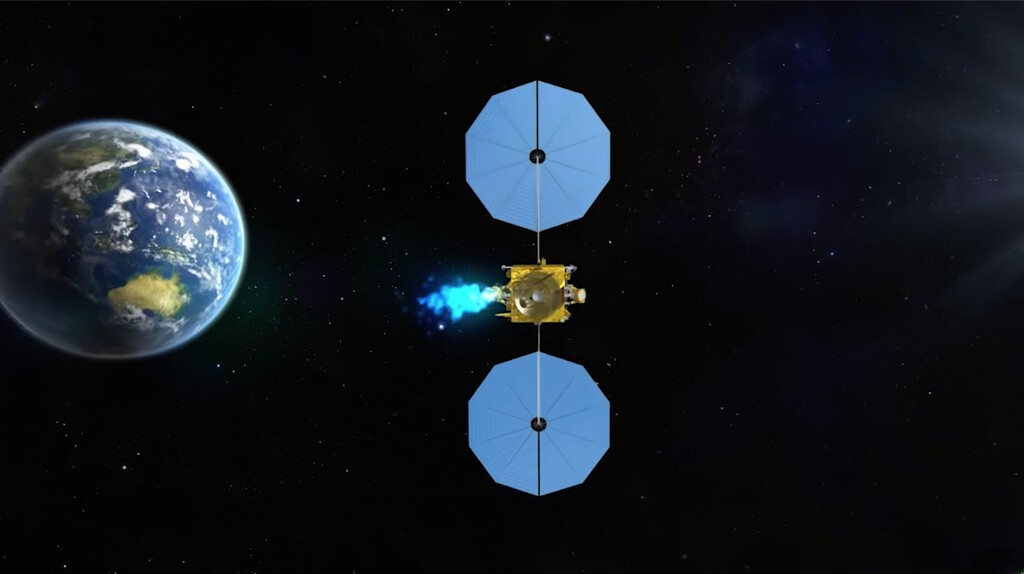
If confirmed, Kamo'oalewa would be the first known quasi-satellite of Earth to originate from the Moon, offering a unique opportunity to study lunar material without a sample-return mission to the Moon itself. Moreover, understanding its composition could provide clues about the early solar system and the processes that shape near-Earth objects.
Tianwen-2's Journey and Arrival
The Tianwen-2 mission was launched on May 29, 2025, and after 400 days of travel, it has now reached its first stop: a position just 20 kilometers from Kamo'oalewa. There, it has begun taking high-resolution images to map the asteroid's surface and identify optimal sampling sites.
The spacecraft is equipped with 11 scientific payloads, including cameras, spectrometers, and a sampling device. These instruments will allow scientists to analyze the asteroid's composition, structure, and surface properties in unprecedented detail.
What Happens Next: Sampling and Return
After the mapping phase, Tianwen-2 will attempt to collect samples from the asteroid's surface. The samples are scheduled to be returned to Earth in 2027, where they will be analyzed in laboratories around the world.
The sampling process is complex and risky, as the asteroid's low gravity and irregular shape pose challenges for the spacecraft. However, the mission team has prepared extensively, and the successful arrival is a promising sign.
The Big Question: Asteroid or Moon Fragment?
The primary scientific goal of Tianwen-2 is to determine the origin of Kamo'oalewa. If the samples show that its composition matches lunar rocks, it would strongly support the Moon-fragment hypothesis. If not, it would suggest that Kamo'oalewa is a primitive asteroid captured from the main belt.
Either way, the results will have implications for our understanding of near-Earth objects and the dynamic processes that transport material across the solar system. The background to this story is set out in SpaceX Starship Reaches Orbit for the First Time Ever. A related thread runs through Mercury Reaches Farthest Point from Sun: Best Viewing Tips. Earlier coverage in US National Debt Reaches $40 Trillion: Economic Consequences shows how the argument developed.
Key Takeaways from the Tianwen-2 Mission
- Historic arrival: China's Tianwen-2 has reached Kamo'oalewa after a 400-day journey, marking a new era in asteroid exploration.
- Mystery of origin: The mission aims to resolve whether Kamo'oalewa is an asteroid or a lunar fragment.
- Sample return: Samples will be returned to Earth in 2027, providing definitive answers.
- Advanced instruments: The probe carries 11 scientific payloads for detailed analysis.
- Global interest: The world's astronomical community is closely watching the mission's progress.
Comparing Tianwen-2 to Other Asteroid Missions
Tianwen-2 is not the first mission to explore an asteroid, but it is one of the most ambitious. Here's how it compares to other notable asteroid missions: A closer look at the same subject appears in Spain's First Electric Propulsion Satellite Reaches Orbit. Anyone following the wider picture can start with Science: latest articles. The same theme surfaces in NASA Seeks Four Volunteers for a Year-Long Mars Simulation, which takes a different angle.
| Mission | Agency | Target | Sample Return | Status |
|---|---|---|---|---|
| Tianwen-2 | CNSA (China) | Kamo'oalewa | Yes (2027) | Arrived July 2026 |
| OSIRIS-REx | NASA (USA) | Bennu | Yes (2023) | Completed |
| Hayabusa2 | JAXA (Japan) | Ryugu | Yes (2020) | Completed |
| Psyche | NASA (USA) | 16 Psyche | No | En route |
Tianwen-2 stands out because of its target's unique status as a quasi-satellite and potential lunar origin. If successful, it will be the first mission to return samples from such an object. Context on how this played out before sits in NASA Voyager 2 Power Boost: Extending Interstellar Mission. A companion piece, NASA Streamlines Mission Selection to Launch More Often Like SpaceX, approaches the same subject from another angle.
FAQ
What is Kamo'oalewa and why is it important?
Kamo'oalewa is a near-Earth asteroid that orbits the Sun in a path that keeps it close to Earth, making it a quasi-satellite. It is important because its origin is uncertain—it could be a fragment from the Moon, which would provide valuable insights into lunar material and solar system dynamics.
When will Tianwen-2 return samples to Earth?
The samples are scheduled to be returned to Earth in 2027, after the spacecraft completes its mapping and sampling activities at Kamo'oalewa.
How does Tianwen-2 compare to other asteroid missions?
Tianwen-2 is unique because it targets a quasi-satellite that may be of lunar origin. Unlike missions to main-belt asteroids, it aims to resolve a specific mystery about Earth's mini-moon, and it includes sample return, similar to OSIRIS-REx and Hayabusa2.
What instruments does Tianwen-2 carry?
Tianwen-2 carries 11 scientific payloads, including cameras for high-resolution imaging, spectrometers for compositional analysis, and a sampling device to collect surface material.
The successful arrival of Tianwen-2 at Kamo'oalewa is a testament to China's growing capabilities in deep space exploration. As the mission progresses, the world will be watching closely to see what secrets this mysterious mini-moon holds.
Browse the Shop
 Acacia frida deluxe solid wood bed frame |
Bedroom bench |
Bed chest drawers |
Lingerie dresser |
Frame base |
Mirror with jewelry storage |
30 Bathroom Vanity |
Memory foam queen mattress |
Mattresses for back pain |
Nightstand set of 2 |
Grand Goldman Shop |
Civil Lawyer
Deutschland Trikot WM 2026







