

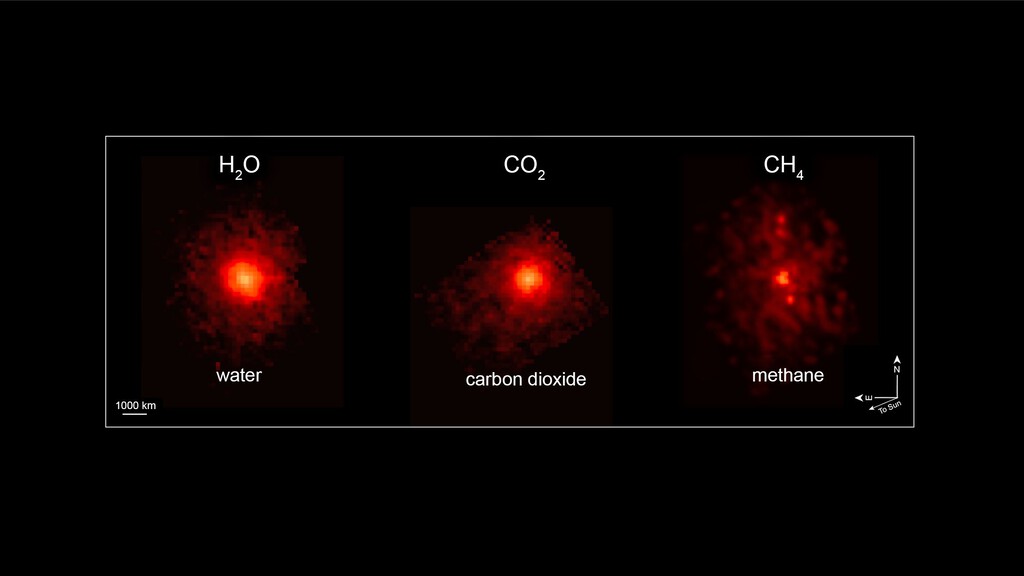
The James Webb Space Telescope has analyzed the chemical composition of interstellar comet 3I/ATLAS, revealing gases that are highly unusual for our Solar System. Using its MIRI spectrograph, astronomers detected water vapor, methane, and carbon dioxide—marking the first time methane has been identified in an interstellar visitor.
This breakthrough, made possible by Webb's mid-infrared capabilities, offers an unprecedented glimpse into the chemistry of a body formed around another star. The findings could reshape our understanding of how planetary systems assemble and what materials they share across the galaxy.
Find Original Home Decor sparking conversation at Grand Goldman Shop.

Why 3I/ATLAS Is a Scientific Goldmine
Interstellar objects like 3I/ATLAS are rare cosmic messengers. Each one that passes through our neighborhood carries a chemical fingerprint from its home system, preserved across light-years of travel. Unlike asteroids or comets born in our own Solar System, these visitors offer a direct sample of extrasolar chemistry.
The first confirmed interstellar visitor, 1I/‘Oumuamua, puzzled scientists in 2017 with its odd shape and lack of visible outgassing. In 2019, 2I/Borisov provided the first clear look at an interstellar comet, showing a familiar but slightly alien composition. Now, 3I/ATLAS takes the spotlight with the most detailed chemical analysis yet.
How James Webb Unlocked the Comet's Chemical Fingerprint
At the heart of this discovery is MIRI, the Mid-Infrared Instrument on the James Webb Space Telescope. MIRI's spectrograph splits infrared light into its component wavelengths, allowing scientists to identify specific molecules based on the unique way they absorb and emit light.
Because different chemicals reflect light differently, the resulting spectrum acts like a barcode. By reading that barcode, researchers can determine which gases are present and in what amounts. In the case of 3I/ATLAS, MIRI delivered the first clear spectral signature of an interstellar object's chemical makeup.
What Webb Found: Water, Methane, and Carbon Dioxide
The analysis revealed water vapor beyond the comet's nucleus, likely produced as icy grains sublimated in the Sun's heat. Closer to the nucleus, Webb detected both methane and carbon dioxide. The presence of methane is particularly striking—it is the first time this gas has been observed in an interstellar visitor.
These molecules are not uncommon in our Solar System, but their combination and distribution in 3I/ATLAS stand out. The ratios and locations of these gases hint at formation conditions that may differ significantly from those in our own planetary neighborhood.
- First methane detection in an interstellar object, made possible by Webb's MIRI spectrograph.
- Water vapor found beyond the nucleus, suggesting sublimating ice grains.
- Carbon dioxide identified near the nucleus, indicating a distinct chemical reservoir.
- MIRI's mid-infrared sensitivity was crucial for separating and identifying these gases.
- 3I/ATLAS is the third confirmed interstellar visitor, after ‘Oumuamua and Borisov.
Why These Gases Are Rare for Our Solar System
In our Solar System, comets typically show water vapor and carbon dioxide, but methane is less commonly detected in such proximity to the nucleus. The methane in 3I/ATLAS appears to be concentrated near the core, which could imply a different thermal history or formation environment.
Moreover, the relative abundances of these gases may not match the profiles of known Solar System comets. This discrepancy suggests that 3I/ATLAS formed in a region of its parent system with distinct temperature and chemical conditions—perhaps closer to its star or in a different disk environment.
| Gas | Location | Significance |
|---|---|---|
| Water vapor | Beyond the nucleus | Indicates sublimating ice grains |
| Methane | Near the nucleus | First detection in an interstellar object |
| Carbon dioxide | Near the nucleus | Suggests a distinct chemical reservoir |
What This Means for Interstellar Studies
The detection of methane and other gases in 3I/ATLAS opens a new chapter in interstellar research. By comparing its chemical fingerprint with those of Solar System comets, scientists can begin to trace how common—or unique—our own planetary system's chemistry is. Context on how this played out before sits in James Webb Analyzes 3I/ATLAS and Finds Rare Interstellar Gases.
Each interstellar visitor provides a data point in the grand puzzle of planet formation. As more objects are discovered and analyzed with tools like Webb, patterns may emerge that link the chemistry of different stellar nurseries. For now, 3I/ATLAS stands as a tantalizing hint that the cosmos is more chemically diverse than we imagined. The background to this story is set out in Science: latest articles. A related thread runs through James Webb Finds First Black Hole Star, a Theoretical Object.
What to Watch Next
Researchers will continue to monitor 3I/ATLAS as it recedes from the Sun, refining the gas ratios and searching for additional molecules. Future interstellar objects, likely discovered by surveys like the Rubin Observatory, will offer more opportunities for comparative studies. Earlier coverage in Ryan MacDonald on Earth's Future: White Dwarf Study Reveals Sun's Fate shows how the argument developed. A closer look at the same subject appears in NASA's Roman Space Telescope Launch Moves Up to August 2026.
With its unmatched infrared sensitivity, the James Webb Space Telescope will remain a key tool in this quest. Every new spectrum adds a piece to the story of how planets—and perhaps life—assemble across the galaxy. Anyone following the wider picture can start with Robert Pattinson Auditions for James Bond: 007 Race Heats. The same theme surfaces in Haier Space-Fit Fridges: Bottom Cooling Lets You Place Them Closer to Cabinets, which takes a different angle.
FAQ
What is 3I/ATLAS?
3I/ATLAS is the third confirmed interstellar object to pass through our Solar System, following ‘Oumuamua in 2017 and comet Borisov in 2019. It is a comet-like body that originated around another star.
Why is the detection of methane in 3I/ATLAS significant?
This is the first time methane has been identified in an interstellar visitor. Its presence, along with water vapor and carbon dioxide, provides clues about the comet's formation conditions and the chemistry of its home system.
How did the James Webb Space Telescope analyze 3I/ATLAS?
Webb used its MIRI spectrograph, which splits mid-infrared light into a spectrum. By studying the spectrum, scientists can identify the unique light signatures of different gases and determine their composition and location.
What makes these gases rare for our Solar System?
While water and carbon dioxide are common in Solar System comets, methane near the nucleus is less typical. The combination and distribution of gases in 3I/ATLAS suggest it formed under conditions different from those in our own planetary system.
Browse the Shop
 Acacia frida deluxe solid wood bed frame |
Bedroom bench |
Bed chest drawers |
Lingerie dresser |
Frame base |
Mirror with jewelry storage |
30 Bathroom Vanity |
Memory foam queen mattress |
Mattresses for back pain |
Nightstand set of 2 |
Grand Goldman Shop |
Civil Lawyer
Deutschland Trikot WM 2026







