

In 1984, NASA sent 3,301 bees to space to find out if they could build a honeycomb without gravity. Seven days later, the insects had constructed about 200 cm² of hexagonal cells, a result that surprised researchers and shed light on how living things adapt to weightlessness.
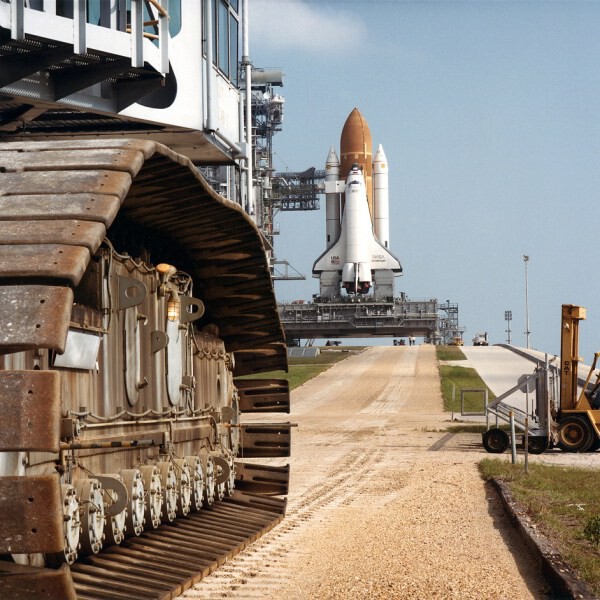
The experiment flew on the Space Shuttle Challenger mission STS-41C, which launched on April 6, 1984, and lasted 6 days, 23 hours, and 40 minutes. While five astronauts prepared to perform the first on-orbit satellite repair, a much smaller crew of bees was busy with its own mission: testing the limits of instinct in microgravity.
Find Original, High-end Home Decor that spark conversation at Grand Goldman Shop.
Why Send Bees to Space?
The idea came from student Dan Poskevich, who proposed a simple but profound question: can bees build a honeycomb without gravity? On Earth, bees use gravity as a reference to orient their comb. Without it, would they still produce the iconic hexagonal structure?

To answer this, NASA designed a special module to keep the bees alive during the flight. The module housed 3,301 bees along with a queen, providing food and ventilation. The experiment aimed to observe whether the bees could adapt their behavior and construction techniques in the absence of gravity.
The Challenges of Microgravity
The first days were rough. The bees survived the launch, but moving in microgravity proved difficult. Some tried to fly and ended up crashing into the walls of the enclosure. Without gravity, they lacked the up-and-down reference that normally guides their movement and comb building.
Despite these initial struggles, the bees gradually adapted. They began to cluster and eventually started building comb. The result was a small but significant piece of honeycomb, demonstrating that the bees' instinct to build was not entirely dependent on gravity.
What the Bees Built in Space
Over the seven days, the bees constructed approximately 200 cm² of honeycomb. The structure retained the hexagonal pattern characteristic of bee combs on Earth, although the cells were slightly smaller and less regular. This suggested that while gravity influences the building process, the bees possess an innate ability to create hexagonal cells even in microgravity.
The experiment provided valuable insights into how organisms respond to space environments. It also raised questions about the role of gravity in shaping biological structures and behaviors.
Key Takeaways from the Bee Experiment
- Adaptation: Bees can build honeycomb in microgravity, though initial attempts are chaotic.
- Instinct vs. environment: The hexagonal pattern persists without gravity, indicating a strong genetic component.
- Space biology: The experiment highlighted the challenges and possibilities of studying animal behavior in space.
- Student involvement: Dan Poskevich's proposal showed how student ideas can contribute to space research.
- Future implications: Understanding how life adapts to space is crucial for long-duration missions.
How the Bee Experiment Was Conducted
The bees were housed in a custom-built module that provided food (sugar water) and ventilation. The module was designed to be secure and to allow observation. During the mission, astronauts monitored the bees and recorded their behavior.
The experiment was part of a broader effort to study the effects of spaceflight on living organisms. Similar experiments have been conducted with other animals, including spiders, fish, and rodents, to understand how space affects development, behavior, and physiology. Context on how this played out before sits in NASA Sent 3,301 Bees to Space in 1984: They Built 200 cm² of Honeycomb.
| Parameter | Details |
|---|---|
| Mission | STS-41C (Challenger) |
| Launch date | April 6, 1984 |
| Duration | 6 days, 23 hours, 40 minutes |
| Number of bees | 3,301 (including one queen) |
| Honeycomb built | Approximately 200 cm² |
| Proposer | Dan Poskevich (student) |
Why This Experiment Still Matters
The 1984 bee experiment remains a fascinating example of how life adapts to space. It demonstrated that fundamental behaviors, like comb building, are resilient even when a key environmental cue—gravity—is removed. This has implications for future space agriculture and for understanding the limits of biological adaptation. The background to this story is set out in Science: latest articles. A related thread runs through Unitree's World-Model Humanoid Robot Achieves Full Autonomy.
As we plan longer missions to the Moon and Mars, studying how organisms like bees function in space could inform the design of life support systems. Bees are important pollinators, and their ability to build comb in microgravity suggests that they might be able to function in space habitats, though much more research is needed. Earlier coverage in Mac Studio M5 Max and M5 Ultra: CPU, GPU, and NPU Upgrades Explained shows how the argument developed. A closer look at the same subject appears in Zelda Ocarina of Time Remake: First Gameplay Revealed.
What to Watch Next
While the bee experiment was a one-off, it paved the way for more sophisticated studies of animal behavior in space. Future experiments on the International Space Station and beyond could explore how microgravity affects social insects, pollination, and ecosystem dynamics. Such research will be crucial for sustaining life beyond Earth. Anyone following the wider picture can start with Apple Locks Down NAND Memory Ahead of iPhone 18 Pro Launch. The same theme surfaces in LEGO PlayStation Set: 1,911-Piece Console Replica Launches October, which takes a different angle.
FAQ
How many bees were sent to space in 1984?
NASA sent 3,301 bees, including one queen, on the Space Shuttle Challenger mission STS-41C.
Did the bees build a honeycomb in space?
Yes, they built approximately 200 cm² of honeycomb over seven days, maintaining the hexagonal pattern despite the lack of gravity.
Why was the bee experiment conducted?
The experiment aimed to determine if bees could build a honeycomb without gravity and whether the hexagonal structure would be preserved.
What were the initial challenges for the bees in space?
In microgravity, the bees struggled to fly and orient themselves, often crashing into the walls of their enclosure before adapting.
Browse the Shop
 Acacia frida deluxe solid wood bed frame |
Bedroom bench |
Bed chest drawers |
Lingerie dresser |
Frame base |
Mirror with jewelry storage |
30 Bathroom Vanity |
Memory foam queen mattress |
Mattresses for back pain |
Nightstand set of 2 |
Grand Goldman Shop |
Civil Lawyer
Deutschland Trikot WM 2026







