

SpaceX is reportedly preparing the largest initial public offering (IPO) in history, a move that could reshape the financial landscape and cement Elon Musk's vision for the future. The company's recent acquisition of xAI, combined with the booming space and AI divisions, has pushed its valuation to staggering heights. But why now? And what does this mean for investors and the broader market?
SpaceX IPO: The Largest in History?
According to reports, SpaceX is aiming to raise approximately $75 billion through its IPO, far exceeding earlier estimates of $50 billion. At a current valuation of around $1.75 trillion, the offering would dwarf the previous record held by Saudi Aramco, which raised $29.4 billion in 2019.
Find Original Home Decor sparking conversation at Grand Goldman Shop.

If the predictions hold, SpaceX's market capitalization (including xAI) could reach $1.5 trillion, according to some analysts—94 times what it raised in 2025. The Information goes further, suggesting the potential valuation could climb to the cited $1.75 trillion.
Why the Sudden Move?
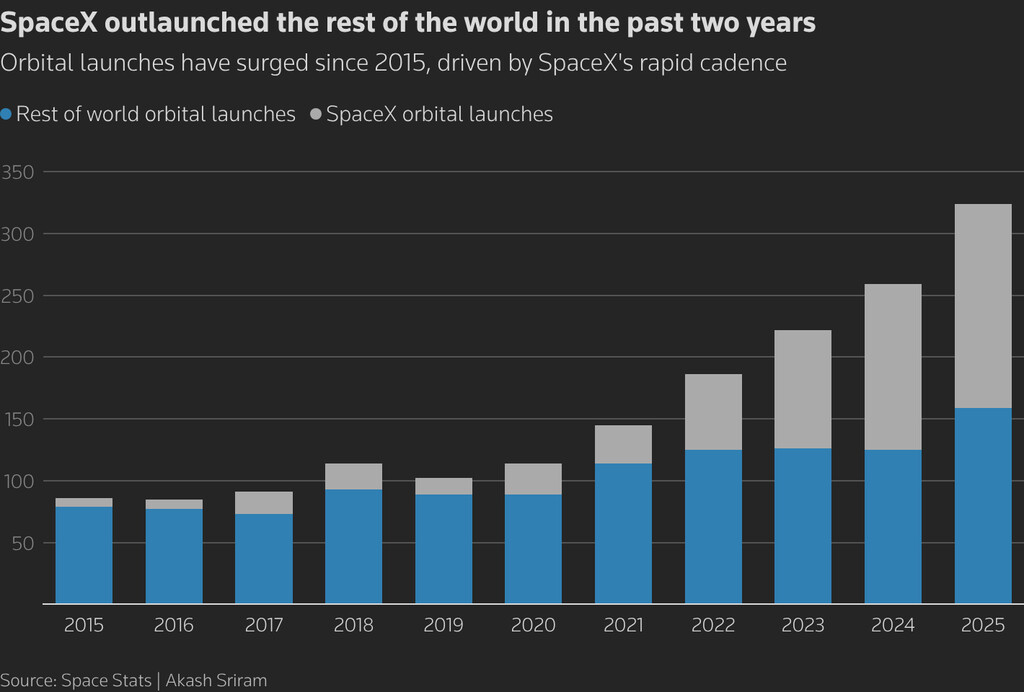
The timing is no coincidence. SpaceX's acquisition of xAI, the artificial intelligence company also founded by Musk, has raised eyebrows, especially as several of xAI's original co-founders have recently departed. This exodus, combined with the soaring valuations of both the space and AI divisions, has created a perfect storm for a blockbuster IPO.
Musk has long hinted at taking SpaceX public, but the recent consolidation of his business empire suggests a strategic push to capitalize on the AI hype and the company's dominant position in the space industry.
Key Takeaways
- Record-breaking IPO: SpaceX aims to raise $75 billion, surpassing Saudi Aramco's $29.4 billion record.
- Valuation surge: The company's valuation stands at $1.75 trillion, with potential to reach $1.5 trillion post-IPO.
- xAI acquisition: The merger with xAI has boosted SpaceX's AI capabilities but also raised concerns about leadership turnover.
- Strategic timing: The IPO comes amid a boom in both space and AI sectors, maximizing investor interest.
- Market impact: A successful IPO could set a new benchmark for tech offerings and influence future valuations.
How SpaceX Compares to Other Major IPOs
| Company | IPO Year | Amount Raised (USD) | Valuation at IPO (USD) |
|---|---|---|---|
| SpaceX (projected) | 2026 | $75 billion | $1.75 trillion |
| Saudi Aramco | 2019 | $29.4 billion | $1.7 trillion |
| Alibaba | 2014 | $25 billion | $231 billion |
| SoftBank Corp | 2018 | $23.5 billion | $65 billion |
SpaceX's projected IPO would not only break records but also signal a new era for private space companies and AI-driven enterprises. The table above highlights just how monumental this offering could be.
The xAI Factor: A Double-Edged Sword
SpaceX's acquisition of xAI was a bold move, but it comes with risks. While the AI division has immense potential, the departure of several co-founders raises questions about stability and leadership. Musk's ability to integrate AI into SpaceX's operations could be a game-changer, but it also adds complexity to an already ambitious company.
Investors will be watching closely to see how SpaceX manages this integration and whether the AI division can deliver on its promises. The success of the IPO may hinge on convincing the market that xAI is an asset, not a distraction. The background to this story is set out in SpaceX IPO: Starlink, Not Mars, Drives $1.5 Trillion Valuation. A related thread runs through Anthropic IPO Prices at $83, Surpassing SpaceX Valuation. Earlier coverage in SpaceX Beats Revenue Expectations in First Post-IPO Earnings shows how the argument developed.
What This Means for Investors
For retail and institutional investors, the SpaceX IPO represents a rare opportunity to own a piece of a company that is literally reaching for the stars. However, the high valuation and the involvement of xAI introduce volatility. Potential investors should weigh the long-term vision against the short-term risks. A closer look at the same subject appears in Gina Rinehart Loses A$700m on SpaceX IPO as Stock Dips. Anyone following the wider picture can start with Gina Rinehart Loses A$700m as SpaceX Stock Crashes Post-IPO. The same theme surfaces in SpaceX IPO: 4,000 Workers Turn Millionaires, Musk a Billionaire, which takes a different angle.
Moreover, the IPO could trigger a wave of interest in space and AI stocks, creating ripple effects across the market. As always, due diligence is essential. Context on how this played out before sits in Gina Rinehart SpaceX IPO Profit Wiped Out as Stock Price Dips. A companion piece, SpaceX IPO Reveals Gulf States as Key AI Tech Investors, approaches the same subject from another angle.
FAQ
What is the expected size of SpaceX's IPO?
SpaceX is reportedly aiming to raise $75 billion, which would make it the largest IPO in history, surpassing Saudi Aramco's $29.4 billion in 2019.
Why is SpaceX going public now?
The timing is driven by the acquisition of xAI, the booming valuations of both the space and AI sectors, and a strategic push to capitalize on investor enthusiasm.
How does xAI fit into SpaceX's business?
xAI is an artificial intelligence company founded by Elon Musk. Its acquisition by SpaceX is intended to integrate AI capabilities into space operations, though it has also raised concerns due to leadership turnover.
What valuation is SpaceX targeting?
Current estimates place SpaceX's valuation at around $1.75 trillion, with some analysts predicting a market capitalization of $1.5 trillion post-IPO.
Browse the Shop
 Acacia frida deluxe solid wood bed frame |
Bedroom bench |
Bed chest drawers |
Lingerie dresser |
Frame base |
Mirror with jewelry storage |
30 Bathroom Vanity |
Memory foam queen mattress |
Mattresses for back pain |
Nightstand set of 2 |
Grand Goldman Shop |
Civil Lawyer
Deutschland Trikot WM 2026







