

Spanish startup Kreios Space is on the verge of solving one of the biggest challenges in satellite operations: maintaining very low Earth orbit (VLEO) with its innovative air-breathing electric propulsion system. The company is preparing to launch the first satellite powered by this technology, marking a significant milestone in space exploration.
VLEO offers numerous advantages, including sharper Earth imaging, more precise measurements, and optimized communications. However, keeping a satellite at such low altitudes is costly and technically demanding. Kreios Space aims to overcome these hurdles with its novel propulsion approach, which could revolutionize how satellites operate in low orbit.
Find Original Home Decor sparking conversation at Grand Goldman Shop.

Why VLEO Matters for Satellite Operations
Operating in very low Earth orbit, typically between 150 and 300 kilometers, provides clear benefits. Satellites can capture higher-resolution images, gather more accurate data, and enable faster communications. But atmospheric drag at these altitudes is significant, requiring frequent orbit adjustments and substantial fuel consumption.
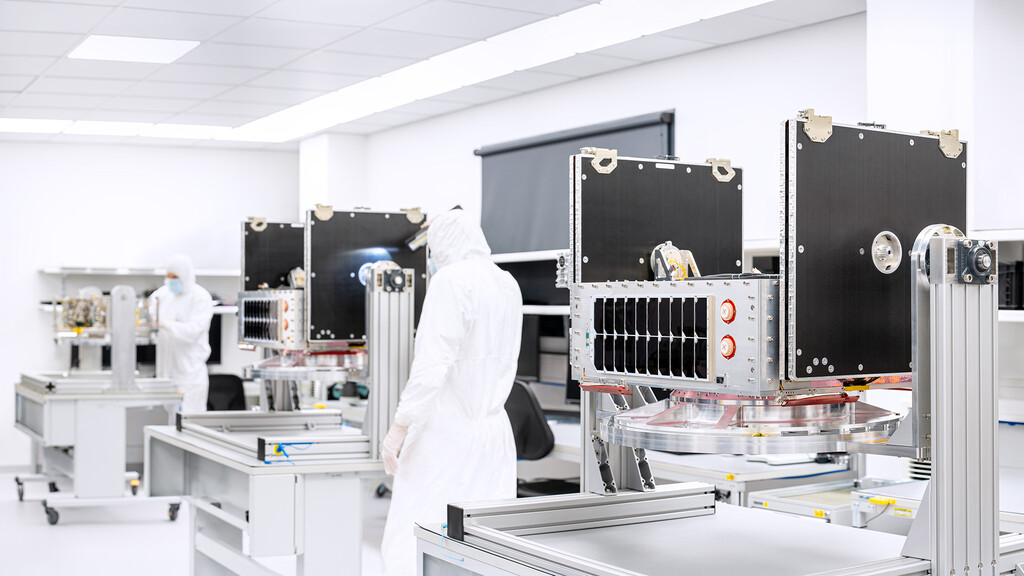
Traditional propulsion systems struggle to maintain VLEO economically. Kreios Space's air-breathing electric propulsion technology addresses this by using the thin atmosphere as propellant, potentially extending mission lifetimes and reducing costs.
Kreios Space Partners with Kongsberg NanoAvionics
To bring its vision to reality, Kreios Space has selected Kongsberg NanoAvionics, a leading European manufacturer of satellite platforms, for the first in-orbit demonstration of its propulsion technology. The mission will utilize NanoAvionics' MP42 microsatellite bus, which weighs approximately 200 kilograms in its final configuration including the payload.
This initial mission will validate the performance of Kreios' thruster at altitudes between 150 and 300 kilometers. Additionally, the satellite will conduct environmental measurements and capture images in the visible and near-infrared spectral ranges. NanoAvionics will provide the satellite platform and integration services, ensuring a robust and reliable bus for the demonstration.
How Air-Breathing Electric Propulsion Works
Air-breathing electric propulsion (ABEP) systems collect residual atmospheric particles at VLEO altitudes and use them as propellant. This eliminates the need for onboard propellant tanks, reducing mass and extending operational life. The technology is particularly suited for long-duration missions in very low orbit. Context on how this played out before sits in Spanish Startup Kreios Space Nears VLEO Satellite Breakthrough. A companion piece, GPS Fails Indoors: Pulsar Satellite Offers a Solution, approaches the same subject from another angle.
Kreios Space's system is designed to operate efficiently in the rarefied atmosphere, where conventional chemical or electric propulsion would be less effective. By leveraging the environment itself, the satellite can maintain its orbit with minimal resource consumption. The background to this story is set out in Spain's First Electric Propulsion Satellite Reaches Orbit. A related thread runs through Science: latest articles.
Key Advantages of Kreios Space's Approach
- Extended mission duration: Air-breathing propulsion reduces the need for propellant resupply, enabling longer operations.
- Cost efficiency: Lower launch mass and reduced fuel requirements translate to significant cost savings.
- Improved performance: VLEO enables higher-resolution imaging and more precise data collection.
- Sustainability: Using atmospheric particles as propellant minimizes space debris and environmental impact.
- Versatility: The technology can be adapted for various satellite sizes and mission profiles.
Comparison of Satellite Orbits
| Orbit Type | Altitude Range | Advantages | Challenges |
|---|---|---|---|
| LEO (Low Earth Orbit) | 300-1,000 km | Good imaging, moderate drag | Requires propulsion for station-keeping |
| VLEO (Very Low Earth Orbit) | 150-300 km | High-resolution imaging, precise measurements | High drag, needs frequent orbit adjustments |
| MEO (Medium Earth Orbit) | 1,000-20,000 km | Wide coverage, stable orbit | Higher latency, lower resolution |
| GEO (Geostationary Orbit) | 35,786 km | Constant view of same area | High latency, expensive launches |
What This Means for the Future of Space Technology
Kreios Space's upcoming demonstration could pave the way for a new era of satellite operations. If successful, air-breathing electric propulsion could become a standard for VLEO missions, enabling more capable and sustainable satellites. This technology aligns with the growing demand for Earth observation, telecommunications, and scientific research from low orbit. Earlier coverage in Vantablack 310: The Blackest Black to Fix Satellite Light Pollution shows how the argument developed. A closer look at the same subject appears in Satellite Bodyguards: New Defense Against Orbital Threats.
The partnership with Kongsberg NanoAvionics highlights the collaborative effort needed to advance space innovation. As the mission progresses, the industry will closely watch whether Kreios Space can deliver on its promise to make VLEO accessible and affordable. Anyone following the wider picture can start with Satellite Life Extension: How a 2009 Spacecraft Got a Mechanic in Orbit. The same theme surfaces in Space Mirrors for Night Lighting: Reflect Orbital's Plan Draws, which takes a different angle.
FAQ
What is very low Earth orbit (VLEO)?
VLEO refers to altitudes between 150 and 300 kilometers above Earth's surface. Satellites in this orbit benefit from closer proximity for higher-resolution imaging and lower communication latency, but face significant atmospheric drag.
How does air-breathing electric propulsion work?
Air-breathing electric propulsion collects residual atmospheric particles at VLEO altitudes and uses them as propellant. This eliminates the need for onboard propellant tanks, reducing mass and extending mission life.
Why is maintaining VLEO so challenging?
At VLEO altitudes, atmospheric drag is substantial, requiring frequent orbit adjustments. Traditional propulsion systems consume large amounts of propellant, making long-term operations costly and limiting mission duration.
What is the significance of Kreios Space's mission?
Kreios Space's mission will be the first in-orbit demonstration of air-breathing electric propulsion for VLEO. If successful, it could enable more affordable and sustainable satellite operations, opening new possibilities for Earth observation and communications.
Browse the Shop
 Acacia frida deluxe solid wood bed frame |
Bedroom bench |
Bed chest drawers |
Lingerie dresser |
Frame base |
Mirror with jewelry storage |
30 Bathroom Vanity |
Memory foam queen mattress |
Mattresses for back pain |
Nightstand set of 2 |
Grand Goldman Shop |
Civil Lawyer
Deutschland Trikot WM 2026







