

The future of AI is being decided in courtrooms across the world, with more than 100 lawsuits filed against major tech companies over the use of copyrighted material to train artificial intelligence models. These legal battles could fundamentally change how AI is built and who profits from it.
For ChatGPT, Gemini, or Meta AI to answer the vast number of questions users ask daily, the companies behind them made a decision years ago: acquire data at all costs and from any source. Books, news articles, song lyrics, illustrations, source code—the premise was clear: it was better to ask for forgiveness than permission.
Find Original Home Decor sparking conversation at Grand Goldman Shop.

Today, courtrooms are crowded with lawsuits, billions of dollars are at stake, and the business model of AI is on trial. For years, piracy was the domain of individuals downloading movies. Now, the world's largest companies have done something similar, but on a massive scale and with technology that structurally violates copyright. What judges decide will shape how artificial intelligence is built from now on.
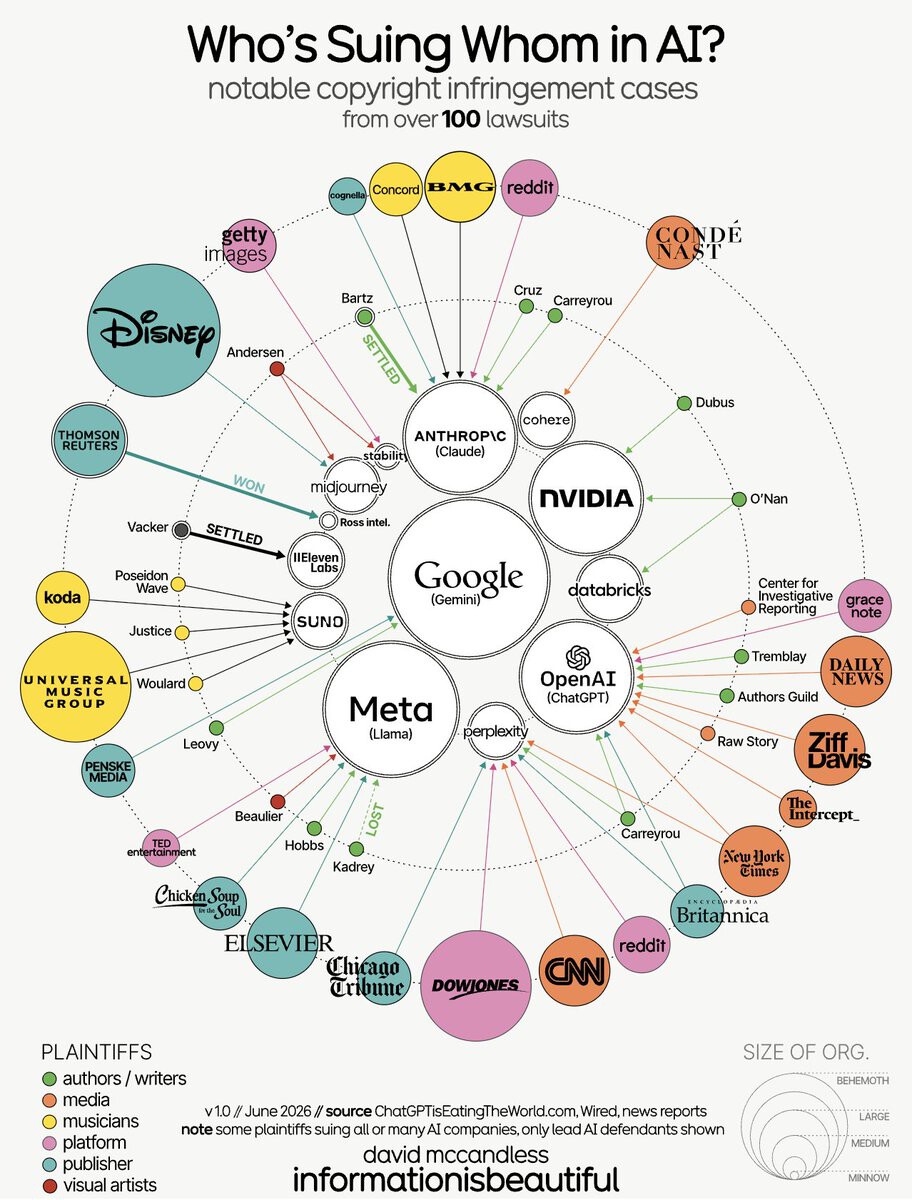
The Data Gold Rush: How AI Companies Built Their Models
Just as you prepare better for an exam by not only reading the class textbook but also going to the library and reading recommended books to broaden your knowledge, the research teams behind large AI models realized that enormous datasets from varied sources produced better results.
The problem is that this tremendous volume of data doesn't fall from the sky: they took it from the web, digital libraries, and repositories like LibGen or Z-Library. The usual defense of companies is that this constitutes fair use, but that argument is being tested in courts worldwide.
Why These Lawsuits Matter to Everyone
These lawsuits are not just a legal dispute between tech giants and content creators. They affect anyone who uses AI tools, creates content, or invests in technology. The outcomes will determine the cost and availability of AI services, the quality of AI outputs, and the rights of creators.
If courts rule that using copyrighted material without permission is illegal, AI companies could face massive fines and be forced to rebuild their models using licensed data. That could slow innovation and increase costs, but it could also lead to a more equitable system where creators are compensated.
Key Takeaways from the AI Copyright Battles
- Over 100 lawsuits have been filed against major AI companies for copyright infringement.
- Billions of dollars are at stake, with potential damages and licensing fees that could reshape the industry.
- Fair use defense is the main legal argument used by tech companies, but its success is uncertain.
- Training data often comes from pirated sources like LibGen and Z-Library, raising additional legal issues.
- The outcome will affect the cost, quality, and availability of AI tools for everyone.
How the Lawsuits Compare: Key Cases and Claims
| Case | Plaintiff | Defendant | Key Claim |
|---|---|---|---|
| Authors Guild v. OpenAI | Authors Guild | OpenAI | Unauthorized use of books to train ChatGPT |
| Getty Images v. Stability AI | Getty Images | Stability AI | Copyright infringement in image generation |
| Andersen v. Stability AI | Visual artists | Stability AI, Midjourney, DeviantArt | Use of artists' work without permission |
| NYT v. Microsoft and OpenAI | The New York Times | Microsoft, OpenAI | Use of news articles to train AI |
These are just a few examples of the many legal battles underway. Each case could set a precedent for how AI companies can use copyrighted material in the future.
What to Watch Next in AI Copyright Litigation
The outcomes of these lawsuits will have far-reaching consequences. Companies may need to license data, which could favor large players who can afford it. Startups might struggle, leading to consolidation in the AI industry. The background to this story is set out in Meta Child Safety Lawsuits: Costs and Reform Pressures. A related thread runs through Book Publishers Sue Google Over Gemini AI Copyright Infringement. Earlier coverage in Sony and Warner Sue Anthropic Over AI Music Copyright Infringement shows how the argument developed.
Alternatively, courts might uphold fair use, allowing AI to continue training on vast datasets without permission. That would be a blow to creators but could accelerate AI development. A closer look at the same subject appears in Anthropic Faces Multibillion-Dollar Song Copyright Lawsuit. Anyone following the wider picture can start with Big Tech AI Spending: When Booming Profits Meet Soaring Costs. The same theme surfaces in Wolfoo Copyright Infringement: Peppa Pig Wins Legal Battle, which takes a different angle.
Another possibility is that new legislation will emerge to clarify the rules, balancing innovation with creators' rights. The EU's AI Act and similar efforts in the US are already addressing some of these issues. Context on how this played out before sits in OpenAI Faces 30 New Lawsuits Over Tumbler Ridge Shooting. A companion piece, Meta AI Layoff Lawsuit: Workers Claim Bias in Mass Cuts, approaches the same subject from another angle.
FAQ
What is fair use in the context of AI training?
Fair use is a legal doctrine that allows limited use of copyrighted material without permission for purposes like criticism, comment, news reporting, teaching, scholarship, or research. AI companies argue that training models is transformative and thus fair use, but courts have not yet definitively ruled on this.
How many lawsuits are currently filed against AI companies?
As of now, there are over 100 lawsuits filed against major tech companies over AI training data, with more expected as the technology becomes more widespread.
What could happen if AI companies lose these lawsuits?
If AI companies lose, they could face billions in damages, be forced to delete models trained on infringing data, and have to renegotiate licenses with content creators. This could increase costs and slow down AI development.
How can I protect my content from being used to train AI?
You can use robots.txt files, copyright notices, and legal means to assert your rights. Some platforms offer opt-out options for AI training. However, enforcement is challenging, and the law is still evolving.
Browse the Shop
 Acacia frida deluxe solid wood bed frame |
Bedroom bench |
Bed chest drawers |
Lingerie dresser |
Frame base |
Mirror with jewelry storage |
30 Bathroom Vanity |
Memory foam queen mattress |
Mattresses for back pain |
Nightstand set of 2 |
Grand Goldman Shop |
Civil Lawyer
Deutschland Trikot WM 2026







