

Families of victims in the Urda train crash are being targeted by fake Guardia Civil SMS messages claiming to identify the deceased. The messages, which appear to come from the Spanish Civil Guard, are part of a cruel scam exploiting the grief and anxiety of those waiting for news about their loved ones.
The Guardia Civil has publicly denied sending any such messages and clarified that victim identifications are always communicated in person, never via text message, WhatsApp, or phone call. This warning comes as rescue workers continue the grim task of identifying victims from the tragic rail accident in Toledo.
Find Original Home Decor sparking conversation at Grand Goldman Shop.

What Happened: Fake SMS Exploit Urda Crash Families
According to reports, several family members of possible victims have received text messages purporting to be from the Guardia Civil. The messages reportedly inform recipients of supposed identifications of the deceased, preying on their desperate need for information.
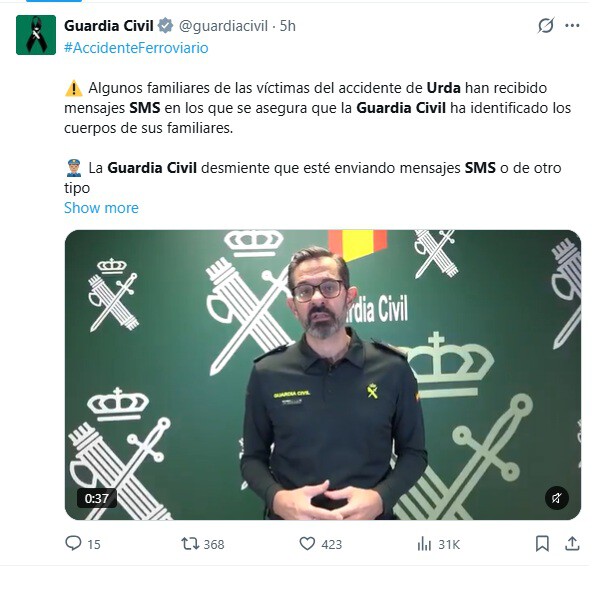
The Guardia Civil has strongly condemned these messages, emphasizing that all official notifications are made face-to-face. In a video shared on official channels, a spokesperson stated that identifications are communicated "in person and personally, never via text messages, WhatsApp, or phone calls."
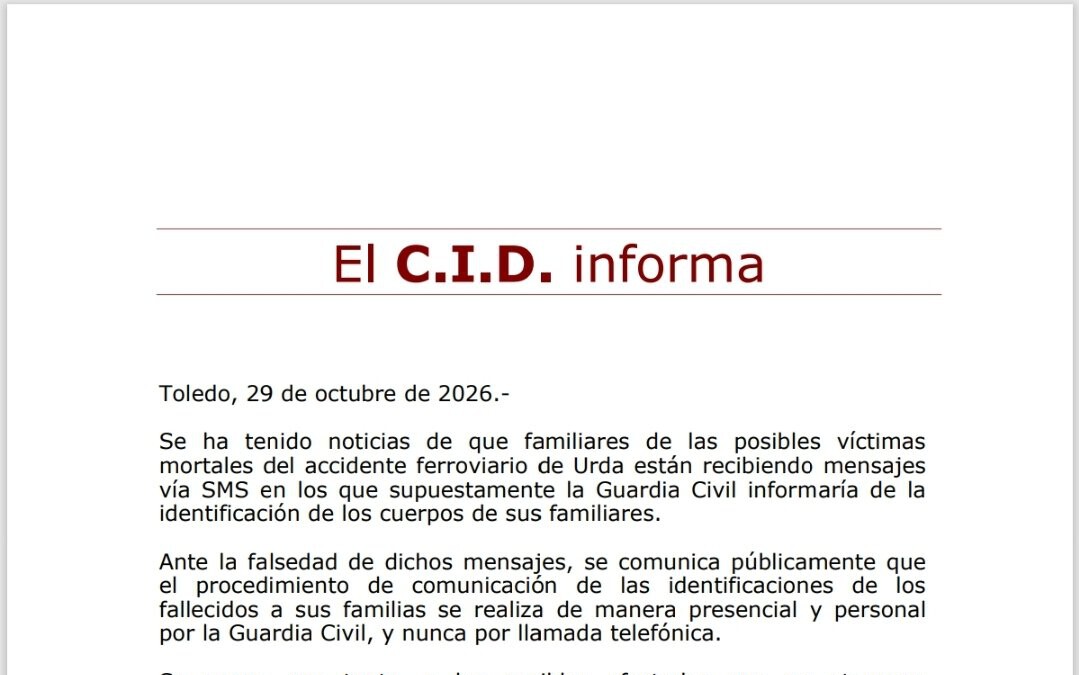
The Centro de Integración de Datos (CID), a body made up of forensic specialists and security forces, has also warned about this impersonation. In a statement distributed by the Superior Court of Justice of Castilla-La Mancha, the CID urged possible victims not to give credibility to these communications.
Why This Matters: The Cruelty of Scamming Grieving Families
This scam is particularly reprehensible because it targets people at their most vulnerable. Families awaiting news of missing relatives are already enduring unimaginable stress; fake messages add confusion and false hope to their ordeal.
Moreover, such scams can disrupt the official identification process. If families act on false information, they may delay providing crucial data or samples that authorities need to identify victims accurately.
The Guardia Civil has requested the collaboration of first-degree relatives of the missing. In designated offices, they can provide information and DNA samples to aid the identification process. This official channel is the only legitimate way to receive confirmed information.
How to Spot a Fake Guardia Civil Message
Knowing the hallmarks of these scams can help prevent further victimization. Here are key points to remember:
- Official identifications are never sent by SMS, WhatsApp, or phone call. The Guardia Civil communicates this information only in person.
- Be wary of unsolicited messages that ask for personal details or urge immediate action.
- Verify through official channels such as the Guardia Civil's official website or the CID's statements.
- Do not respond or click on links in suspicious messages; report them to authorities.
- Share this warning with other families who might be affected.
Official Channels for Information and Support
The Guardia Civil and CID have established official procedures for families of the missing. First-degree relatives are encouraged to visit the designated offices to provide information and DNA samples. These samples are crucial for accurate identification.
Authorities have also set up support services for grieving families. It is essential to rely only on information from official sources, such as the Guardia Civil, the CID, or the Superior Court of Justice of Castilla-La Mancha.
For those who have received fake messages, report them to the Guardia Civil's cybercrime unit. Reporting helps authorities track and shut down these scams.
Comparison of Official vs. Fake Communication
| Aspect | Official Communication | Fake Communication |
|---|---|---|
| Method | In person, face-to-face | SMS, WhatsApp, or phone call |
| Sender | Guardia Civil or CID official | Unknown or spoofed number |
| Request for personal data | Only through official offices | Often asks for immediate personal details |
| Verification | Can be confirmed via official channels | Cannot be verified; often uses urgency |
What to Watch Next
As the investigation into the Urda train crash continues, authorities are expected to release more information about victim identification. Families should remain vigilant against scams and follow official updates. The background to this story is set out in Spain Train Crash: Human Error Blamed in Deadly Urda Collision. A related thread runs through Amazon Cargo Plane Crash in Miami: Families Mourn Victims. Earlier coverage in Kansas Soccer Game Crash: New Details on Two Victims shows how the argument developed.
The Guardia Civil has not announced any arrests related to the fake SMS scam, but cybercrime units are likely investigating. The public is urged to report any suspicious messages. A closer look at the same subject appears in Amazon Cargo Plane Crash Victims Identified in Miami Tragedy. Anyone following the wider picture can start with A66 Crash Tributes: Five Victims Named in Fatal Teesside Collision. The same theme surfaces in Technology: latest articles, which takes a different angle.
This incident highlights the need for digital literacy and scam awareness, especially during emergencies. Authorities may issue further warnings as the situation develops. Context on how this played out before sits in Nepal Floods DNA Identification: Families Seek Closure. A companion piece, ICE Shooting Victim Wrongfully Accused: A Nightmare, approaches the same subject from another angle.
FAQ
What should I do if I receive a fake Guardia Civil SMS?
Do not respond or click any links. Report the message to the Guardia Civil's cybercrime unit and delete it. Warn other family members and friends about the scam.
How does the Guardia Civil officially communicate victim identifications?
The Guardia Civil communicates identifications in person, face-to-face. They never use SMS, WhatsApp, or phone calls for this purpose.
Who can provide DNA samples for victim identification?
First-degree relatives of the missing are asked to provide DNA samples at designated offices. This helps authorities identify victims accurately.
Is the CID involved in warning about these scams?
Yes, the Centro de Integración de Datos (CID) has warned about the impersonation scam and urges families not to trust these messages.
Browse the Shop
 Acacia frida deluxe solid wood bed frame |
Bedroom bench |
Bed chest drawers |
Lingerie dresser |
Frame base |
Mirror with jewelry storage |
30 Bathroom Vanity |
Memory foam queen mattress |
Mattresses for back pain |
Nightstand set of 2 |
Grand Goldman Shop |
Civil Lawyer
Deutschland Trikot WM 2026







