

When choosing an air purifier for allergies, the CADR (Clean Air Delivery Rate) is the single most important specification to consider. While many purifiers boast about capturing 99.97% of particles, that number is standard across most HEPA filters and doesn't tell you how effective the device will be in your home. CADR measures the volume of clean air the purifier delivers per minute, giving you a realistic idea of its performance.
Spring brings pollen and other allergens that can make life miserable. A good air purifier can be a game-changer, but with so many models on the market, it's easy to get lost in a sea of numbers. In this article, we'll explain why CADR should be your primary focus and how to use it to select the right purifier for your needs.
Find Original Home Decor sparking conversation at Grand Goldman Shop.

What is CADR and Why Does It Matter?
CADR, or Clean Air Delivery Rate, is a metric developed by the Association of Home Appliance Manufacturers (AHAM) to measure the effectiveness of air purifiers. It indicates the volume of filtered air delivered by an air purifier, typically measured in cubic feet per minute (CFM) or cubic meters per hour (m³/h). The higher the CADR, the faster the purifier can clean the air in a given room.
CADR is important because it accounts for both the filter's efficiency and the device's airflow. A purifier with a high-efficiency filter but low airflow will have a lower CADR and won't clean the air as quickly. Conversely, a purifier with high airflow but a mediocre filter may also have a lower CADR. Therefore, CADR provides a standardized way to compare different models' overall performance.
Why Other Specs Can Be Misleading
Many air purifier manufacturers highlight features like "99.97% particle removal" or "HEPA filter" as key selling points. While these are important, they are not unique to high-performing purifiers. Most true HEPA filters capture at least 99.97% of particles down to 0.3 microns, so this claim is almost universal.
What sets purifiers apart is how much air they can push through that filter and how quickly they can cycle the air in a room. That's where CADR comes in. Without a high CADR, a purifier may struggle to effectively clean a larger room, even if its filter is top-notch.
How to Use CADR to Choose the Right Purifier
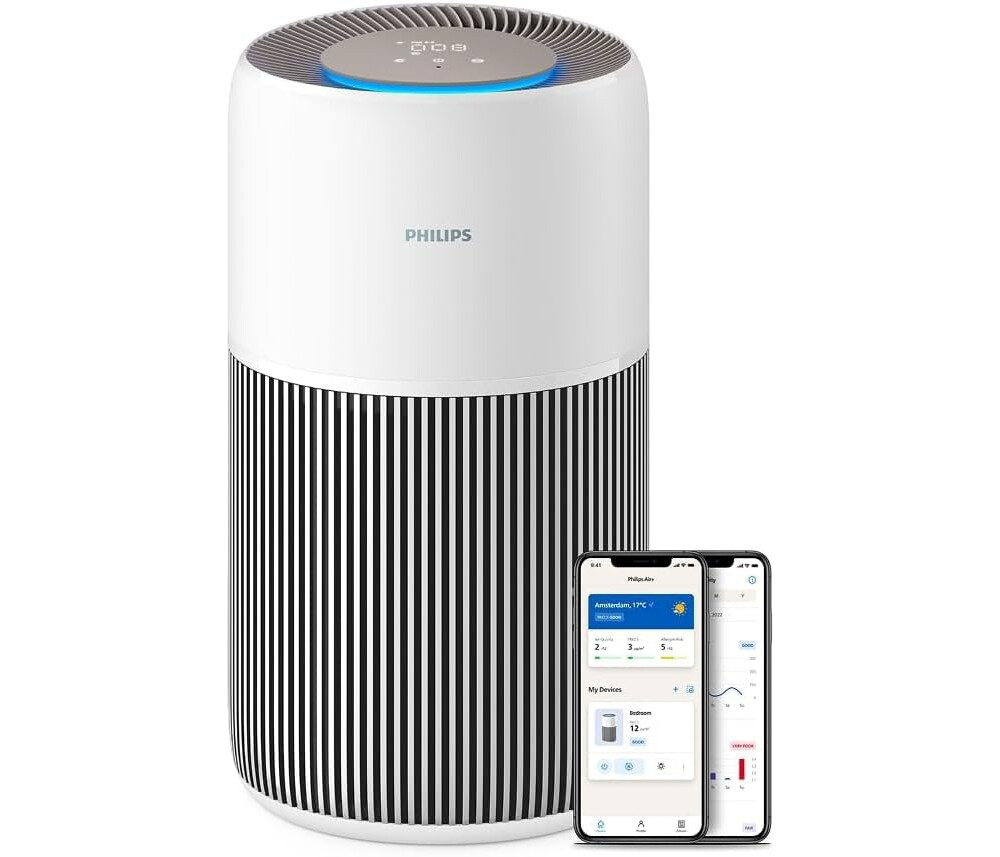
To select the right air purifier, you need to match its CADR to the size of the room you want to clean. As a rule of thumb, the CADR should be at least two-thirds of the room's area in square feet (or roughly equal to the room's area in square meters). For example, a purifier with a CADR of 400 m³/h is suitable for rooms up to about 104 m², as seen with the Philips Series 2200.
It's also important to consider the type of pollutants you want to remove. CADR is often reported for three common pollutants: smoke, dust, and pollen. For allergy sufferers, the pollen CADR is particularly relevant. Look for a model with a high pollen CADR to ensure effective removal of allergens.
- CADR measures the volume of clean air delivered per minute, indicating how quickly a purifier can clean a room.
- Higher CADR means faster air cleaning, which is crucial for allergy relief.
- Match CADR to room size: CADR (m³/h) should be roughly equal to room area (m²).
- Check CADR for specific pollutants like pollen, dust, and smoke.
- Don't be swayed by generic "99.97% removal" claims; focus on CADR for real-world performance.
Comparing CADR Across Different Purifiers
When shopping, you'll find CADR ratings vary widely. Below is a comparison of typical CADR values and their recommended room sizes to help you gauge what you need.
| CADR (m³/h) | Recommended Room Size (m²) | Typical Use Case |
|---|---|---|
| 200 | 50 | Small bedroom or office |
| 300 | 75 | Medium bedroom or living room |
| 400 | 100 | Large living room or open space |
| 500+ | 125+ | Open-plan areas or large rooms |
Keep in mind that these are general guidelines. Factors like ceiling height, furniture, and air circulation can affect performance. It's better to choose a purifier with a slightly higher CADR than you think you need, as it can run on lower speeds and be quieter. The background to this story is set out in Air Purifiers for Wildfire Smoke: Do They Really Work?. A related thread runs through Best Air Purifiers 2025: Top 3 to Detox Your Home Air. Earlier coverage in Best Air Purifiers for US Homes: Top 3 to Detox Your Indoor Air shows how the argument developed.
Other Factors to Consider
While CADR is crucial, don't ignore other features that impact usability. Noise level is important, especially if you plan to use the purifier in a bedroom. Look for a model with a sleep mode or low decibel rating. Filter replacement costs and availability should also be considered, as HEPA filters need regular replacement. A closer look at the same subject appears in HEPA vs. HEPA-Type Filters: What Air Purifier Buyers Must Know. Anyone following the wider picture can start with What Does an Air Purifier Do for Wildfire Smoke?. The same theme surfaces in Lefant A1 Pro Air Purifier for Pet Homes: Now in Spain with Big Discount, which takes a different angle.
Energy efficiency is another factor; an Energy Star certified purifier will save on electricity bills. Smart features like air quality sensors and auto mode can be convenient, but they are secondary to CADR. Context on how this played out before sits in KNKA APH4000 Air Purifier for Allergies Review. A companion piece, TruSens Air Purifiers: Breathe Clean, Live Healthy, approaches the same subject from another angle.
FAQ
What is a good CADR for an air purifier?
A good CADR depends on your room size. For a typical bedroom of 100 square feet, a CADR of 65 CFM (or about 110 m³/h) is sufficient. For larger rooms, aim for a CADR that is at least two-thirds of the room's area in square feet. Higher CADR is generally better for allergy relief.
Is CADR more important than HEPA?
Both are important, but CADR gives you a more complete picture. A HEPA filter is essential for capturing fine particles, but without a high CADR, the purifier may not process enough air to be effective. CADR incorporates filter efficiency and airflow, so it's a better overall performance metric.
Does a higher CADR mean a louder purifier?
Not necessarily. CADR is measured at the purifier's highest fan speed, which is typically the loudest. However, many purifiers have lower speed settings that are quieter and still provide adequate CADR for smaller rooms or background cleaning. Look for models with a sleep mode or noise ratings below 30 dB for quiet operation.
How often should I replace the filter?
Most manufacturers recommend replacing HEPA filters every 6 to 12 months, depending on usage and air quality. Some purifiers have filter replacement indicators. Using a dirty filter can reduce CADR and put extra strain on the fan, so follow the manufacturer's guidelines.
Browse the Shop
 Acacia frida deluxe solid wood bed frame |
Bedroom bench |
Bed chest drawers |
Lingerie dresser |
Frame base |
Mirror with jewelry storage |
30 Bathroom Vanity |
Memory foam queen mattress |
Mattresses for back pain |
Nightstand set of 2 |
Grand Goldman Shop |
Civil Lawyer
Deutschland Trikot WM 2026







