

Ceuta was Portuguese for 165 years before it became part of Spain, and the story of how that happened is a fascinating tale of loyalty, politics, and a decision that still resonates today. In 1415, Portugal captured Ceuta from the Marinid Sultanate of Fez, and for over a century and a half, the city was a Portuguese stronghold. But in 1640, when Portugal rebelled against Spanish rule, Ceuta chose to remain loyal to Spain. This decision, often romanticized as a "free and democratic plebiscite," lacks documentary evidence but had profound consequences.
The Portuguese Conquest of Ceuta
On August 21, 1415, a Portuguese expedition led by King John I captured Ceuta. The city was a strategic port and a center of corsair activity. Among the expedition was a teenage prince named Henry, who would later be known as "Henry the Navigator." The conquest marked the beginning of Portuguese expansion into Africa and the Atlantic.
Find Original Home Decor sparking conversation at Grand Goldman Shop.

For 165 years, Ceuta remained Portuguese, despite being surrounded by hostile Muslim territories. It was a constant site of conflict, and its defense was crucial to Portuguese prestige. The city's governor, Pedro de Meneses, famously declared, "With this staff I am enough to defend Ceuta from all its enemies," when asked about his troops. This period shaped Ceuta's identity as a military outpost and a symbol of Portuguese power.
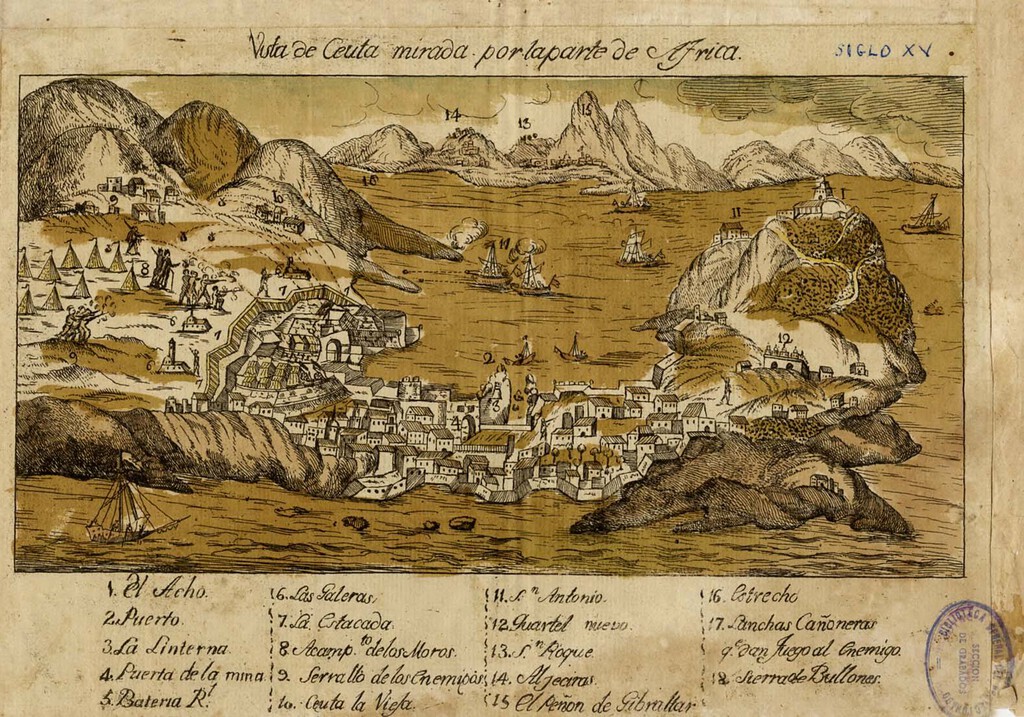
The Iberian Union: A Twist of Fate
In 1580, King Sebastian of Portugal died without an heir at the Battle of Alcácer Quibir (also known as the Battle of the Three Kings). This led to a succession crisis, and Philip II of Spain, who had a claim to the Portuguese throne, took advantage. The Iberian Union was formed, uniting the crowns of Spain and Portugal under a single monarch. Ceuta, on paper, remained Portuguese, but in practice, it was part of a larger Spanish-dominated empire.
During this period, Ceuta continued to be a military outpost, but its administration was increasingly influenced by Spain. The union lasted until 1640, when Portugal rebelled and declared independence under the Duke of Braganza, who became King John IV.
1640: Ceuta Chooses Spain
When Portugal declared independence in December 1640, most Portuguese territories sided with the new king. Ceuta, however, did not. The city's governor at the time, Francisco de Almeida, was sympathetic to Braganza, and the garrison was Portuguese. Yet the local nobility and clergy swore loyalty to Philip IV of Spain. The popular narrative speaks of a "free and democratic plebiscite," but no document records such a vote. Instead, it appears that the elite decided to remain with Spain, likely due to economic and political ties.
This decision was not without controversy. Some historians argue that the people of Ceuta were pressured or manipulated, while others maintain that the city genuinely preferred Spanish rule. Either way, Ceuta became part of Spain, and it has remained so ever since. Context on how this played out before sits in US Expands Nuclear-Capable B-52 Base in Spain: What It Means.
Why Did Ceuta Choose Spain?
Several factors likely influenced Ceuta's decision. First, the city's economy was closely tied to Spain, and breaking away could have disrupted trade. Second, the local nobility may have feared that Portuguese independence would lead to instability. Third, the Spanish crown had invested in Ceuta's defenses, and the city's elite may have felt a sense of loyalty to Spain. Finally, the Portuguese garrison was small, and without support from the local population, resistance would have been futile. The background to this story is set out in Rui Pinto: Football Leaks Whistleblower Abandoned by Portugal. A related thread runs through Spain and Portugal Olive Mills Face 27% Closure Crisis.
- Economic ties: Ceuta's trade was deeply connected to Spain, making independence risky.
- Political stability: The local elite feared the uncertainty of Portuguese independence.
- Military investment: Spain had fortified Ceuta, creating a sense of allegiance.
- Lack of popular support: Without the backing of the people, the Portuguese garrison could not hold the city.
- Historical loyalty: Some residents had lived under Spanish rule for decades and felt more Spanish than Portuguese.
The Aftermath and Modern Implications
After 1640, Ceuta became a permanent part of Spain. Portugal never formally recognized Spanish sovereignty over Ceuta, but the issue faded over time. Today, Ceuta is an autonomous city of Spain, and its Portuguese heritage is still visible in its architecture and culture. The city's status is occasionally debated, especially in the context of Spain's territorial disputes with Morocco, which claims Ceuta and Melilla. Earlier coverage in Trending: latest articles shows how the argument developed. A closer look at the same subject appears in Spain Housing Prices Hit Record High Despite Falling Sales.
The story of Ceuta's choice in 1640 is a reminder of how local decisions can have lasting geopolitical consequences. It also highlights the complexity of national identity and loyalty, which are often shaped by practical considerations rather than abstract ideals. Anyone following the wider picture can start with Jet Ski Debate Intensifies in Spain's Mar Menor Lagoon. The same theme surfaces in Madrid Tourism Backlash: Does 'Madrileñofobia' Really Exist in Spain, which takes a different angle.
| Year | Event | Ruler |
|---|---|---|
| 1415 | Portugal captures Ceuta | King John I of Portugal |
| 1580 | Iberian Union begins | Philip II of Spain |
| 1640 | Portugal declares independence; Ceuta remains with Spain | John IV of Portugal / Philip IV of Spain |
| Present | Ceuta is an autonomous city of Spain | Spanish government |
FAQ
Why did Ceuta become part of Spain?
Ceuta became part of Spain in 1640 when, during Portugal's war of independence, the city's nobility and clergy chose to remain loyal to Philip IV of Spain. This decision was likely influenced by economic ties, political stability, and military investment. There is no evidence of a formal plebiscite, but the local elite's choice determined the city's future.
Was Ceuta ever Portuguese?
Yes, Ceuta was Portuguese from 1415 to 1640. Portugal captured the city from the Marinid Sultanate and held it for 165 years. During the Iberian Union (1580–1640), Ceuta was nominally Portuguese but under Spanish rule. In 1640, it chose to stay with Spain.
Does Portugal still claim Ceuta?
Portugal has never formally recognized Spanish sovereignty over Ceuta, but it has not actively claimed the city since the 17th century. The issue is largely historical and does not affect modern diplomatic relations. Today, Ceuta is an autonomous city of Spain.
What is the significance of Ceuta today?
Ceuta is strategically located on the North African coast and serves as a gateway between Europe and Africa. It is an autonomous city of Spain and has a unique culture blending Spanish, Portuguese, and Moroccan influences. Its status is occasionally debated, especially in the context of Morocco's claims to the city.
Browse the Shop
 Acacia frida deluxe solid wood bed frame |
Bedroom bench |
Bed chest drawers |
Lingerie dresser |
Frame base |
Mirror with jewelry storage |
30 Bathroom Vanity |
Memory foam queen mattress |
Mattresses for back pain |
Nightstand set of 2 |
Grand Goldman Shop |
Civil Lawyer
Deutschland Trikot WM 2026







