

The doomsday prediction for November 13, 2026, has arrived—and the world is still here. In 1960, three scientists published a paper in Science titled "Doomsday: Friday, 13 November, A.D. 2026," calculating that humanity would vanish on this exact date. Their forecast wasn't based on asteroids or nuclear war, but on a mathematical model showing that population growth would spiral to infinity.
That day is today, and obviously, we're still standing. So what went wrong with their calculation? And why did a prestigious journal publish such a bold claim? Let's unpack the story.
Find Original Home Decor sparking conversation at Grand Goldman Shop.

The Doomsday Equation That Shocked the World
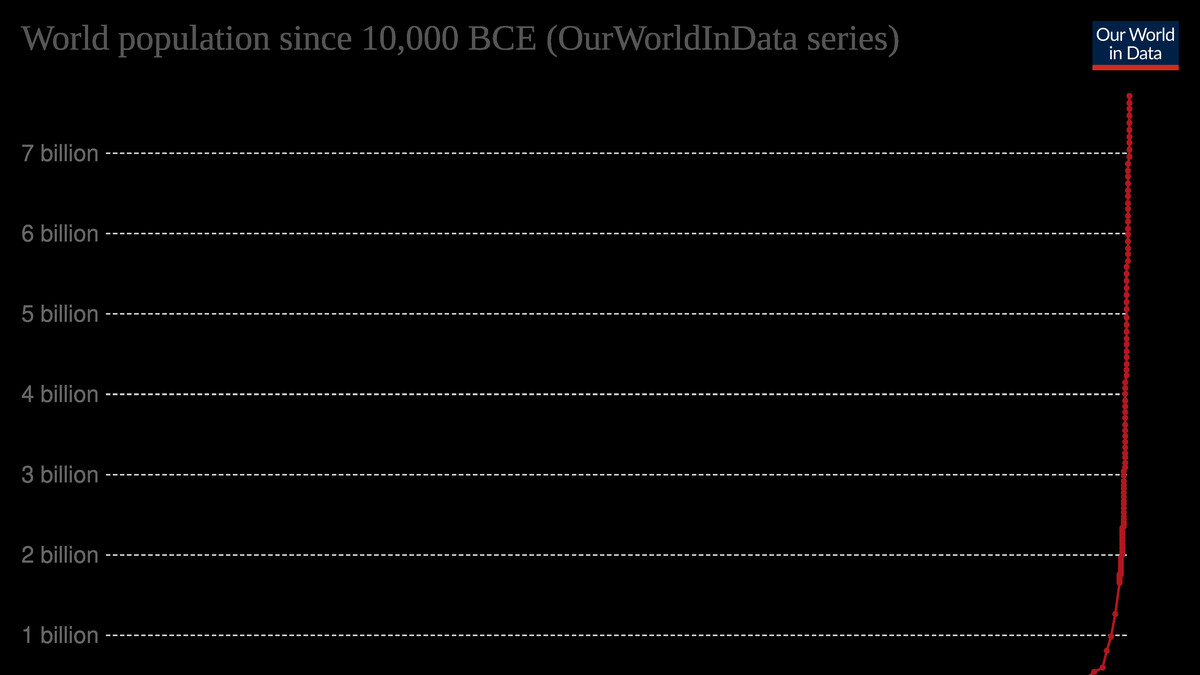
At the height of the Cold War, Austrian physicist Heinz von Foerster and his students Patricia Mora and Lawrence Amiot at the University of Illinois analyzed 24 estimates of world population. They found that from the year 1 to 1960, population didn't grow exponentially—it grew even faster, following a hyperbolic curve that approaches infinity at a finite time.
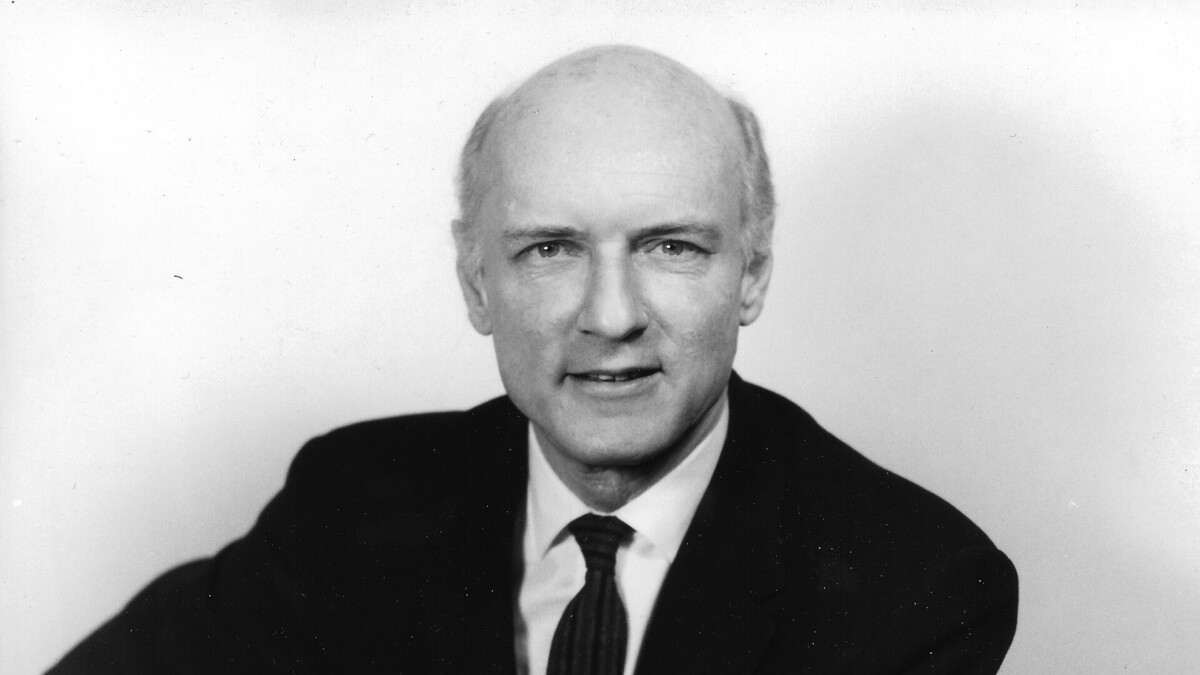
Their equation predicted that on Friday, November 13, 2026, the global population would become infinite. In practical terms, that meant doomsday: a catastrophic collapse as resources ran out and society crumbled. The paper was published in Science, one of the most prestigious journals, lending it an air of authority.
Why the Math Seemed Convincing
For decades, the prediction appeared eerily accurate. The hyperbolic model fit historical population data remarkably well, from ancient times through the Industrial Revolution. Von Foerster even joked that humanity's only hope was to "colonize other planets" or embrace nuclear war to reduce numbers.
But there was a critical flaw: the model assumed that population growth would continue unchecked, ignoring the demographic transition. As countries develop, birth rates tend to fall, and population growth slows. That's exactly what happened.
What the Scientists Got Wrong
The doomsday prediction overlooked key factors that changed the trajectory of human population. Here are the main reasons their forecast failed:
- Demographic transition: As societies become more affluent and educated, family sizes shrink, slowing population growth.
- Agricultural and technological advances: The Green Revolution and other innovations dramatically increased food production, supporting more people.
- Globalization and trade: Resources are distributed more efficiently across borders, reducing the risk of sudden collapse.
- Family planning and healthcare: Access to contraception and improved healthcare lowered birth rates and mortality.
- Mathematical oversimplification: The hyperbolic model extrapolated past trends without considering feedback loops that stabilize populations.
How Population Growth Actually Evolved
Since 1960, the world population has more than doubled, from about 3 billion to over 8 billion. But the growth rate has slowed significantly. According to the UN, the global population is expected to peak around 10.4 billion in the 2080s and then gradually decline.
This pattern contradicts the hyperbolic model, which predicted infinite growth. Instead, we've seen a logistic growth curve—an S-shape that levels off as societies develop. The doomsday date came and went, but the underlying concerns about overpopulation and resource scarcity remain relevant.
Lessons for Predicting the Future
The 1960 doomsday prediction is a cautionary tale about the limits of mathematical modeling. Extrapolating trends without accounting for human adaptability and social change can lead to spectacularly wrong conclusions. Yet, it also highlights the value of long-term thinking. The longer history behind the story is traced in Doomsday Prediction 2026: Why the World Didn't End Today.
Today, we face different challenges: climate change, resource depletion, and inequality. While the specific doomsday date was wrong, the broader warning about unsustainable growth resonates. The key is to use models as tools for exploration, not as crystal balls. The background to this story is set out in AI Doomsday Warning: Why This Resignation Went Viral. A related thread runs through AI Doomsday Predictions: Two Decades of Apocalypse Warnings. Earlier coverage in AI Doomsday Questions Answered: Real Risks and What You shows how the argument developed.
What Today Means for Doomsday Predictions
As November 13, 2026, unfolds, it's a reminder that predictions of the end are often premature. From religious prophecies to scientific forecasts, humanity has a long history of surviving supposed apocalypses. That doesn't mean we should ignore risks—but we should approach them with humility and adaptability. A closer look at the same subject appears in Satellites and Nuclear Weapons: The Doomsday System in Our Skies. Anyone following the wider picture can start with Trending: latest articles. The same theme surfaces in World Map Reveals Two Types of Countries: Demographic Growth vs Decline, which takes a different angle.
The doomsday equation may have been mathematically elegant, but it underestimated human ingenuity. As we look to the future, the challenge is to balance growth with sustainability, ensuring that we don't test the limits of our planet. Context on how this played out before sits in TecnoFest 2026: Madrid's Ultimate Gaming and Tech Experience. A companion piece, Best Tablets 2026: Top 7 Models to Buy and Key Buying Guide, approaches the same subject from another angle.
FAQ
What was the 1960 doomsday prediction?
In 1960, Heinz von Foerster and his students published a paper in Science predicting that the world population would reach infinity on Friday, November 13, 2026, leading to doomsday. The prediction was based on a hyperbolic growth model.
Why did the doomsday prediction fail?
The prediction failed because it didn't account for the demographic transition—the tendency of birth rates to decline as societies develop. It also underestimated technological advances in agriculture and resource management.
Who was Heinz von Foerster?
Heinz von Foerster was an Austrian-American physicist and philosopher, a pioneer of cybernetics. He worked at the University of Illinois and co-authored the 1960 doomsday paper with Patricia Mora and Lawrence Amiot.
What can we learn from the doomsday prediction?
The prediction teaches us to be cautious about extrapolating trends without considering human adaptability and social change. It also underscores the importance of using models as exploratory tools rather than definitive forecasts.
Browse the Shop
 Acacia frida deluxe solid wood bed frame |
Bedroom bench |
Bed chest drawers |
Lingerie dresser |
Frame base |
Mirror with jewelry storage |
30 Bathroom Vanity |
Memory foam queen mattress |
Mattresses for back pain |
Nightstand set of 2 |
Grand Goldman Shop |
Civil Lawyer
Deutschland Trikot WM 2026







