

In the aftermath of Nepal's catastrophic glacial flood, one image went viral: a green house standing untouched amid a landscape of mud and debris. The Nepal green house, home to the Pyakurel family in Dhunge Bazaar, became known as the "Miracle House" and even appeared on Google Maps as a flood-resistant attraction. But the most intriguing explanation for its survival might be hidden underground.
As reported by The New York Times, the Pyakurel family watched from their third floor and then their roof as a massive torrent of water, mud, and debris slammed into their building for over an hour. When the water finally receded, neighbors used metal pipes as a makeshift ladder to rescue them. The house, against all odds, remained standing.
Find Original, High-end Home Decor that spark conversation at Grand Goldman Shop.
What Happened in Nepal's Glacial Flood
The disaster struck after the collapse of a glacier in the Himalaya region between Nepal and Tibet. The resulting flood swept through the Nuwakot district, destroying more than 1,200 homes completely and damaging another thousand. Entire neighborhoods, roads, and even a bazaar disappeared under the force of the water.
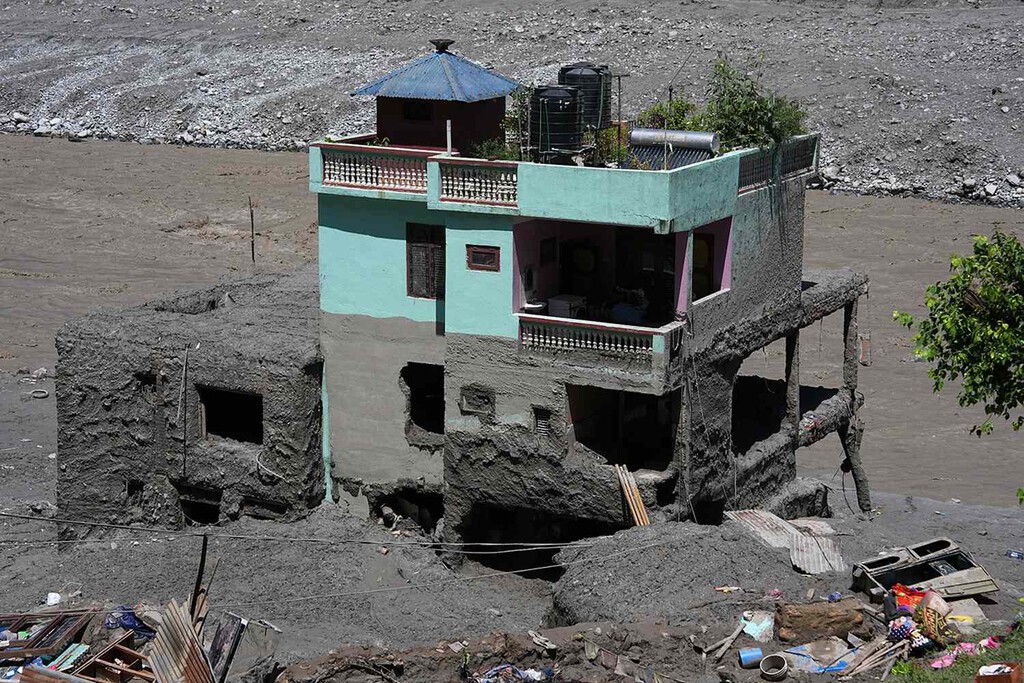
The Pyakurel family's green house stood as a lonely beacon of survival. Its survival was so extraordinary that visitors began flocking to see it, and it was soon marked on Google Maps as a "flood-resistant" attraction. But why did this one house survive when so many others were swept away?
The Underground Secret: Why the Green House Survived
While the house's sturdy construction and reinforced concrete may have played a role, experts suggest that the key to its survival lies beneath the surface. The foundation of the Pyakurel home was likely built on solid rock or compacted soil that resisted the erosive power of the floodwaters.
In contrast, many surrounding structures were built on softer ground that gave way under the immense pressure. The green house's foundation may have been deeper and more robust, anchoring it firmly while others were uprooted. This underground advantage, invisible to the eye, could be the real hero of the story.
Comparing Foundations: Why Some Houses Stand and Others Fall
The difference between survival and destruction often comes down to what you can't see. The table below contrasts the likely foundation conditions of the Miracle House with those of typical destroyed homes in the area.
| Factor | Miracle House (Green House) | Typical Destroyed Homes |
|---|---|---|
| Foundation depth | Deep, anchored to bedrock | Shallow, resting on loose soil |
| Soil type | Compacted, stable | Loose, erodible |
| Construction quality | Reinforced concrete | Often unreinforced masonry |
| Location relative to flow | Slightly elevated or shielded | Directly in flood path |
This comparison highlights that the green house's survival was not just luck but a combination of engineering and geological factors. The underground secret is a reminder that what lies beneath can be just as important as what stands above.
Who Is Affected and What It Means for Rebuilding
The flood devastated the Nuwakot district, leaving thousands homeless and destroying critical infrastructure. The Pyakurel family's story offers a glimmer of hope and a valuable lesson for future construction in flood-prone regions.
As Nepal rebuilds, experts are urging communities to learn from the Miracle House. Building codes may need to be updated to require deeper foundations and better soil analysis. The green house stands as a testament to the power of resilient design. Context on how this played out before sits in Nepal's Green Miracle House: The Secret Beneath the Soil.
- Foundation matters: Deep, bedrock-anchored foundations can withstand extreme floods.
- Soil stability: Building on compacted or rocky ground reduces erosion risk.
- Construction quality: Reinforced concrete outperforms unreinforced masonry.
- Location awareness: Slight elevation or natural shielding can divert floodwaters.
- Community education: Sharing survival stories can drive better building practices.
What to Watch Next: The Future of Flood-Resistant Housing
The Miracle House has become a symbol of resilience, but it also raises important questions. Will its fame lead to better building standards in Nepal? Could its underground secrets be replicated in other vulnerable communities? The background to this story is set out in Trending: latest articles. A related thread runs through Amazon Prefab House Deal: Expandable Home with Kitchen and Bath Under $9,000.
As climate change increases the frequency of extreme weather events, the lessons from this green house are more relevant than ever. Engineers and urban planners are already studying similar cases to develop guidelines for flood-resistant construction. The Pyakurel family's home may well become a case study in resilience engineering. Earlier coverage in Palantir Maven: Europe's Military AI and the Control Question shows how the argument developed. A closer look at the same subject appears in AirPods 4 vs AirPods 5: Which Apple Earbuds Should You Buy.
For now, the green house remains a tourist attraction, a curiosity on Google Maps, and a powerful reminder that sometimes the most important stories are buried deep underground. Anyone following the wider picture can start with Google Maps Fruit Fly Brain, Community Trains It to Play Doom. The same theme surfaces in Dario Amodei Urges AI Slowdown as Risks of Internet Control Loom, which takes a different angle.
FAQ
Why did the green house in Nepal survive the flood?
The green house likely survived due to a combination of a deep foundation anchored to bedrock or stable soil, reinforced concrete construction, and a slightly elevated or shielded location that diverted the flood's force. These underground and structural factors worked together to keep it standing.
Is the Miracle House now a tourist attraction?
Yes, the green house has become a local attraction and is even marked on Google Maps as a flood-resistant point of interest. Visitors have traveled to see the house that defied the odds, and it has gained international attention through media coverage.
How many homes were destroyed in the Nepal flood?
In the Nuwakot district alone, more than 1,200 homes were completely destroyed, and another thousand suffered partial damage. The total impact across the region was devastating, making the survival of the green house all the more remarkable.
Can the green house's survival be replicated in other flood-prone areas?
Experts believe that the principles behind the green house's survival—deep foundations, stable soil, and reinforced construction—can be applied elsewhere. However, each location requires specific geological analysis and engineering solutions tailored to local conditions.
Browse the Shop
 Acacia frida deluxe solid wood bed frame |
Bedroom bench |
Bed chest drawers |
Lingerie dresser |
Frame base |
Mirror with jewelry storage |
30 Bathroom Vanity |
Memory foam queen mattress |
Mattresses for back pain |
Nightstand set of 2 |
Grand Goldman Shop |
Civil Lawyer
Deutschland Trikot WM 2026







