

When Mount Vesuvius erupted in 79 AD, one victim in Pompeii grabbed a medical kit before fleeing—a decision that offers a rare glimpse into the priorities of people facing sudden catastrophe. The discovery comes from the Garden of the Fugitives, where archaeologists have unearthed the poignant remains of those who didn't escape.
Imagine a typical day in Pompeii. You're at home when shouts erupt in the street. You look out and see people running in panic. In the distance, ash and fiery rock rise from a volcano you thought was dormant. What would you take with you? For one resident, the answer was a medical kit—a choice that continues to intrigue researchers nearly two millennia later.
Find Original Home Decor sparking conversation at Grand Goldman Shop.

The ruins of Pompeii were first uncovered centuries ago, and archaeologists have spent decades piecing together the events of that fateful day—traditionally dated to August 24, though some evidence points to October. The eruption buried Pompeii and neighboring towns like Herculaneum, Stabiae, and Oplontis under a thick layer of ash. Despite extensive study, the site still yields surprises, and this latest find is a testament to its enduring power to inform and move us.
The Garden of the Fugitives: A Snapshot of Desperation
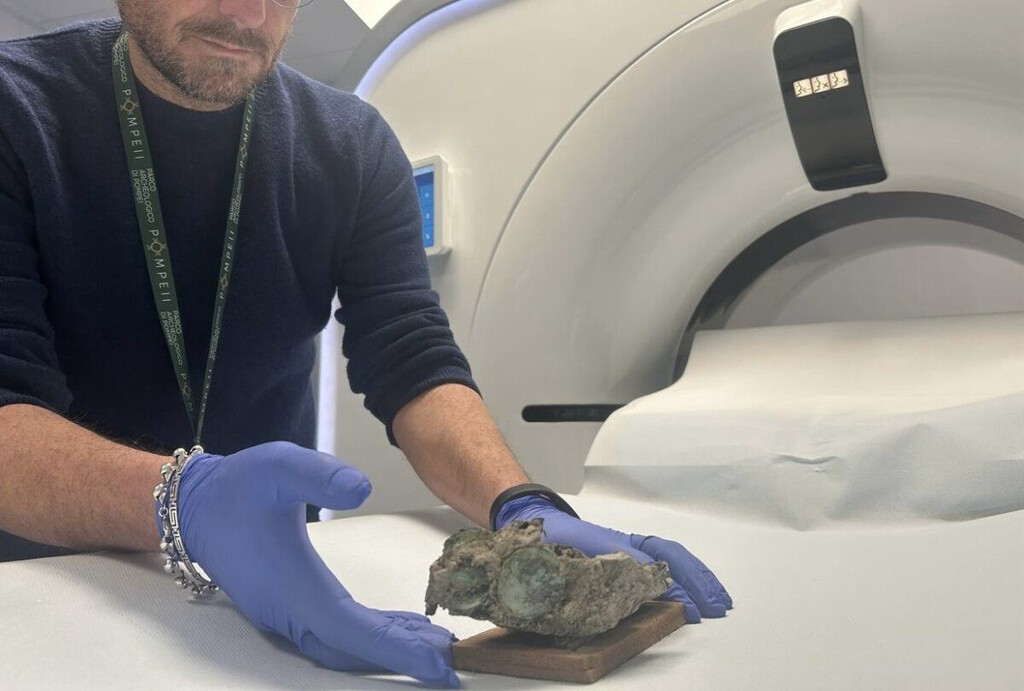
The Garden of the Fugitives (Orto dei Fuggiaschi) is a haunting corner of Pompeii where archaeologists have found the remains of 13 victims who sought shelter in a vineyard. Among them was an individual clutching a wooden box—later identified as a medical kit—containing bronze and bone instruments. This find is exceptional because it captures a moment of decision: even in the face of imminent death, this person held onto their professional tools.
The kit, known as a scalprum or medicus box, included items like scalpels, forceps, and a cupping vessel. Such kits were essential for Roman physicians, who often carried them on house calls. The victim's identity remains unknown, but the presence of the kit suggests they were a doctor or perhaps a slave trained in medicine. The fact that they grabbed it while fleeing speaks volumes about their role in society and their instinct to preserve what was most valuable to them.
This discovery adds to our understanding of daily life in Pompeii. It shows that medical practice was advanced enough to require specialized portable equipment, and that doctors were integral members of the community. It also humanizes the tragedy: amid chaos, one person's thoughts turned to their livelihood, their duty, or perhaps their hope of helping others.
What the Medical Kit Reveals About Roman Medicine
The instruments found in the kit are remarkably well-preserved, thanks to the ash that sealed them for centuries. They include bronze scalpels with iron blades, forceps, and a bronze cupping vessel used for bloodletting. These tools reflect the medical knowledge of the time, heavily influenced by Greek physicians like Galen and Hippocrates.
Roman medicine was surprisingly sophisticated. Surgeons could perform procedures like cataract removal and hernia repair, and they understood the importance of hygiene—at least to some extent. The kit's portability indicates that physicians traveled to patients' homes, a practice common among the wealthy. The presence of such a kit in Pompeii confirms that the city had a functioning medical infrastructure, likely with trained professionals serving the elite and possibly the general population.
Moreover, the kit's survival offers a tangible connection to the past. It's one thing to read about ancient medical practices in texts; it's another to hold the actual tools. This artifact brings us closer to the individuals who lived and died in Pompeii, reminding us that they were not so different from us in their aspirations and fears.
Why This Discovery Matters Today
This find is more than a historical curiosity. It underscores the importance of emergency preparedness and the human instinct to preserve what we value most. In a disaster, what would you grab? For this ancient physician, it was the tools of their trade—a choice that speaks to professional identity and perhaps a sense of duty.
Archaeologists continue to excavate Pompeii, and each discovery adds a new layer to our understanding of the past. The medical kit is a reminder that even in the face of overwhelming natural forces, people hold onto their roles and responsibilities. It also highlights the fragility of life and the resilience of human culture.
As we reflect on this story, we might consider our own preparedness for emergencies. While we can't predict disasters, we can learn from history. The Pompeii victim's choice to take their medical kit is a powerful symbol of hope and professionalism in the darkest of times. The background to this story is set out in Pompeii Wardrobe Yields Perfume Bottle and Child's Necklace. A related thread runs through Herculaneum Papyri: How Archaeologists Can Now Read Them. Earlier coverage in Tom Hiddleston Brings Pompeii to Life in Emotional Nat Geo Doc shows how the argument developed.
Key Takeaways from the Pompeii Medical Kit Discovery
- The medical kit was found in the Garden of the Fugitives, where 13 victims sought shelter.
- It contained bronze and bone instruments, including scalpels and forceps, typical of Roman surgical kits.
- The victim was likely a physician or medical practitioner, highlighting the presence of healthcare in Pompeii.
- The kit's preservation offers insights into Roman medical practices and daily life.
- The discovery humanizes the tragedy, showing personal choices amid chaos.
Comparing Roman Medical Kits to Modern Emergency Kits
While ancient medical kits were rudimentary by today's standards, they served a similar purpose: providing essential tools for treating injuries and illnesses. The table below compares key features of Roman medical kits with modern emergency medical kits. A closer look at the same subject appears in Archaeologists Unearth 1,800-Year-Old Roman Coin Hoard in France. Anyone following the wider picture can start with The Fires Review: Volcanoes and Romance Erupt in Iceland Disaster. The same theme surfaces in Tom Hiddleston Brings Pompeii to Life in Riveting Nat Geo Doc, which takes a different angle.
| Feature | Roman Medical Kit (1st Century AD) | Modern Emergency Kit |
|---|---|---|
| Materials | Bronze, iron, bone | Stainless steel, plastic, sterile packaging |
| Common Tools | Scalpels, forceps, cupping vessels | Bandages, antiseptics, syringes, CPR masks |
| Portability | Wooden box, hand-carried | Compact bag or backpack |
| Primary Use | Surgery, bloodletting, wound care | First aid, trauma care, resuscitation |
| Sterility | Limited; tools reused | Sterile, single-use items |
This comparison highlights how far medicine has come, yet the fundamental idea of a portable kit for emergencies remains unchanged. Context on how this played out before sits in Alarcos Excavation Reveals Major Archaeological Discovery in Spain. A companion piece, Fiji's Tiny Island Made of Shells Is an Archaeological Find, approaches the same subject from another angle.
FAQ
What was the medical kit found in Pompeii?
The medical kit was a wooden box containing bronze and bone surgical instruments, including scalpels, forceps, and a cupping vessel. It was found in the Garden of the Fugitives, clutched by a victim fleeing the eruption.
Who was the victim carrying the medical kit?
The victim's identity is unknown, but the presence of the kit suggests they were a physician or a medical practitioner, possibly a slave trained in medicine. Their choice to take the kit indicates their professional role.
Why is this discovery significant?
The discovery provides a rare glimpse into the personal choices made during the eruption and offers tangible evidence of medical practices in ancient Rome. It humanizes the tragedy and adds to our understanding of daily life in Pompeii.
What can we learn from the Pompeii medical kit?
The kit teaches us about the sophistication of Roman medicine, the importance of emergency preparedness, and the human instinct to preserve what we value most in times of crisis.
Browse the Shop
 Acacia frida deluxe solid wood bed frame |
Bedroom bench |
Bed chest drawers |
Lingerie dresser |
Frame base |
Mirror with jewelry storage |
30 Bathroom Vanity |
Memory foam queen mattress |
Mattresses for back pain |
Nightstand set of 2 |
Grand Goldman Shop |
Civil Lawyer
Deutschland Trikot WM 2026







