

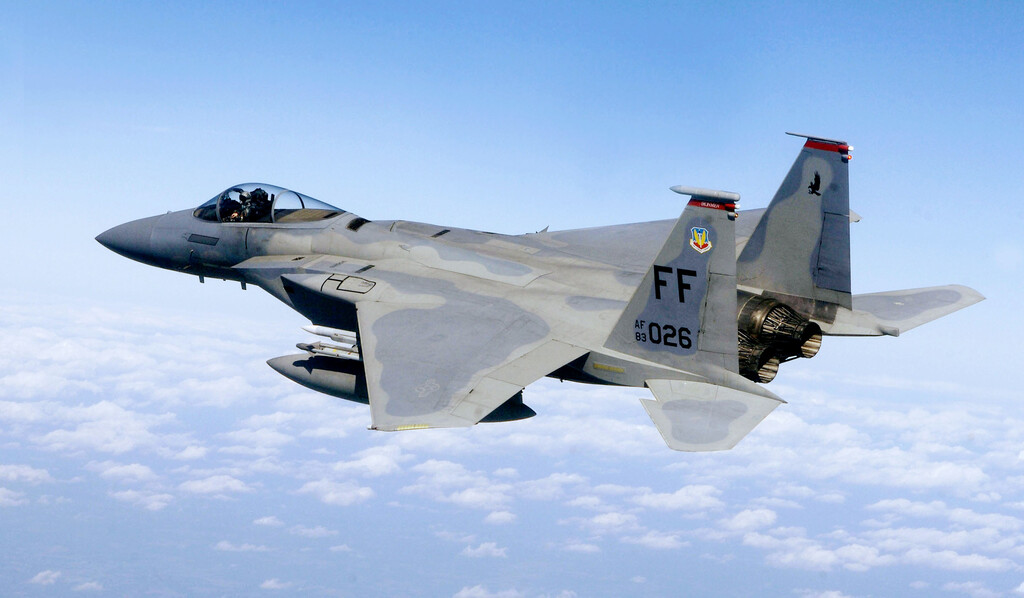
The recent shootdown of a US F-15E fighter jet over Iran has quickly evolved from a military mystery into a geopolitical flashpoint, with suspicions pointing to a Chinese-made man-portable air-defense system (MANPADS). The incident, which marks the first time in decades that a US fighter has been brought down by enemy fire, has raised uncomfortable questions about China's role in bolstering Iran's military capabilities.
What Happened: The F-15E Shootdown
Last month, a US F-15E Strike Eagle was downed over Iranian territory, triggering a dramatic rescue operation that left one crew member hidden in the Zagros mountains for two days. The loss of the aircraft itself was extraordinary, but the aftermath has shifted the narrative from Iran's air-defense prowess to the possibility that Chinese technology was involved.
Find Original Home Decor sparking conversation at Grand Goldman Shop.

According to sources cited by NBC News, investigators suspect the jet was hit by a Chinese-manufactured MANPADS. If confirmed, this would represent a significant escalation in the proxy conflict between the US and Iran, with China emerging as a key enabler.
Why China's Involvement Matters
The implications of Chinese military support for Iran extend far beyond a single incident. It signals a deeper alignment between Beijing and Tehran that could complicate US strategic interests in the Middle East and beyond.
For Washington, the shootdown is a stark reminder that adversarial states are increasingly equipped with advanced weaponry from rival powers. This not only challenges US air superiority but also raises the stakes in any future confrontation.
The MANPADS Connection
MANPADS are portable surface-to-air missiles that can be easily concealed and deployed by individuals or small teams. Their proliferation has long been a concern for aviation security, but state-sponsored transfers to groups like Iran's Revolutionary Guard Corps (IRGC) amplify the threat.
Chinese MANPADS, such as the QW series, are known for their affordability and effectiveness. If Iran possesses them, it could threaten low-flying aircraft and helicopters, altering the tactical landscape in the region.
Geopolitical Fallout: US-China Tensions
The incident comes at a time of already heightened tensions between the US and China over trade, technology, and territorial disputes. Evidence of Chinese military assistance to Iran could further strain relations and potentially lead to new sanctions or diplomatic repercussions.
Moreover, it underscores the challenges of enforcing arms embargoes and controlling the spread of advanced conventional weapons. The US may need to reassess its approach to non-proliferation and consider tougher measures against countries that flout international norms.
Impact on Middle East Stability
The Middle East is already a tinderbox, with multiple conflicts raging from Yemen to Syria. The introduction of more sophisticated weapons into Iran's arsenal could embolden its proxy forces and destabilize the region further. The longer history behind the story is traced in US F-15E Shootdown Over Iran Points to Chinese Missile Aid.
Israel, a key US ally, has long viewed Iran's military buildup as an existential threat. The shootdown may prompt Israel to accelerate its own countermeasures, potentially leading to a new arms race. The background to this story is set out in Iran Vows Retaliation Against Sanctions Cooperation. A related thread runs through Iran Wedding Strike Devastates Kuhestak Community. Earlier coverage in US Strikes Iran 10th Time; Iran Declares Full-Scale War shows how the argument developed.
What to Watch Next
As investigations continue, several key developments bear watching. First, the official confirmation of the missile's origin will be crucial in shaping the US response. Second, the international community's reaction, particularly from European allies, could influence the diplomatic path forward. A closer look at the same subject appears in Iran War Casualty Reclassification Disrespects Veterans. Anyone following the wider picture can start with Trending: latest articles. The same theme surfaces in Drone Warfare: How Ukraine's Tactics Downed an Apache in Hormuz, which takes a different angle.
Additionally, Iran's behavior in the wake of the incident will be telling. Will it flaunt its new capabilities or downplay them to avoid further isolation? And how will China respond to accusations of arming Iran? These questions will determine whether this incident remains an isolated event or escalates into a broader crisis. Context on how this played out before sits in China's Submarine Without Sail: A New Era in Naval Engineering. A companion piece, USS Boxer and 2,000 Marines Redirected to South China Sea, approaches the same subject from another angle.
FAQ
What is a MANPADS?
A MANPADS (Man-Portable Air-Defense System) is a shoulder-fired surface-to-air missile that can be used by a single person or a small team to target aircraft. They are relatively cheap, easy to conceal, and have been used in numerous conflicts around the world.
Why is the F-15E shootdown significant?
It is the first time in decades that a US fighter jet has been shot down by enemy fire, highlighting vulnerabilities and signaling potential advances in adversary air-defense capabilities. The suspected involvement of Chinese technology adds a new dimension to US-Iran tensions.
How might the US respond to China's alleged involvement?
The US could impose sanctions on Chinese entities involved in arms transfers to Iran, increase military support to allies in the region, or push for stronger international enforcement of arms embargoes. Diplomatic channels may also be used to pressure Beijing.
What does this mean for Middle East stability?
The proliferation of advanced weapons to Iran could embolden its proxies and increase the risk of miscalculation. It may also trigger an arms race, with countries like Israel and Saudi Arabia seeking to upgrade their defenses, potentially leading to greater instability.
Browse the Shop
 Acacia frida deluxe solid wood bed frame |
Bedroom bench |
Bed chest drawers |
Lingerie dresser |
Frame base |
Mirror with jewelry storage |
30 Bathroom Vanity |
Memory foam queen mattress |
Mattresses for back pain |
Nightstand set of 2 |
Grand Goldman Shop |
Civil Lawyer
Deutschland Trikot WM 2026







