

A giant fossil shark tooth, estimated to be 331 million years old, has been discovered in Asturias, Spain, near the Covadonga Sanctuary. The tooth belonged to a hypercarnivorous shark that grew between 5 and 6 meters long, swimming in the region long before dinosaurs existed.
The find, made by geologists from the University of Oviedo, the University of Valencia, and UNED, was published in the Journal of Palaeogeography. It offers a rare glimpse into a marine ecosystem from the Carboniferous period.
Find Original Home Decor sparking conversation at Grand Goldman Shop.

What Was Found: A 43-Millimeter Giant
The fossil tooth measures 43 millimeters in height, the largest ever recorded for its genus. Although the exact species remains unidentified, the tooth's broad, curved crown and double-serrated edges are distinctive.
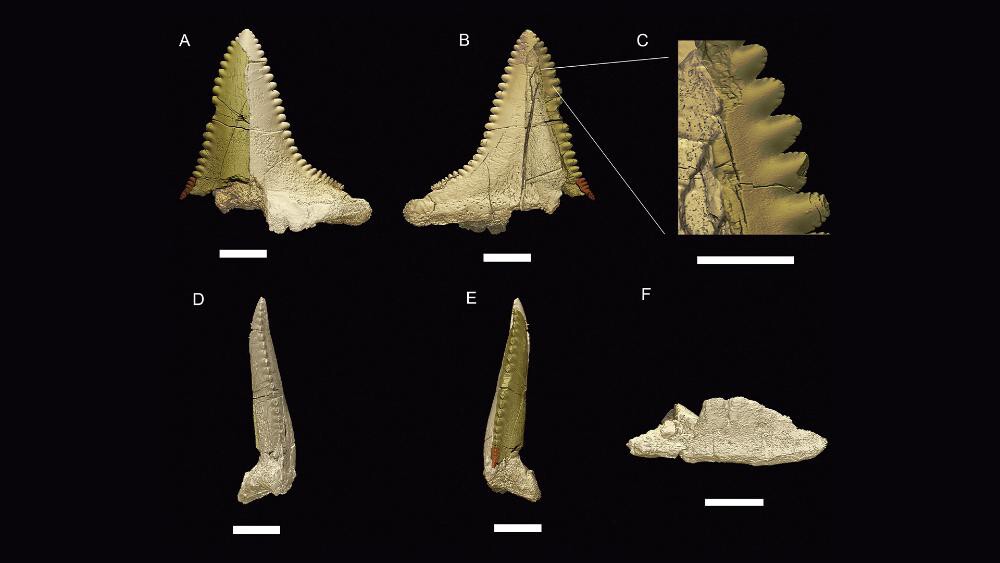
Using micro-computed tomography, researchers reconstructed the tooth in 3D without damaging it, revealing the vascular canal network in the dentin. The enamel microserrations resemble those of the modern tiger shark, adapted for slicing flesh and even shells.
Why This Shark Was a Hypercarnivore
The tooth's shape and serrations indicate a hypercarnivorous diet—meaning the shark fed almost exclusively on other animals. Its broad, curved crown was built for gripping and tearing large prey.
Based on body proportions of modern great white and tiger sharks, the researchers estimate the shark reached 5 to 6 meters in length. That's comparable to today's largest predatory sharks.
Unlocking Ancient Oceans: The Significance
This discovery pushes back the record of large predatory sharks in the region by millions of years. It shows that complex marine food webs existed long before the age of dinosaurs.
The fossil was found embedded in red limestone near the Covadonga Sanctuary, a site usually known for its religious architecture. This time, looking down revealed a prehistoric treasure. The background to this story is set out in Fossilized 10,000-Year-Old Mastodon Tooth Found by California. A related thread runs through Trending: latest articles.
- The tooth is 43 mm tall, the largest of its genus.
- Micro-CT scanning allowed 3D reconstruction without damage.
- Enamel serrations match those of modern tiger sharks.
- Estimated body length: 5–6 meters.
- Age: 331 million years, from the Carboniferous period.
Comparing the Ancient Shark to Modern Predators
| Feature | Ancient Shark (Asturias) | Modern Great White | Modern Tiger Shark |
|---|---|---|---|
| Estimated length | 5–6 meters | 4–6 meters | 3–5 meters |
| Tooth height | 43 mm | Up to 50 mm | Up to 40 mm |
| Diet | Hypercarnivorous | Carnivorous | Carnivorous |
| Age | 331 million years | Present | Present |
What This Means for Paleontology
The discovery highlights the importance of museum collections and field surveys in uncovering unexpected fossils. It also demonstrates how modern imaging techniques can extract detailed anatomical information from fragile specimens. Earlier coverage in Renaissance Portal Hidden in Spanish Home Wins Owner €1 Million shows how the argument developed. A closer look at the same subject appears in 260 Ancient Tombs Unearthed in Sudan Desert.
Researchers plan to continue studying the site to see if more fossils from this ancient shark or its prey are present. Anyone following the wider picture can start with Satellite Reveals 2,600-Year-Old Mudbrick Building in Egypt's Nile Delta. The same theme surfaces in Oldest Iberian Lynx Skeleton Unearthed in Murcia, which takes a different angle.
FAQ
How old is the shark tooth found in Asturias?
The tooth is estimated to be 331 million years old, dating back to the Carboniferous period.
What kind of shark did the tooth belong to?
It belonged to a hypercarnivorous shark that likely grew 5–6 meters long. The exact species is still unknown.
How did scientists study the tooth without damaging it?
They used micro-computed tomography (micro-CT) to create a 3D model, revealing internal structures like vascular canals.
Why is this discovery important?
It provides evidence of large predatory sharks in the region millions of years earlier than previously known, shedding light on ancient marine ecosystems.
Browse the Shop
 Acacia frida deluxe solid wood bed frame |
Bedroom bench |
Bed chest drawers |
Lingerie dresser |
Frame base |
Mirror with jewelry storage |
30 Bathroom Vanity |
Memory foam queen mattress |
Mattresses for back pain |
Nightstand set of 2 |
Grand Goldman Shop |
Civil Lawyer
Deutschland Trikot WM 2026







