

Before Jaws made audiences afraid of the water, a small Spanish production called The Phone Booth (La Cabina) achieved something equally unsettling: it made people fear a simple phone booth. Directed by Antonio Mercero and released in 1972, this 35-minute film became a cultural phenomenon in Spain, leaving a lasting mark on the national psyche.
The film's premise is deceptively simple: a man steps into a phone booth to make a call and finds he cannot get out. What follows is a masterclass in suspense and social commentary that predates Spielberg's blockbuster by three years.
Find Original Home Decor sparking conversation at Grand Goldman Shop.

The Genesis of The Phone Booth
The idea for The Phone Booth was born from a trip to New York. In the early 1970s, Antonio Mercero and José Luis Garci visited the city and, while climbing the Statue of Liberty, they decided that José Luis López Vázquez had to star in their next project. That intuition would eventually lead to one of the most traumatic images in Spanish television history.
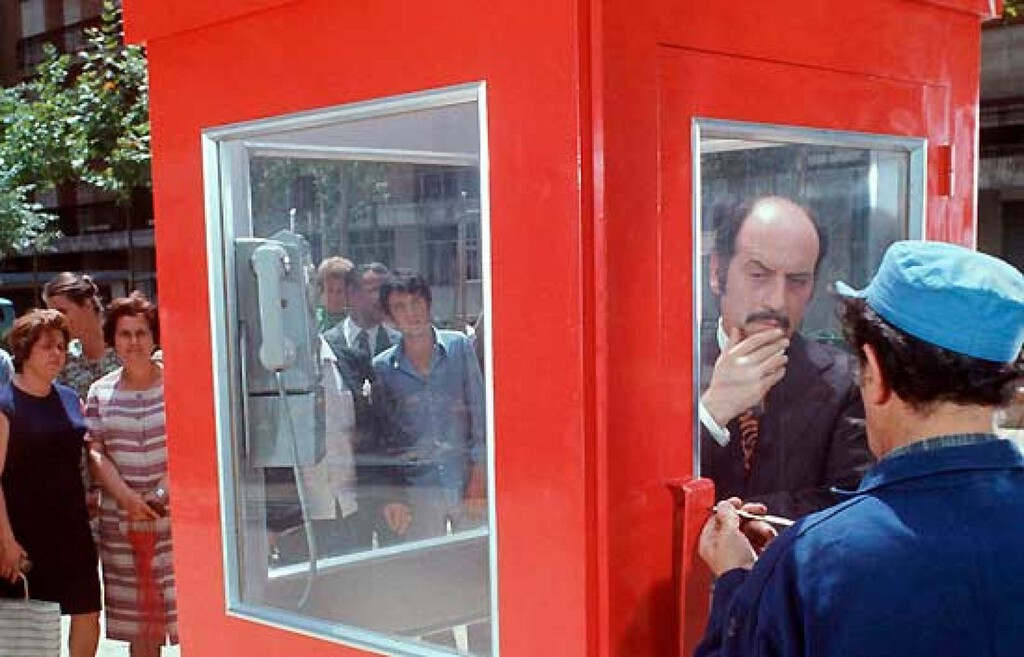
Initially, Mercero, Garci, and Horacio Valcárcel envisioned a comedic sketch about a man unable to exit a phone booth. But Mercero soon realized the situation held something profoundly disturbing. It wasn't just the physical claustrophobia of being trapped inside a glass box; it was the anguish of feeling observed, ignored, and ultimately abandoned by the world while everything around continues as normal.

From Comedy to Horror: The Transformation
What started as a simple gag evolved into a chilling narrative. The film's power lies in its ability to transform an everyday object into a source of terror. The phone booth, a symbol of communication and connection, becomes a prison. The protagonist, played by López Vázquez, is trapped not only physically but also socially—bystanders watch, some try to help, but ultimately, they move on, leaving him to his fate.
This shift from comedy to horror is a testament to Mercero's directorial vision. He understood that the most effective horror often stems from the mundane, from the familiar turned sinister. The film's lack of dialogue (there is almost none) and its everyman protagonist make it universally relatable, which only heightens the dread.
Why The Phone Booth Still Haunts Viewers
Decades later, The Phone Booth remains a touchstone of Spanish pop culture. It is often cited as one of the most frightening things ever broadcast on Spanish television, even though it was originally a television movie. Its influence extends beyond Spain, inspiring remakes and homages.
The film's enduring legacy can be attributed to its psychological depth. It taps into universal fears: claustrophobia, isolation, and the indifference of society. The image of a man trapped in a glass box while the world goes about its business is a powerful metaphor for modern alienation.
- Innovative storytelling: A simple premise executed with precision and depth.
- Social commentary: Critiques the bystander effect and societal indifference.
- Cultural impact: Became a reference point for Spanish horror and television.
- Timeless fear: Explores claustrophobia and isolation that resonate today.
- Director's vision: Antonio Mercero's ability to find horror in the everyday.
The Phone Booth vs. Jaws: A Comparison
While Jaws made millions afraid of the ocean, The Phone Booth made Spaniards wary of a common street fixture. Both films share a knack for turning ordinary settings into scenes of terror, but they operate on different scales. Jaws is a big-budget Hollywood spectacle, while The Phone Booth is a modest television production. Yet both achieve a similar goal: they embed a lasting fear in the audience's mind.
The table below highlights key differences and similarities between the two films.
| Aspect | The Phone Booth (1972) | Jaws (1975) |
|---|---|---|
| Director | Antonio Mercero | Steven Spielberg |
| Runtime | 35 minutes | 124 minutes |
| Setting | A phone booth on a city street | A beach town and the ocean |
| Source of fear | Confinement and social indifference | A giant shark |
| Impact | Traumatized a nation; cult classic | Blockbuster phenomenon; changed Hollywood |
| Legacy | Spanish television landmark | Defining summer blockbuster |
The Cultural Impact in Spain and Beyond
In Spain, The Phone Booth is more than just a film; it's a shared cultural memory. Many Spaniards remember watching it as children and being terrified. The image of López Vázquez trapped in the booth has become iconic. The film won several awards, including the International Emmy for Best Fiction in 1973, and it was also nominated for an Oscar for Best Live Action Short Film.
Its influence can be seen in various aspects of popular culture, from references in other films to parodies. It also sparked conversations about the role of technology in our lives—how a device meant to connect us can also isolate us. The background to this story is set out in Scariest Non-Horror Movies: Readers Share Their Terrifying Picks. A related thread runs through Rapture Review: Cult Spanish Horror and Cinemania. Earlier coverage in Charles Booth's Poverty Maps Expose London Housing Inequality shows how the argument developed.
What Makes The Phone Booth a Masterpiece of Suspense
Mercero's direction is masterful in building tension. The camera work often places the viewer in the booth with the protagonist, enhancing the feeling of entrapment. The lack of a musical score (except for a haunting tune) and the use of ambient sound—the ticking of the phone, the muffled noises from outside—create a sense of unease. A closer look at the same subject appears in Celebrity: latest articles. Anyone following the wider picture can start with Alien Chestburster Scene: How Ridley Scott Hid the Horror. The same theme surfaces in Antena 3 Loses Rosco Rights: Pasapalabra Future in Jeopardy, which takes a different angle.
The performance of José Luis López Vázquez is pivotal. He conveys a range of emotions—from confusion to panic to resignation—without uttering a word. His everyman appearance makes it easy for viewers to imagine themselves in his place. Context on how this played out before sits in Alba Carrillo: From TV Gossip to Left-Wing Pop Icon. A companion piece, Torrente Presidente Breaks Box Office Records, Now on Netflix, approaches the same subject from another angle.
FAQ
What is The Phone Booth (La Cabina) about?
The Phone Booth is a 1972 Spanish short film directed by Antonio Mercero. It tells the story of a man who becomes trapped in a phone booth and cannot escape, despite the efforts of bystanders. The film is a psychological horror that explores themes of isolation and societal indifference.
Why is The Phone Booth considered scary?
The Phone Booth is scary because it turns a mundane object into a trap. It taps into primal fears of claustrophobia and abandonment. The protagonist's helplessness and the crowd's eventual indifference create a sense of dread that lingers long after viewing.
Did The Phone Booth influence Jaws?
There is no direct evidence that The Phone Booth influenced Jaws. However, both films share a similar approach to horror: they make everyday settings terrifying. The Phone Booth predates Jaws by three years and is often cited as an example of how low-budget films can achieve significant cultural impact.
Where can I watch The Phone Booth?
The Phone Booth is available on various streaming platforms and is often included in collections of Spanish cinema. It is also frequently screened at film festivals and retrospectives. Check your local streaming services or online retailers for availability.
Browse the Shop
 Acacia frida deluxe solid wood bed frame |
Bedroom bench |
Bed chest drawers |
Lingerie dresser |
Frame base |
Mirror with jewelry storage |
30 Bathroom Vanity |
Memory foam queen mattress |
Mattresses for back pain |
Nightstand set of 2 |
Grand Goldman Shop |
Civil Lawyer
Deutschland Trikot WM 2026







