

The European Space Agency's (ESA) Arrakihs mission is setting its sights on one of the biggest mysteries in cosmology: dark matter. With a launch planned for 2030, this rapid-development mission aims to map the halos of galaxies and shed light on the invisible substance that makes up most of the universe's mass.
Named as a nod to the desert planet in Dune, Arrakihs stands for Analysis of Resolved Remnants of Accreted galaxies as a Key Instrument for Halo Surveys. It was conceived in 2022 and recently received the green light from ESA's Scientific Committee to move into implementation. Despite the eight-year timeline, Arrakihs is classified as a fast mission (type F), which is remarkably quick compared to medium-class missions that typically take 15 years or more.
Find Original Home Decor sparking conversation at Grand Goldman Shop.

Why Dark Matter Matters
Dark matter is a hypothetical form of matter that does not emit, absorb, or reflect light, making it invisible to current telescopes. Yet its gravitational effects are evident in the rotation of galaxies and the large-scale structure of the universe. Without dark matter, our models of galaxy formation and evolution simply don't hold up.
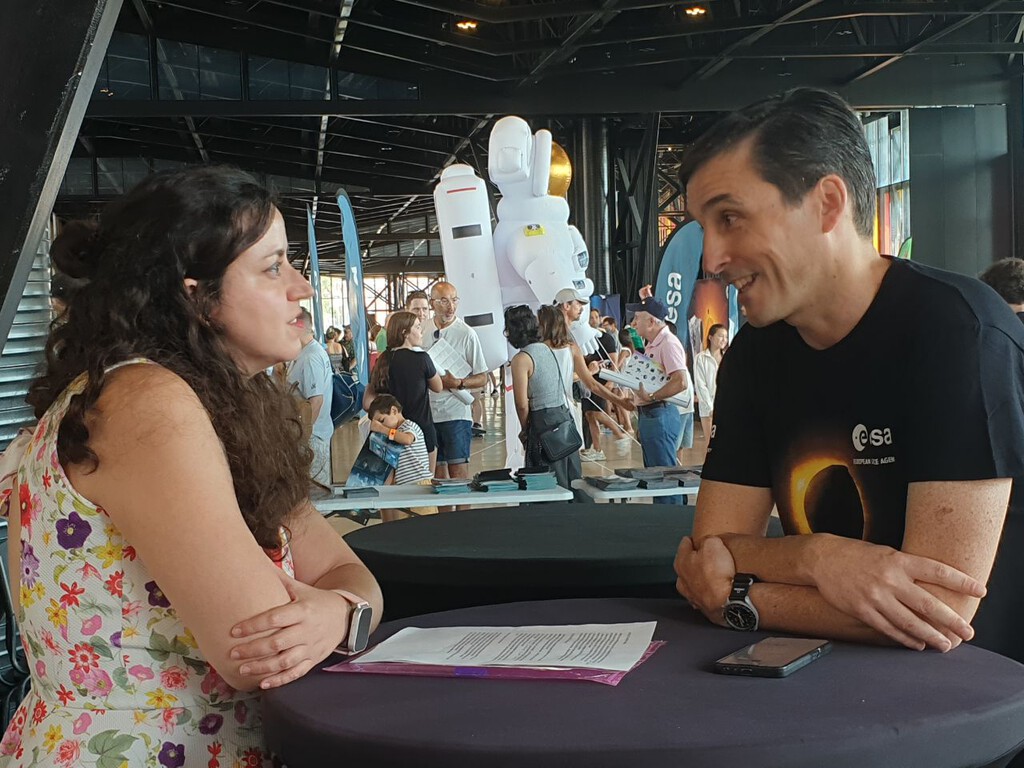
Carlos Corral, a scientist on the Arrakihs project, explains: "We know a lot about the universe, but until we know what dark matter is, there will always be a mystery." This sentiment underscores the mission's importance: it's not just about adding another piece to the cosmic puzzle; it's about resolving a fundamental gap in our understanding.
How Arrakihs Will Probe the Invisible
Arrakihs will use a technique called galactic archaeology. By observing the faint remnants of small galaxies that have been accreted onto larger ones, it can reconstruct the assembly history of galactic halos. These halos are thought to be dominated by dark matter, so studying their structure and dynamics provides indirect clues about the nature of dark matter itself.
The mission will survey the halos of nearby galaxies, mapping the distribution of stars and gas that have been stripped from dwarf galaxies. These tidal streams act as tracers of the gravitational potential, allowing scientists to infer the amount and distribution of dark matter.
Key Science Goals
- Map the structure of galactic halos in unprecedented detail.
- Identify and characterize tidal streams from accreted dwarf galaxies.
- Test models of dark matter by comparing observations with simulations.
- Constrain the properties of dark matter particles, such as their mass and interaction cross-section.
- Provide a census of the faintest galaxies in the local universe.
Arrakihs vs. Other Dark Matter Missions
While other missions like Euclid also study dark matter, Arrakihs takes a complementary approach. Euclid focuses on the large-scale distribution of galaxies and weak lensing, while Arrakihs zooms in on the local universe, examining the fine details of galactic halos. This synergy will help build a more complete picture.
| Mission | Launch Date | Primary Technique | Dark Matter Focus |
|---|---|---|---|
| Arrakihs | 2030 | Galactic archaeology | Local halo structure |
| Euclid | 2023 | Weak lensing, galaxy clustering | Large-scale distribution |
| Nancy Grace Roman | 2027 | Wide-field imaging, spectroscopy | Cosmic shear, supernovae |
The Scientist Behind the Mission
Carlos Corral is one of the researchers working on Arrakihs. In an interview during the solar eclipse event in León, Spain, on August 12, he shared insights into the mission's progress and its potential impact. Corral's enthusiasm is palpable as he describes the mission's goals and the excitement of being part of a project that could revolutionize our understanding of the cosmos.
Corral emphasizes that while we have learned much about the universe, dark matter remains a profound enigma. "Until we know what dark matter is, there will always be a mystery," he reiterates. This drive to solve the mystery is what motivates the team to push the boundaries of technology and science. The background to this story is set out in Dark Matter Mystery: How Giant Planets Could Reveal the Invisible Universe. A related thread runs through NASA's Roman Telescope Gains 12 Extra Years to Explore Dark Matter.
What's Next for Arrakihs?
With the green light from ESA, the Arrakihs team is now moving into the implementation phase. This involves finalizing the instrument design, building the spacecraft, and planning the science operations. The launch is targeted for 2030, but there is still much work to be done. Earlier coverage in Dark Matter Hunt: Xenon Experiment Reveals Unexplained Signal shows how the argument developed. A closer look at the same subject appears in Science: latest articles.
As the mission progresses, we can expect more detailed announcements about its capabilities and anticipated discoveries. For now, Arrakihs stands as a testament to human curiosity and the relentless pursuit of knowledge about our universe. Anyone following the wider picture can start with How Many Times Have We Been to the Moon and Why Only 12 Humans Have Walked. The same theme surfaces in OSIRIS-REx Samples Solve Asteroid Bennu Thermal Mystery, which takes a different angle.
FAQ
What is the Arrakihs mission?
Arrakihs is a European Space Agency mission designed to study dark matter by mapping the halos of galaxies. It will use galactic archaeology to observe remnants of accreted dwarf galaxies and infer the distribution of dark matter.
When will Arrakihs launch?
Arrakihs is scheduled to launch in 2030. It is classified as a fast mission (type F), which means it is being developed more quickly than typical medium-class missions.
How does Arrakihs differ from other dark matter missions?
Arrakihs focuses on the local universe, examining the fine structure of galactic halos, while missions like Euclid study the large-scale distribution of galaxies. They are complementary and together will provide a more complete understanding of dark matter.
Why is dark matter so mysterious?
Dark matter does not interact with light or other electromagnetic forces, making it invisible to telescopes. Its presence is inferred only through gravitational effects, and its true nature remains one of the biggest unsolved problems in physics.
Browse the Shop
 Acacia frida deluxe solid wood bed frame |
Bedroom bench |
Bed chest drawers |
Lingerie dresser |
Frame base |
Mirror with jewelry storage |
30 Bathroom Vanity |
Memory foam queen mattress |
Mattresses for back pain |
Nightstand set of 2 |
Grand Goldman Shop |
Civil Lawyer
Deutschland Trikot WM 2026







