

In January 1946, the U.S. Army's Project Diana sent a radar signal to the Moon and received an echo 2.5 seconds later, marking the first human-made contact with another celestial body. This experiment, conducted at Camp Evans in New Jersey, not only demonstrated that radio waves could penetrate the ionosphere but also served as a crucial step toward the space race.
The successful echo resolved a long-standing scientific debate about the nature of the ionosphere and proved that space communication was feasible. More importantly, it was a direct response to the emerging threat of long-range missiles like the German V-2, which had reached space during World War II.
Find Original, High-end Home Decor that spark conversation at Grand Goldman Shop.
The Origins of Project Diana
During World War II, the U.S. Army Signal Corps' Evans Signal Laboratory at Fort Monmouth, New Jersey, was tasked with improving radar technology and studying captured German and Japanese equipment. The lab's expertise in radar made it the ideal place to tackle a new challenge: detecting incoming ballistic missiles.
The V-2 rocket, first used by Germany in 1944, was the first human-made object to reach space. The Pentagon feared that a future, larger version could cross oceans and strike the United States. To defend against such a threat, the military needed to know if radar could detect and track objects at extreme distances.
Lieutenant Colonel John H. DeWitt Jr. and his team were assigned to find out. Without an actual intercontinental missile to test, they turned to the Moon—a target far beyond the atmosphere.
How the Experiment Worked
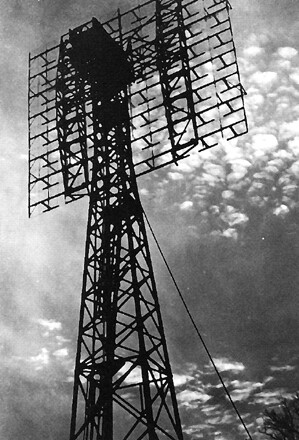
The team repurposed a surplus SCR-271 radar, a powerful early-warning system used during the war. They modified it to transmit a high-power signal at 111.5 MHz (a wavelength of 2.7 meters) and aimed it at the rising Moon. The signal, traveling at the speed of light, took about 2.5 seconds to make the round trip to the Moon and back.
At the receiver, the faint echo was amplified and displayed on an oscilloscope. On January 10, 1946, the team saw the first successful echo. They repeated the experiment several times over the following days, confirming the result.
Key Technical Details
| Component | Specification |
|---|---|
| Radar System | Modified SCR-271 |
| Frequency | 111.5 MHz |
| Wavelength | 2.7 meters |
| Peak Power | 3 kW |
| Antenna Gain | 24 dB |
| Echo Delay | ~2.5 seconds |
The experiment was a remarkable feat of engineering, considering the technology of the time. It required precise timing and sensitive receivers to detect the weak echo.
Why Project Diana Mattered
Project Diana was more than a scientific curiosity; it had immediate practical implications. It proved that the ionosphere—a layer of charged particles in the upper atmosphere—would not block radio waves at certain frequencies, contrary to some theories. This opened the door for satellite communication and space exploration.
Militarily, it demonstrated that radar could potentially detect objects beyond the atmosphere, laying the groundwork for missile defense systems. The experiment also boosted American morale and technological prestige in the early Cold War era.
Furthermore, Project Diana was a precursor to the space race. It showed that humans could reach beyond Earth with technology, inspiring further research and development. Just over a decade later, the Soviet Union launched Sputnik, and the race to space was in full swing. Context on how this played out before sits in Project Diana: The 1946 Moon Radar Signal That Launched the Space Race.
- First human-made signal to reach another celestial body
- Proved the ionosphere was transparent to certain radio frequencies
- Demonstrated radar's potential for long-range detection
- Inspired subsequent space communication and exploration
- Marked a key step toward the space race
The Legacy of Project Diana
The success of Project Diana led to the development of more advanced radar systems and contributed to the establishment of the U.S. space program. It also paved the way for radio astronomy and the search for extraterrestrial intelligence. The background to this story is set out in US Confirms Space Weapons Deployment: Global Arms Race. A related thread runs through Zambia's Space Race: The Afronauts' Untold Pan-African Story.
Today, the site of the experiment is marked with a monument, and the legacy of Project Diana lives on in every radar that bounces off the Moon and in the technologies that enable space exploration. Earlier coverage in Science: latest articles shows how the argument developed. A closer look at the same subject appears in NASA Teases SR-71 Blackbird Successor with Mysterious Shadow.
The experiment was a testament to human ingenuity and the desire to push boundaries. It showed that with creativity and determination, even the sky is not the limit. Anyone following the wider picture can start with Anthropic's Claude AI Makes Novel Biology Discovery: What It Means. The same theme surfaces in How Germany Sank Its Own Fleet in 1919 and Created a Nuclear Treasure, which takes a different angle.
FAQ
What was Project Diana?
Project Diana was a U.S. Army experiment in 1946 that sent a radar signal to the Moon and received an echo, proving that radio waves could penetrate the ionosphere and reach beyond Earth.
Why was the Moon chosen as a target?
The Moon was a convenient target because it was far enough to test long-range detection but close enough to receive an echo. It also avoided the need for an actual missile.
How did Project Diana impact the space race?
Project Diana demonstrated the feasibility of space communication and inspired further research, contributing to the technological momentum that led to the space race between the U.S. and the Soviet Union.
Who led Project Diana?
Lieutenant Colonel John H. DeWitt Jr. led the team at Camp Evans, New Jersey, that conducted the experiment.
Browse the Shop
 Acacia frida deluxe solid wood bed frame |
Bedroom bench |
Bed chest drawers |
Lingerie dresser |
Frame base |
Mirror with jewelry storage |
30 Bathroom Vanity |
Memory foam queen mattress |
Mattresses for back pain |
Nightstand set of 2 |
Grand Goldman Shop |
Civil Lawyer
Deutschland Trikot WM 2026










