

A Spanish museum has recreated the iconic Cray-1 supercomputer from 1976 using 30 Mac minis, blending vintage design with modern hardware. The project, led by the Museum of Computer History in Majadas de Tiétar (Cáceres), took over a year and a half to complete and offers a fascinating look at how far computing has come.
The Cray-1 was the fastest computer of its time and a symbol of supercomputing. Its distinctive curved shape, surrounded by a padded bench, was not just for looks—it shortened internal connections to reduce signal travel time. Now, fifty years later, that silhouette is back, but its calculations are powered by Apple hardware from the 2010s.
Find Original, High-end Home Decor that spark conversation at Grand Goldman Shop.

What Exactly Did the Museum Build?
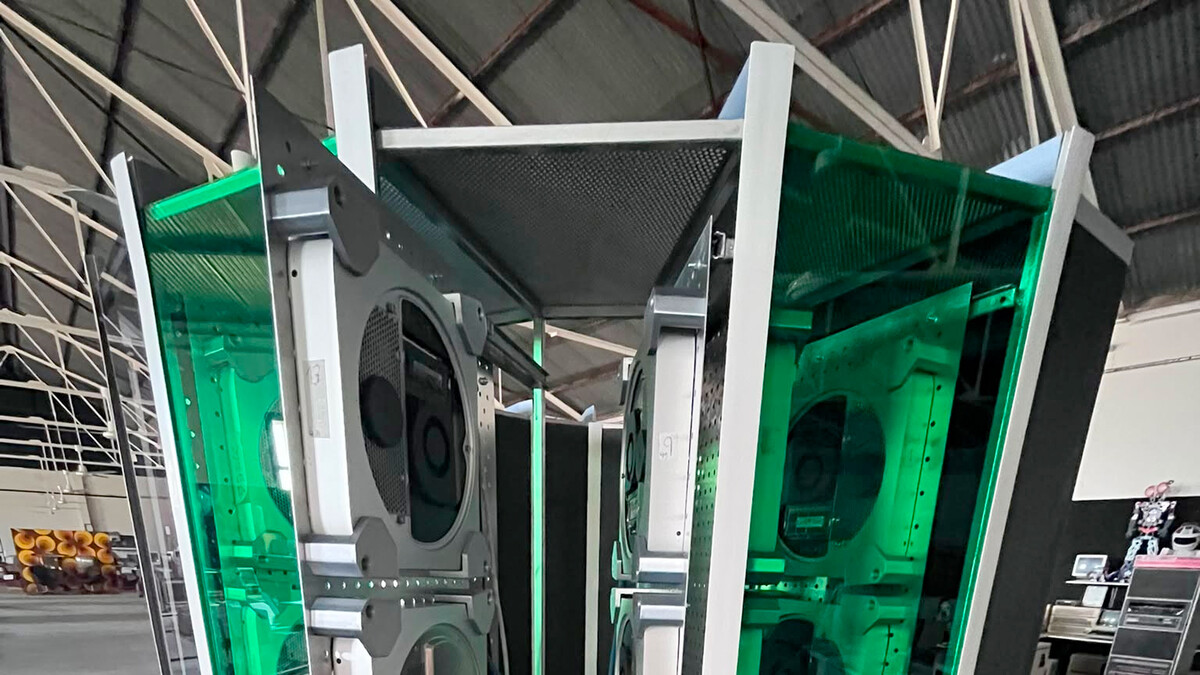
This is not a restoration of an original Cray-1. Instead, the team recreated the exterior appearance and gave it working capacity using much more recent hardware. The reproduction uses 28 Mac minis from 2012 and two from 2014. Twenty-five of them have dual-core Intel Core i5 processors, while the remaining five use quad-core Core i7 chips.
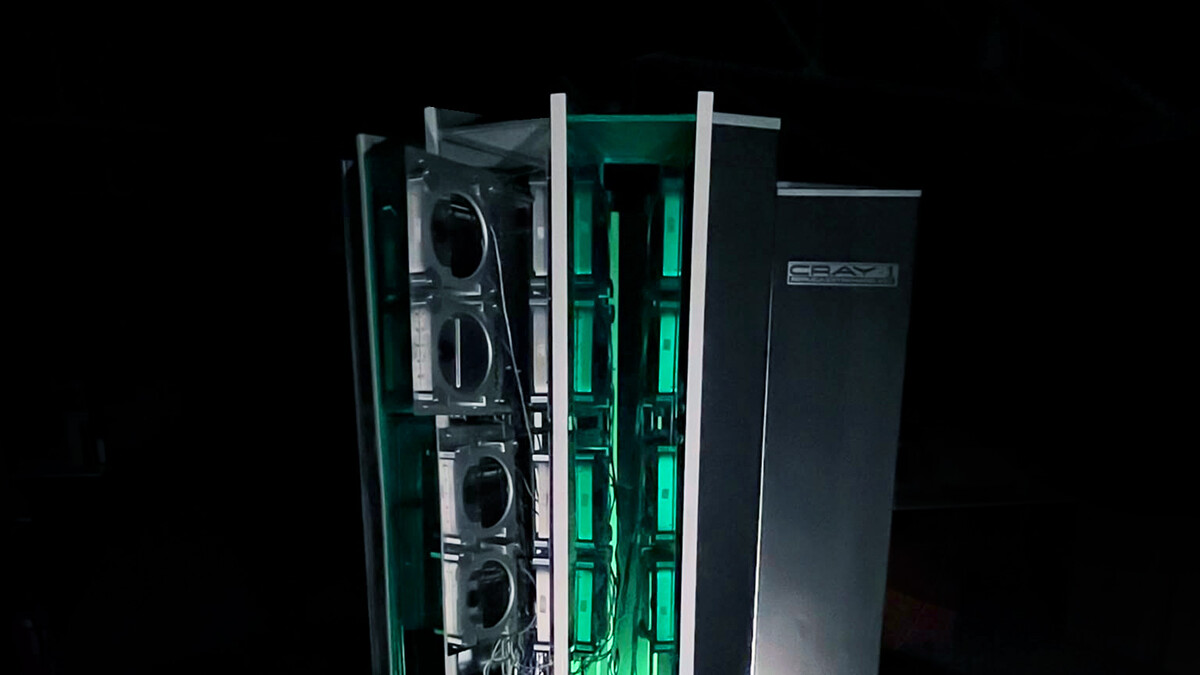
The result is a full-scale replica that looks like the original but runs on hardware that is itself over a decade old. That might seem like an odd choice, but it highlights how much computing power has advanced—what once required a room-sized machine now fits in a cluster of small desktop computers.
Why the Cray-1 Mattered
When the Cray-1 was introduced in 1976, it was a breakthrough in speed and design. It used vector processing to handle large amounts of data efficiently, and its unique cooling system and compact shape set it apart from other machines of the era. It became a status symbol for research labs and government agencies.
Its legacy is not just in its performance but in its influence on supercomputer architecture. Many later systems adopted ideas first popularized by the Cray-1, and it remains a cultural icon of computing history.
How the Replica Works
The Mac minis are networked together to perform calculations, simulating the parallel processing of the original. While the replica does not match the raw speed of a modern supercomputer, it demonstrates the concept of clustering and how far hardware has evolved.
Visitors to the museum can see the replica in action, with the Mac minis tucked inside the curved casing. The project is a testament to the ingenuity of retro computing enthusiasts and the enduring appeal of iconic machines.
Key Takeaways
- The Cray-1 was the fastest computer of its time and a symbol of supercomputing.
- The replica uses 30 Mac minis from 2012 and 2014, not original components.
- The project took over a year and a half to complete.
- It is housed at the Museum of Computer History in Majadas de Tiétar, Spain.
- The recreation highlights the rapid advancement of computing power.
Comparing Then and Now
| Feature | Original Cray-1 (1976) | Replica (2020s) |
|---|---|---|
| Processor | Custom Cray vector processors | Intel Core i5 and i7 (Mac mini) |
| Number of units | 1 | 30 Mac minis |
| Cooling | Freon-based | Air-cooled |
| Purpose | Supercomputing | Museum exhibit |
The table shows how technology has shrunk in size while growing in capability. The original Cray-1 required a large room and special cooling, while the replica fits in a similar footprint but uses standard desktop hardware.
What This Means for Retro Computing
Projects like this one show that retro computing is not just about preserving old machines but also about reinterpreting them with modern tools. By using Mac minis, the museum can keep the exhibit running without relying on fragile vintage parts. The background to this story is set out in Technology: latest articles. A closer look at the same subject appears in iPhone Calendar Still Shows the 1582 Gregorian Date Skip.
This approach also makes the exhibit more interactive and reliable. Visitors can see the replica operate and understand the principles behind the original without the risk of breaking irreplaceable hardware. A related thread runs through TCL P80 Ultra: AMOLED Screen That Reads Like Paper. Earlier coverage in Spanish Museum Recreates 1976 Cray-1 Supercomputer Using 30 Mac Minis shows how the argument developed.
FAQ
What is the Cray-1?
The Cray-1 was a supercomputer designed by Seymour Cray and released in 1976. It was the fastest computer in the world at the time and is considered a landmark in computing history.
Why use Mac minis for the replica?
Mac minis are compact, reliable, and readily available. Using them allows the museum to create a working replica without depending on original Cray-1 components, which are rare and difficult to maintain.
Where is the replica located?
The replica is at the Museum of Computer History in Majadas de Tiétar, Cáceres, Spain. It was developed over more than a year and a half.
Does the replica perform the same calculations as the original?
No, the replica is not meant to match the original's performance. It demonstrates the concept and allows the museum to showcase the Cray-1's design and history.
Browse the Shop
 Acacia frida deluxe solid wood bed frame |
Bedroom bench |
Bed chest drawers |
Lingerie dresser |
Frame base |
Mirror with jewelry storage |
30 Bathroom Vanity |
Memory foam queen mattress |
Mattresses for back pain |
Nightstand set of 2 |
Grand Goldman Shop |
Civil Lawyer
Deutschland Trikot WM 2026










