

If you open the iPhone calendar and scroll back more than four centuries, you'll notice a curious gap: the iPhone calendar still reflects the Gregorian calendar shift of 1582, jumping directly from October 4 to October 15. Those ten missing days aren't a glitch—they're a deliberate historical correction that Apple has preserved in its software.
This quirk only matters if you're a time traveler with a DeLorean, but the story behind it reveals how a 16th-century papal decree shaped the digital calendars we use today. Understanding why those days vanished helps explain the precision—and the compromises—built into every date we track.
Find Original, High-end Home Decor that spark conversation at Grand Goldman Shop.

Why the iPhone Calendar Skips October 4 to 15, 1582
The iPhone calendar still reflects the Gregorian calendar shift because it uses the proleptic Gregorian calendar for dates before its introduction. In other words, Apple's software applies the modern calendar rules backward in time, but it acknowledges the actual historical transition by omitting the ten days that were removed.
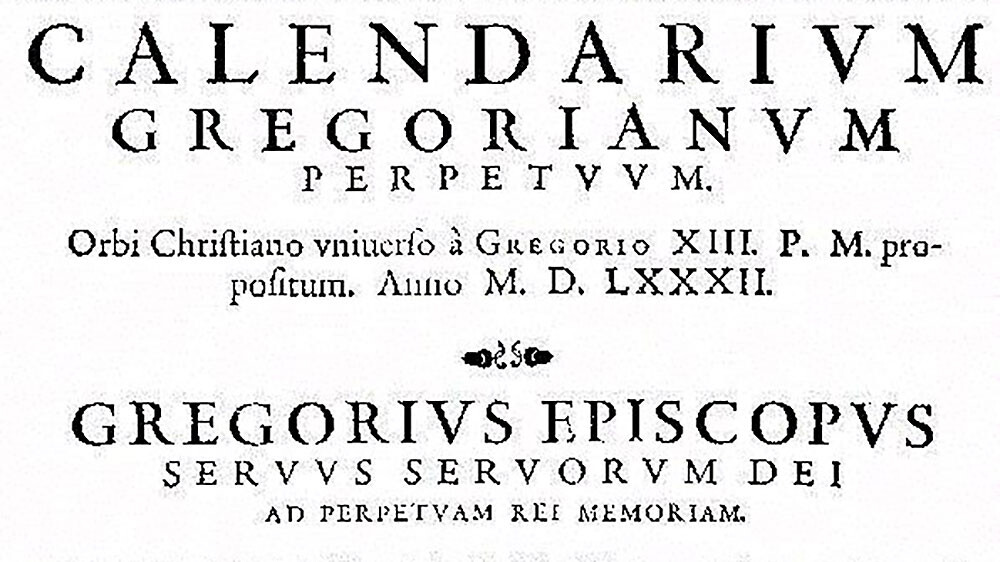
This means if you set a date to October 5, 1582, the calendar will likely adjust to October 15. It's a small Easter egg for history buffs, but it also ensures consistency with historical records that already account for the change.
The Julian Calendar's Drift
Julius Caesar introduced the Julian calendar in 45 BC, setting the year at 365.25 days with a leap year every four years. Astronomically, a solar year is about 365.2422 days—a difference of 11 minutes and 14 seconds. That tiny discrepancy added up to a full day of drift roughly every 130 years.
By the 16th century, the accumulated error was about ten days. The Council of Nicaea in 325 AD had fixed Easter after the spring equinox on March 21, but by 1582 the actual equinox fell on March 11. Without correction, Easter would eventually drift into summer.
The Gregorian Reform and the Missing Days
Pope Gregory XIII issued the papal bull Inter gravissimas in February 1582. To realign the calendar with the seasons, the Church adopted the Gregorian calendar and removed ten days from October 1582. Thursday, October 4, was followed immediately by Friday, October 15.
This bold move corrected centuries of astronomical drift and ensured that Easter would always fall near the spring equinox. The iPhone calendar still reflects this shift, serving as a digital monument to that pivotal moment in timekeeping.
Key Takeaways
- The iPhone calendar skips October 5–14, 1582, mirroring the historical Gregorian reform.
- The Julian calendar drifted 11 minutes and 14 seconds per year, accumulating ten days by 1582.
- Pope Gregory XIII removed those ten days to align Easter with the spring equinox.
- Apple's software uses the proleptic Gregorian calendar but preserves the gap for historical accuracy.
- This quirk affects only dates before 1582 and has no impact on modern scheduling.
How the iPhone Calendar Handles Historical Dates
Apple's Calendar app relies on the Gregorian calendar for all dates, but it doesn't retroactively insert the missing days. This means if you try to create an event on October 10, 1582, the app will either reject it or shift it to October 20. Such behavior is consistent with how most modern software treats the proleptic Gregorian calendar.
For developers, this is a reminder that date handling is never trivial. Time zones, leap seconds, and calendar reforms all add complexity. Apple's choice to honor the 1582 gap shows attention to historical detail, even if few users will ever notice. The longer history behind the story is traced in iPhone Calendar Still Shows the 1582 Gregorian Date Skip. More on the surrounding debate is collected in Submarine Cables: 30 Years of Internet's Underwater Backbone.
Comparison of Calendar Systems
| Calendar | Introduced | Year Length | Leap Year Rule | Drift per Year |
|---|---|---|---|---|
| Julian | 45 BC | 365.25 days | Every 4 years | 11 min 14 sec |
| Gregorian | 1582 | 365.2425 days | Every 4 years, except centuries not divisible by 400 | ~26 sec |
Why This Matters for Modern Users
Most people will never need to schedule a meeting in 1582, but the iPhone calendar's handling of that era highlights the importance of accurate timekeeping. It also serves as a conversation starter about how our calendars evolved. The background to this story is set out in Hand Scroll Saw: Tools and Techniques for Precision DIY. A related thread runs through Social Media Addiction and Loneliness: The Scroll Epidemic. Earlier coverage in Social Media Addiction: Why We Scroll Despite the Harm shows how the argument developed.
For historians and genealogists, the gap can be confusing when cross-referencing old documents. Knowing that the iPhone calendar still reflects the Gregorian shift helps avoid misinterpretations of dates from that period. A closer look at the same subject appears in Technology: latest articles. Anyone following the wider picture can start with Spanish Museum Recreates 1976 Cray-1 Supercomputer Using 30 Mac Minis. The same theme surfaces in Apple's New Home Products Still Depend on the iPhone, which takes a different angle.
Ultimately, the missing days are a testament to human ingenuity—and a reminder that even our most trusted tools carry the fingerprints of history. Context on how this played out before sits in iPhone 18 Pro and Pro Max: Best iPhones With Variable Aperture Camera. A companion piece, Best Tech Deals on Amazon Today: Save Up to 73%, approaches the same subject from another angle.
FAQ
Why does the iPhone calendar skip from October 4 to October 15, 1582?
The iPhone calendar follows the Gregorian calendar, which was introduced in 1582 to correct astronomical drift. To align the calendar with the seasons, ten days were removed, so October 4 was followed by October 15. Apple preserves this historical gap in its software.
Can I create an event on a missing date in the iPhone calendar?
No, dates between October 5 and 14, 1582, do not exist in the Gregorian calendar. If you try to set an event on those days, the iPhone calendar will likely adjust it to the nearest valid date, such as October 15 or later.
Does this calendar gap affect modern scheduling?
Not at all. The missing days only apply to October 1582. All dates after that, including today, are unaffected. The iPhone calendar handles contemporary dates seamlessly.
Why did the Gregorian reform remove exactly ten days?
By 1582, the Julian calendar had drifted about ten days from the solar year. Removing ten days realigned the calendar with the equinox, ensuring that Easter would be celebrated at the correct time of year.
Browse the Shop
 Acacia frida deluxe solid wood bed frame |
Bedroom bench |
Bed chest drawers |
Lingerie dresser |
Frame base |
Mirror with jewelry storage |
30 Bathroom Vanity |
Memory foam queen mattress |
Mattresses for back pain |
Nightstand set of 2 |
Grand Goldman Shop |
Civil Lawyer
Deutschland Trikot WM 2026










