

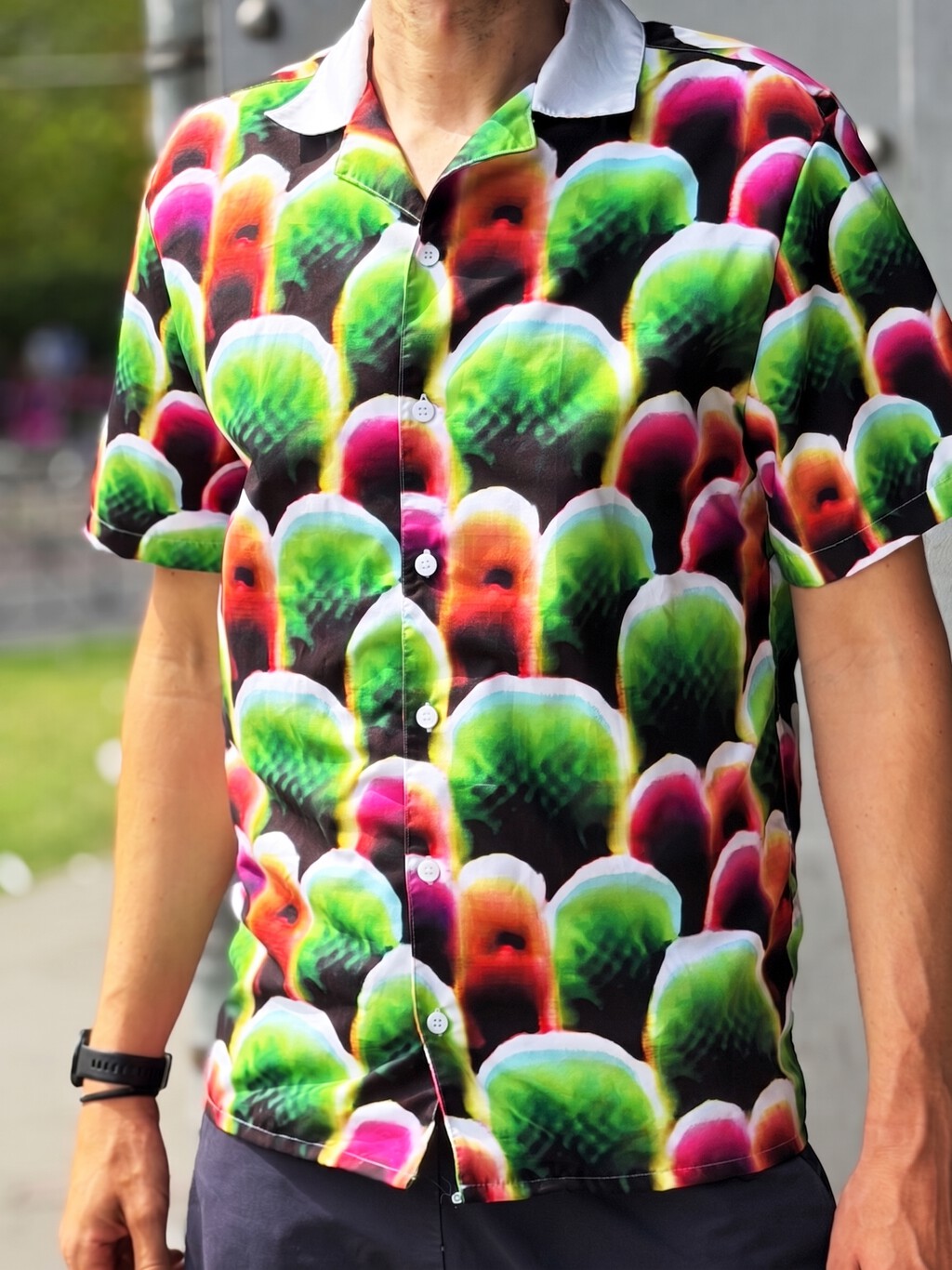
Berlin has begun installing AI-powered surveillance cameras across public spaces, and German artist Simon Weckert has responded with a shirt designed to evade them. The Digital Camouflage Shirt features an abstract pattern that confuses neural networks trained to detect people. It's a wearable protest against the growing reach of automated monitoring.
Weckert is no stranger to tech activism. In 2020, he famously pulled 99 smartphones in a cart to create a fake traffic jam on Google Maps. Now, he's tackling surveillance with fashion that works as adversarial camouflage.
Find Original Home Decor sparking conversation at Grand Goldman Shop.

Berlin's AI Surveillance Cameras Raise Privacy Concerns
Berlin's deployment of AI cameras is part of a broader trend. These systems don't just record—they recognize. They can identify individuals, track movements, and flag behavior. For privacy advocates, this is a red flag.
The cameras use neural networks to analyze video feeds in real time. Unlike traditional CCTV, which requires human review, AI cameras make split-second decisions. That raises questions about accuracy, bias, and accountability.
How the Digital Camouflage Shirt Works
Weckert's shirt is deceptively simple. Its abstract pattern—featuring green, pink, and orange shapes—looks like art pop to human eyes. But to an AI, it's a mess of confusing signals.
The shirt exploits a fundamental weakness: AI doesn't see like humans. It looks for statistical patterns of edges, textures, and colors associated with a category—in this case, a person. By disrupting those patterns, the shirt can cause the AI to fail to detect the wearer.
Weckert tested the shirt with YOLO (You Only Look Once), a popular open-source detection system used in many security cameras. The results were promising: the shirt achieved "acceptable" success in evading detection. It's now available for $91.
Why This Matters: The Vulnerability of AI Recognition
This anecdotal case highlights a critical vulnerability. AI surveillance systems are not infallible. They can be fooled by specially crafted patterns, raising concerns about their reliability for security purposes.
If a shirt can evade detection, what else can? The implications extend beyond privacy to public safety. False negatives could allow individuals to slip through checkpoints, while false positives could lead to wrongful flags.
- AI cameras are spreading in cities like Berlin, raising privacy alarms.
- Adversarial fashion like Weckert's shirt can confuse detection algorithms.
- YOLO is a common open-source system used in surveillance.
- The shirt costs $91 and is a form of protest.
- AI vulnerabilities pose risks beyond privacy.
Comparing Traditional vs. AI Surveillance
| Feature | Traditional CCTV | AI Surveillance |
|---|---|---|
| Detection method | Human review | Automated neural networks |
| Real-time alerts | Limited | Yes |
| Privacy risk | Moderate | High (due to recognition) |
| Vulnerability to evasion | Low | High (adversarial patterns) |
The Broader Implications for Privacy and Security
Weckert's shirt is a conversation starter. It forces us to confront the trade-offs between security and privacy. As cities invest in AI surveillance, they must also consider safeguards against misuse and errors. The background to this story is set out in Adversarial Clothing: Fashion That Confuses Facial Recognition. A related thread runs through Adversarial Clothing: Privacy Fashion Trends to Confuse Facial Re. Earlier coverage in Meta Smartglasses Backlash: Privacy Concerns and Creep Glasses shows how the argument developed.
Moreover, the shirt demonstrates that resistance is possible. It empowers individuals to protect their privacy in creative ways. But it also underscores the need for regulation. Without oversight, AI cameras could become tools of oppression. A closer look at the same subject appears in AI Workplace Surveillance: Employee Monitoring Concerns Rise. Anyone following the wider picture can start with AI Workplace Surveillance: How Employers Monitor Employees. The same theme surfaces in AI Workplace Surveillance in Australia: Privacy Concerns Grow, which takes a different angle.
For now, the shirt is a symbol. It reminds us that technology is not neutral and that citizens can push back. Context on how this played out before sits in Meta Smartglasses: Privacy Concerns and Real-World Impact. A companion piece, Berlin Pool Row: Racism and Swimming Exclusion Debate, approaches the same subject from another angle.
FAQ
What is the Digital Camouflage Shirt?
It's a shirt designed by German artist Simon Weckert with an abstract pattern that confuses AI person-detection systems. It sells for $91 and serves as a protest against surveillance.
How does the shirt evade AI cameras?
The shirt's pattern disrupts the statistical patterns of edges, textures, and colors that AI systems like YOLO use to detect people. This causes the AI to fail to recognize the wearer as a person.
Why is Berlin installing AI surveillance cameras?
Berlin is deploying AI cameras for public security, but the move has raised privacy concerns because these systems can recognize and track individuals in real time.
What is YOLO and why is it relevant?
YOLO (You Only Look Once) is a popular open-source object detection system used in many security cameras. Weckert tested his shirt against YOLO, demonstrating a practical vulnerability in AI surveillance.
Browse the Shop
 Acacia frida deluxe solid wood bed frame |
Bedroom bench |
Bed chest drawers |
Lingerie dresser |
Frame base |
Mirror with jewelry storage |
30 Bathroom Vanity |
Memory foam queen mattress |
Mattresses for back pain |
Nightstand set of 2 |
Grand Goldman Shop |
Civil Lawyer
Deutschland Trikot WM 2026







