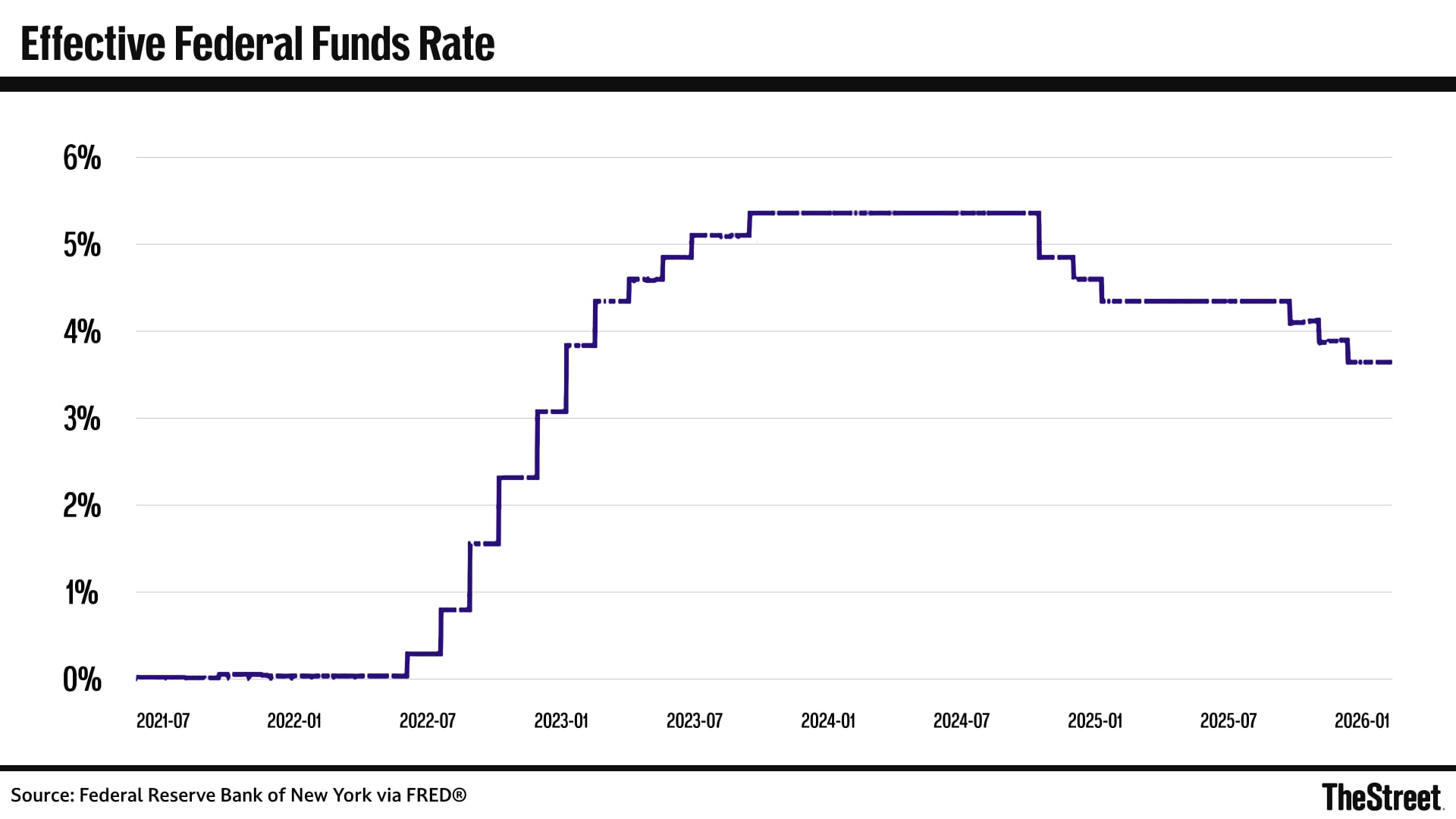
Op 18 maart 2026, liet de de Amerikaanse Federal Reserve haar benchmarkrente ongewijzigd voor de tweede opeenvolgende vergadering, en gaf aan dat er slechts één renteverlaging voor heel 2026 zal plaatsvinden, ondanks hardnekkige inflatiedruk en aanzienlijke economische onzekerheid.
Beleidsmakers noemden verhoogde inflatie, gemengde signalen op de arbeidsmarkt en geopolitieke turbulentie—met name het conflict rondom Iran en de impact daarvan op olieprijzen—als belangrijke factoren in hun voorzichtige houding.
Deze beslissing verraste enkele marktwaarnemers, gezien de verwachtingen eerder dit jaar dat de dalende inflatietrend mogelijk tot meer agressieve renteverlagingen zou leiden. Hieronder volgt een duidelijke uiteenzetting van wat de aankondiging van de Fed betekent voor de economie, de markten en de consumenten.

Wat de Fed heeft besloten
Het Federal Open Market Committee (FOMC) van de Fed stemde 11–1 om de fed funds rente binnen het bereik van 3,50%–3,75% te houden, waardoor de leenlasten op een niveau blijven dat beleidsmakers beschouwen als een balans tussen inflatiecontrole en economische ondersteuning. Alleen Gouverneur Stephen Miran stemde tegen en pleitte voor een onmiddellijke kwartpuntverlaging.
Belangrijkste beleidshoogtepunten
| Beleidsinstrument |
Huidige instelling |
Wijziging ten opzichte van de vorige vergadering |
| Doelbereik voor de Federal Funds |
3.50% – 3.75% |
Geen verandering |
| Voorspelde renteverlagingen in 2026 |
1 renteverlaging |
Ongewijzigd ten opzichte van de voorgaande prognose |
| Inflatievooruitzicht (PCE) |
2,7% tegen eind 2026 |
Hoger dan de voorspelde 2,4% |
| Groei‑prognose (BBP) |
2.4% |
Kleine opwaartse bijstelling |
| Geschatte werkloosheid |
4.4% |
Stabiel |
|
Bron: Fed-prognoses en uitkomsten van de vergaderingen
|
|
|

Waarom de Fed terughoudend is ten opzichte van grote renteverlagingen
Inflatie koelt niet snel genoeg af
Ondanks eerdere dalingen wordt de inflatie-indicator die de Fed verkiest—the Prijsindex voor persoonlijke consumptie-uitgaven (PCE)—nu verwacht het jaar af te sluiten op ongeveer 2,7%, boven het lange termijn doel van 2%. Hogere energieprijzen, gedreven door productieonderbrekingen en geopolitieke risico's, dragen aanzienlijk bij aan deze opwaartse bijstelling.
Stijgende olieprijzen hebben ripple-effecten door de hele economie: ze verhogen de kosten voor transport, goederen en diensten, waardoor disinflatie voor beleidsmakers moeilijker te rechtvaardigen is bij agressieve renteverlagingen.
Geopolitieke spanningen en olieprijs-schokken
Het voortdurende conflict met Iran—met name verstoringen nabij de Straat van Hormuz, een knelpunt voor wereldwijde olielevering—heeft Brent-olie ruim boven $100 per vat gebracht, waardoor extra inflatiedruk ontstaat. Fed-functionarissen omschreven de geopolitieke achtergrond als het creëren van onzekerheid in hun beleidsberekening.
Stijgende energieprijzen drijven niet alleen de algemene inflatie op, maar bemoeilijken ook de prognoses voor inflatieverwachtingen en economische groei.
Gemengde signalen op de arbeidsmarkt.
Onderdeel van het dubbele mandaat van de Fed is het ondersteunen van maximale werkgelegenheid. Hoewel de werkgelegenheidsgroei tekenen van verzwakking vertoont — met langzamere payroll-gegevens en zwakke signalen in de arbeidsdeelname — blijft de werkloosheid gematigd in vergelijking met historische normen.
Deze kloof maakt beleidsplanning moeilijk. Te veel renteverlagingen zouden de arbeidsmarkt verder kunnen verzwakken; te weinig zouden inflatie kunnen voortduren. Sommige Fed-functionarissen hebben zelfs gesuggereerd dat, als de inflatie niet decisief afneemt, renteverhogingen weer op tafel kunnen komen — een ongewoon vooruitzicht gezien de recente trends.
Waarom slechts één renteverlaging?
Beleidsmakers hebben de marktverwachtingen voor meerdere renteverlagingen teruggedrongen en benadrukken in plaats daarvan een voorzichtige, op data gebaseerde aanpak:
-
Inflatierisico’s blijven hoog. De opwaartse bijstelling van inflatieprognoses suggereert dat disinflatie niet gegarandeerd is.
-
Geopolitieke onzekerheid bemoeilijkt de vooruitzichten. Voortdurende instabiliteit rond olietoevoerroutes maakt economische uitkomsten moeilijker te voorspellen.
-
Arbeidsmarkt blijft veerkrachtig maar gemengd. Tekenen van verzwakking bestaan naast historisch lage werkloosheid.
-
Interne verdeeldheid blijft bestaan. Sommige functionarissen pleiten voor verlagingen; anderen geven de voorkeur aan handhaving of zelfs verstrakking als de inflatie de doelstellingen overschrijdt — wat de ideologische scheiding binnen de Fed benadrukt.
In de Fed-dotplot — een diagram dat de prognoses van individuele beleidsmakers laat zien — verwachten de meeste functionarissen nog steeds slechts één renteverlaging tegen het einde van 2026, hoewel sommigen geen enkele renteverlaging voorzien en zelfs een mogelijke verhoging in 2027.
Markten en reacties van beleggers
De financiële markten reageerden aanvankelijk met bescheiden bewegingen in aandelen, obligatie-opbrengsten en de Amerikaanse dollar. Handelaars nemen nu een vertraagde en mogelijk eenmalige renteverlaging later in het jaar in ogenschouw—mogelijk zo laat als december 2026— afhankelijk van inflatie en economische data.
Langetermijnrendementen laten ook tekenen van stijging zien, wat wijst op zorgen over inflatieverwachtingen en de voorzichtige vooruitzichten van de Fed.
Wat dit betekent voor consumenten en bedrijven
Leenkosten
Consumenten kunnen hypotheek- en leenrentes die hoger blijven voor langere tijd zien, terwijl de standvastige houding van de Fed de rentevoeten hoog houdt ondanks inflatiedruk.
Inflatieverwachtingen
Als inflatie weer versnelt, kunnen bedrijven de hogere kosten doorberekenen aan consumenten, wat het koopvermogen schaadt. Omgekeerd kan een vertraagde renteverlaging de economische activiteit vertragen, wat de werkgelegenheid en investeringen beïnvloedt.
Geopolitieke risico's
Globale verstoringen in de toeleveringsketen en volatiliteit van energiekosten blijven risico's die kunnen leiden tot hogere kosten voor huishoudens en bedrijven tot ver in 2026.
Vooruitzicht: Evenwichtig maar voorzichtig
De beslissing van de Fed onderstreept haar toewijding aan een gematigd beleid dat reageert op feitelijke economische data in plaats van alleen op prognoses. Hoewel de markten op meer versoepeling hoopten, beperken de realiteiten van aanhoudende inflatie, schokken op de energiemarkten en onzekerheid op de arbeidsmarkt het agressieve handelen.
Voorlopig lopen beleidsmakers een evenwichtsoefening—met als doel de inflatie onder controle te houden terwijl ze de groei ondersteunen, waarbij recente prognoses suggereren slechts één renteverlaging dit jaar en een volledige herziening afhankelijk is van veranderende omstandigheden.
Investeerders, consumenten en bedrijfsleiders zullen nu elk inflatiecijfer, elk arbeidsmarktrapport en geopolitieke ontwikkelingen volgen op signalen over wanneer of hoe de Fed mogelijk de volgende stap zet.
Lees verder
Fed-renteverlaging |VS-inflatiestijging |Wall Street daalt |Samsung-AMD AI-deal |VS-gasregels



 Acacia frida deluxe solid wood bed frame |
Bedroom bench |
Bed chest drawers |
Lingerie dresser |
Frame base |
Mirror with jewelry storage |
30 Bathroom Vanity |
Memory foam queen mattress |
Mattresses for back pain |
Nightstand set of 2 |
Grand Goldman Shop |
Civil Lawyer
Deutschland Trikot WM 2026
Acacia frida deluxe solid wood bed frame |
Bedroom bench |
Bed chest drawers |
Lingerie dresser |
Frame base |
Mirror with jewelry storage |
30 Bathroom Vanity |
Memory foam queen mattress |
Mattresses for back pain |
Nightstand set of 2 |
Grand Goldman Shop |
Civil Lawyer
Deutschland Trikot WM 2026










