

Airbus is testing artificial intelligence (AI) in one of the most delicate maneuvers of a flight: the landing. The European aerospace giant has unveiled a research project called the Vision Landing Application, which uses cameras mounted on the aircraft and computer vision to analyze runway references in real time during landing. The technology, presented at VivaTech 2026, is still in the research phase, but it hints at a future where AI assists pilots in the final moments of flight.
Landing a commercial aircraft may look routine from the passenger window, but it is actually one of the most demanding phases of flight. Pilots, navigation systems, weather conditions, and airport infrastructure must align with extreme precision. Airbus is exploring whether AI can help with that alignment.
Find Original Home Decor sparking conversation at Grand Goldman Shop.

What Is the Vision Landing Application?
The Vision Landing Application is a research project that uses onboard cameras and artificial intelligence to interpret visual cues from the runway during landing. The idea is to give pilots an extra layer of awareness by processing real-time images of the runway environment.
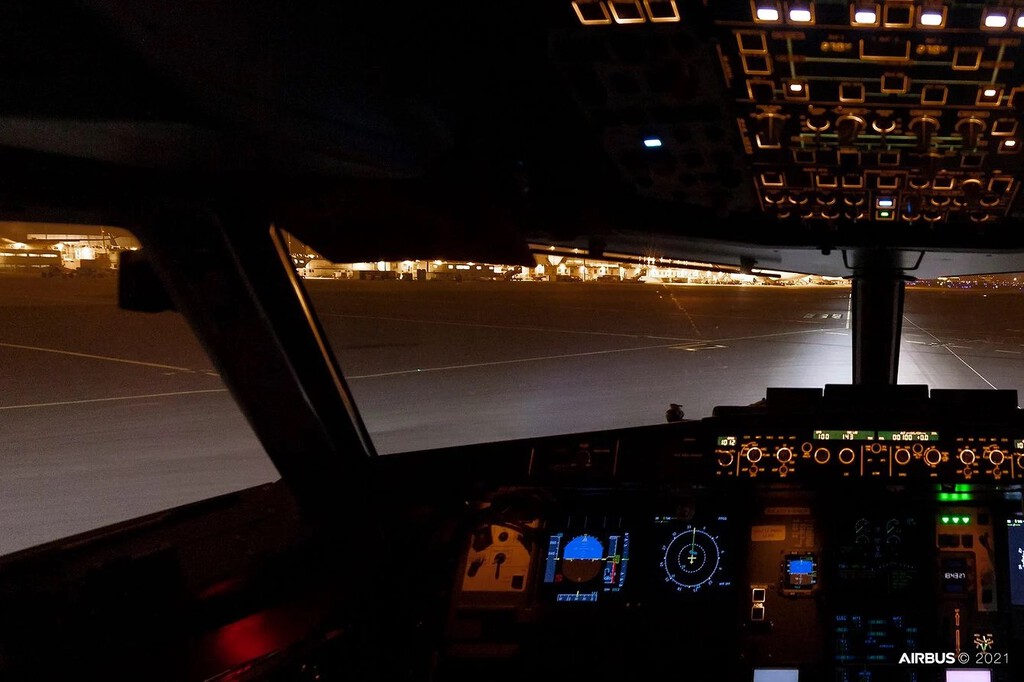
While the concept may sound similar to autonomous ground vehicles, aviation has its own set of constraints and safety standards. The application is not intended to replace pilots but to assist them by providing enhanced situational awareness.
Airbus has not announced a timeline for commercialization, emphasizing that the technology is still being studied. The company presented it at VivaTech 2026 as an example of how AI could be applied to aviation safety.
How AI Landing Assistance Differs from Autoland
Commercial aircraft already have autoland systems that can perform automatic landings under certain conditions. However, these systems require specific certification, airport infrastructure, and procedures. They are not universally available and often depend on the crew's decision to use them.
The Vision Landing Application aims to complement existing systems by using visual data to help pilots during the landing phase. It could potentially enhance safety in situations where autoland is not available or when visual references are critical.
Unlike autoland, which is a certified function, the Vision Landing Application is a research tool. It represents a step toward more intelligent assistance systems that can adapt to dynamic conditions.
Why AI in Landings Matters
Landing is a critical phase where most accidents occur. According to aviation safety data, a significant portion of accidents happen during approach and landing. Enhancing pilot awareness during this phase could contribute to safer operations.
AI and computer vision can help identify runway features, obstacles, or deviations that might be hard to spot, especially in low-visibility conditions. By providing real-time analysis, the system could give pilots more time to react.
Moreover, as aviation moves toward higher levels of automation, AI could play a role in reducing pilot workload and improving decision-making. However, regulatory approval and rigorous testing will be essential before any such system is deployed.
Key Takeaways
- Airbus is researching AI for landing assistance through its Vision Landing Application, which uses cameras and computer vision to analyze runway references.
- The technology is in the research phase and was presented at VivaTech 2026; no commercial timeline has been announced.
- It differs from autoland, which is a certified automatic landing system that requires specific infrastructure and conditions.
- AI could enhance pilot situational awareness during the landing phase, potentially improving safety.
- Regulatory and certification challenges remain before such systems can be used in commercial aviation.
Comparing Landing Technologies
| Technology | Description | Status | Key Requirements |
|---|---|---|---|
| Autoland | Automatic landing system that controls aircraft from approach to touchdown | Certified and in use | Airport infrastructure (ILS), crew certification, specific procedures |
| Vision Landing Application | AI and computer vision to analyze runway references in real time | Research phase | Onboard cameras, AI algorithms, further development and testing |
| Pilot-assisted landing | Pilots manually control landing with instrument guidance | Standard operation | Pilot training, instrument approach procedures |
What to Watch Next
Airbus's research is part of a broader trend of applying AI to aviation. As the technology matures, we can expect more announcements about AI-based assistance systems. However, the path to certification is long and rigorous. The background to this story is set out in Airbus Folding Wings Test: Next-Gen Plane Breakthrough. A related thread runs through US Space Force Tests First Real 'Star Wars' Maneuvers in Orbit. Earlier coverage in Airbus Hydrogen Engine Venture: A New Era in Aviation Propulsion shows how the argument developed.
Key milestones to watch include the results of Airbus's research trials, potential partnerships with airlines and airports, and regulatory developments from authorities like EASA and the FAA. Any deployment will require extensive validation to ensure safety. A closer look at the same subject appears in Car: latest articles. Anyone following the wider picture can start with Russia's MC-21-310 Takes First Flight to Replace Boeing and Airbus. The same theme surfaces in JetZero's Blended Wing Body Z4 Aims to Break the Airbus-Boeing Mold, which takes a different angle.
For now, the Vision Landing Application remains a promising concept that could one day make landings even safer. As Airbus continues to explore AI, the aviation industry will be watching closely. Context on how this played out before sits in FlyDubai Emergency Landing in Saudi Arabia After Pilot Fight. A companion piece, Airbus Tests AI Vision Landing: How Artificial Intelligence Is Changing, approaches the same subject from another angle.
FAQ
What is Airbus's Vision Landing Application?
The Vision Landing Application is a research project by Airbus that uses cameras and artificial intelligence to analyze runway references in real time during landing. It aims to assist pilots by providing enhanced situational awareness.
Is this technology available on commercial flights?
No, the Vision Landing Application is still in the research phase. Airbus has not announced a timeline for commercialization, and it will require extensive testing and certification before being used on commercial flights.
How does it differ from autoland?
Autoland is a certified system that can automatically land an aircraft under specific conditions and requires certain airport infrastructure. The Vision Landing Application is a research tool that uses AI and computer vision to assist pilots, not to replace existing autoland systems.
What are the potential benefits of AI in landings?
AI could enhance pilot awareness by identifying runway features and potential issues in real time, especially in low-visibility conditions. This could contribute to safer landings and reduce pilot workload.
Browse the Shop
 Acacia frida deluxe solid wood bed frame |
Bedroom bench |
Bed chest drawers |
Lingerie dresser |
Frame base |
Mirror with jewelry storage |
30 Bathroom Vanity |
Memory foam queen mattress |
Mattresses for back pain |
Nightstand set of 2 |
Grand Goldman Shop |
Civil Lawyer
Deutschland Trikot WM 2026







