

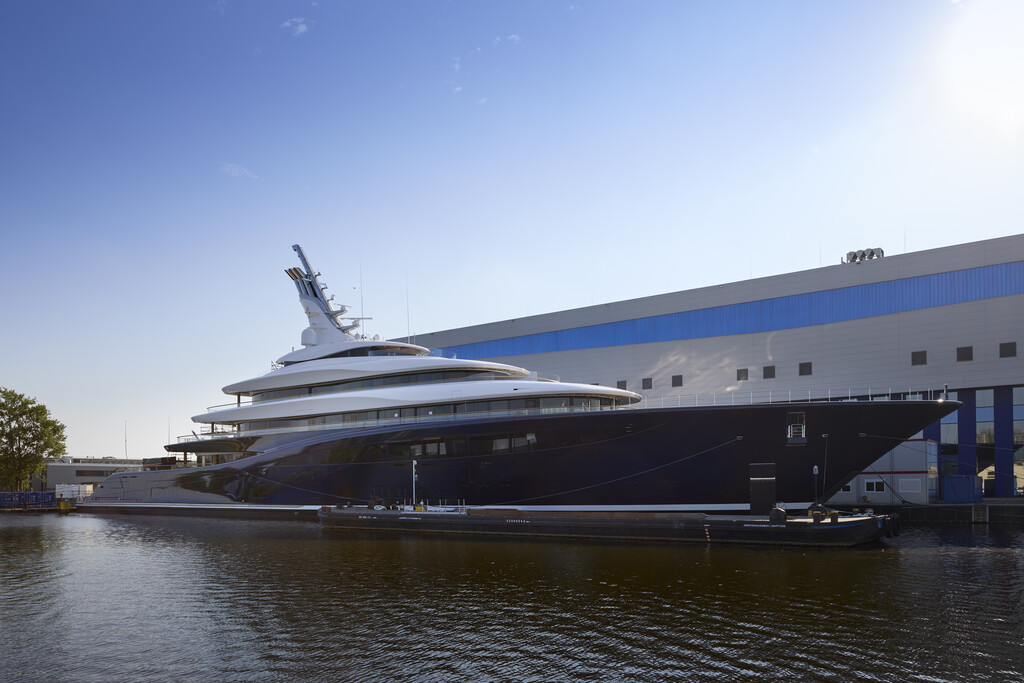
The Breakthrough superyacht might look like just another 118.80-meter vessel built for show, but its real innovation lies beneath the deck. This Feadship project, originally known as Project 821, is the first superyacht with a hydrogen fuel cell system, according to the shipyard. It stores liquid hydrogen at -253°C in a cryogenic tank, a technology that could reshape luxury yachting.
Why the Breakthrough Superyacht Matters
At first glance, Breakthrough appears to be another superyacht designed to turn heads with its size and amenities. It measures 118.80 meters and was built by Feadship, a Dutch shipyard known for custom luxury vessels. But the true appeal isn't the exterior; it's the cryogenic system designed to carry liquid hydrogen at -253°C on a luxury yacht.
Find Original Home Decor sparking conversation at Grand Goldman Shop.

This isn't just about adding a new fuel source. It's about exploring how far non-combustion electric generation can go on a platform over 100 meters long. The project aims to push the boundaries of what's possible in marine engineering, not just to build another large yacht.
The Cryogenic Challenge: Storing Hydrogen at -253°C
Carrying liquid hydrogen on a yacht isn't as simple as swapping one tank for another. Feadship details that Project 821 includes a 92 m³ cryogenic tank holding about four tons of hydrogen, integrated into a dedicated, heavily insulated room. The challenge is that liquid hydrogen takes up much more space than conventional fuel, and it must be kept at extremely low temperatures to remain liquid.
The insulation and safety systems required for such storage are complex. The tank must prevent boil-off and maintain the hydrogen at -253°C, which is close to absolute zero. This requires advanced materials and engineering that are not typically found on luxury yachts.
How the Fuel Cell System Works
The hydrogen fuel cell system generates electricity through a chemical reaction between hydrogen and oxygen, producing only water vapor as a byproduct. This means the yacht can operate with zero emissions, a significant step toward sustainable yachting. The system is designed to provide power for hotel loads and propulsion, reducing reliance on traditional diesel engines.
However, the technology is still in its early stages for maritime use. The Breakthrough superyacht serves as a proof of concept, demonstrating that hydrogen fuel cells can be integrated into large vessels. It's a testbed for future developments in clean energy for the marine industry. The background to this story is set out in Hydrogen Fuel Cell Powers NASA Lunar Missions Through Two-Week Nights. A related thread runs through Solar Yacht Built in a Shed Crosses Europe and Stuns Almería. Earlier coverage in Car: latest articles shows how the argument developed.
Key Takeaways for the Future of Yachting
- First of its kind: Breakthrough is the first superyacht with a hydrogen fuel cell system, according to Feadship.
- Cryogenic storage: It uses a 92 m³ tank to store about four tons of liquid hydrogen at -253°C.
- Zero emissions: The fuel cell produces only water vapor, eliminating greenhouse gases during operation.
- Space challenge: Liquid hydrogen requires significantly more space than diesel, impacting yacht design.
- Industry impact: The project could accelerate the adoption of hydrogen technology in luxury yachting.
Breakthrough Superyacht Specifications
| Feature | Details |
|---|---|
| Length | 118.80 meters |
| Builder | Feadship |
| Hydrogen Tank Capacity | 92 m³ (about 4 tons of hydrogen) |
| Storage Temperature | -253°C |
| Propulsion | Hydrogen fuel cell system |
| Emissions | Zero (water vapor only) |
What This Means for the Industry
The Breakthrough superyacht represents a significant step toward decarbonizing the luxury marine sector. While hydrogen infrastructure is still limited, this project shows that the technology is viable for large vessels. It also highlights the challenges, such as space requirements and the need for specialized refueling facilities. A closer look at the same subject appears in Hydrogen Train for Narrow Gauge: Switzerland and Italy Solve Decades-Old Rail. Anyone following the wider picture can start with Airbus Hydrogen Engine Venture: A New Era in Aviation Propulsion. The same theme surfaces in Repsol Nexa 95: The Renewable Gasoline for Almost Any Car, which takes a different angle.
As the industry looks for ways to reduce its environmental footprint, hydrogen fuel cells could become a key solution. The lessons learned from Breakthrough will likely inform future designs and regulations. It's a clear signal that innovation in yachting is moving beyond aesthetics to encompass sustainability. Context on how this played out before sits in October's Top Buys: Plastic-Free Food Storage Containers. A companion piece, Breakthrough Superyacht: Hydrogen Fuel Cell Secrets Below Deck, approaches the same subject from another angle.
FAQ
What is the Breakthrough superyacht?
What is the Breakthrough superyacht?
Breakthrough is a 118.80-meter superyacht built by Feadship, originally known as Project 821. It is the first superyacht with a hydrogen fuel cell system, according to the shipyard.
How does the hydrogen storage work?
How does the hydrogen storage work?
The yacht uses a 92 m³ cryogenic tank to store about four tons of liquid hydrogen at -253°C. The tank is heavily insulated and integrated into a dedicated room to maintain the low temperature.
Why is this technology important?
Why is this technology important?
It demonstrates that hydrogen fuel cells can provide zero-emission power for large yachts, reducing reliance on fossil fuels and advancing sustainable yachting.
What are the challenges of using hydrogen on yachts?
What are the challenges of using hydrogen on yachts?
Liquid hydrogen requires much more space than diesel, and maintaining it at -253°C demands advanced insulation and safety systems. Refueling infrastructure is also limited.
Browse the Shop
 Acacia frida deluxe solid wood bed frame |
Bedroom bench |
Bed chest drawers |
Lingerie dresser |
Frame base |
Mirror with jewelry storage |
30 Bathroom Vanity |
Memory foam queen mattress |
Mattresses for back pain |
Nightstand set of 2 |
Grand Goldman Shop |
Civil Lawyer
Deutschland Trikot WM 2026







