

If you spot a metallic, angular trailer that looks like a Tesla Cybertruck on a Spanish road, it's likely not a vehicle but a speed radar trailer. These futuristic-looking devices are being deployed to catch speeding drivers, and their presence is growing.
What Is the Cybertruck-Look Speed Radar?
The device is officially called the Poliscan Enforcement Trailer, manufactured by German company Vitronic. It's a mobile speed camera system housed in a trailer that can be easily moved and operates autonomously without constant human supervision.
Find Original Home Decor sparking conversation at Grand Goldman Shop.

Its design, reminiscent of the Tesla Cybertruck, has earned it the nickname "Cybertruck radar." But unlike the electric pickup, this trailer has a more specific purpose: enforcing speed limits and issuing automatic fines.

How Does the Poliscan Enforcement Trailer Work?
This radar trailer is equipped with high-performance batteries, allowing it to operate for extended periods in locations without electrical infrastructure. Once deployed, it monitors speed across multiple lanes with precision and can manage violations without the need for on-site operators.
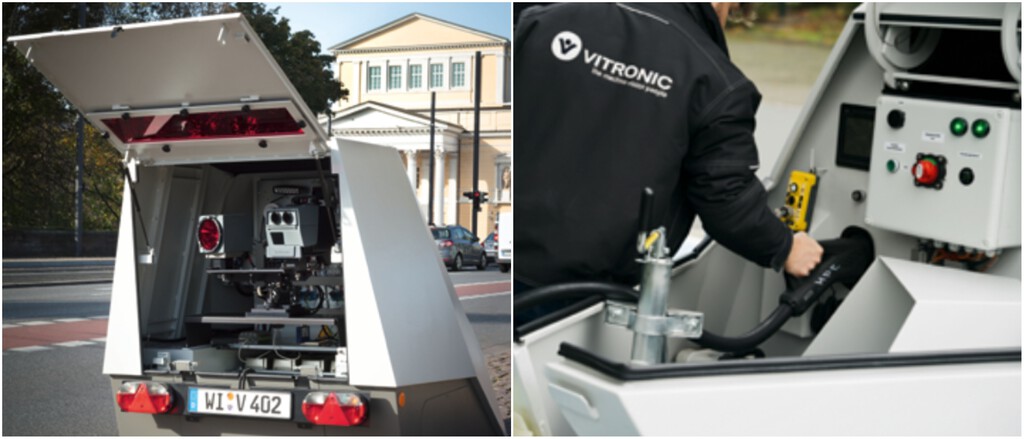
The system captures accurate speed measurements and records evidence, which is then processed for fines. Its mobility means it can be relocated to different hotspots, making enforcement unpredictable for drivers.
Where Is It Being Used?
While such trailers have been seen in other countries, they are now present in Spain. Their deployment is part of a broader effort to improve road safety and reduce speeding, which is a leading cause of accidents.
Spanish traffic authorities have not disclosed exact locations, but these trailers are likely to appear on highways and rural roads where fixed cameras are absent.
Why It Matters for Drivers
The introduction of these trailers means drivers can no longer rely on familiar fixed-camera locations to avoid fines. The mobile nature of the Poliscan trailer makes speed enforcement more widespread and unpredictable.
Moreover, the trailer's ability to operate autonomously in remote areas increases the risk of getting caught speeding where you least expect it. Context on how this played out before sits in Cybertruck-Look Speed Radar Trailers Now Enforcing in Spain. A companion piece, Madrid's Abandoned M-203 Highway Set for $61 Million Revival, approaches the same subject from another angle.
Key Takeaways
- Mobile enforcement: The Poliscan trailer can be moved easily to different locations.
- Autonomous operation: It runs on batteries and doesn't need constant supervision.
- Multi-lane monitoring: It can track speed across several lanes simultaneously.
- Unpredictable placement: Drivers can't rely on known camera spots to avoid detection.
- Growing presence: Already in use in Spain, with potential for expansion.
How It Compares to Other Speed Cameras
| Feature | Poliscan Enforcement Trailer | Fixed Speed Camera | Mobile Radar |
|---|---|---|---|
| Mobility | High (trailer-mounted) | None (fixed) | Moderate (vehicle-mounted) |
| Power Source | Battery | Electrical grid | Vehicle power |
| Operator Required | No | No | Yes |
| Multi-lane Coverage | Yes | Limited | Varies |
| Deployment Speed | Fast | Slow (installation) | Fast |
What to Watch Next
As Spain continues to adopt these trailers, drivers should expect stricter enforcement. The success of the Poliscan trailer may lead to more widespread use across Europe. The background to this story is set out in Car: latest articles. A related thread runs through Navarra's 30-Kilometer Average Speed Radar: What Drivers Must Know.
Authorities may also integrate these systems with other traffic management technologies, such as automatic number plate recognition (ANPR), to enhance enforcement further. Earlier coverage in Pamplona Deploys AI Traffic Cameras to Catch Driving Offenses shows how the argument developed. A closer look at the same subject appears in DGT Drug Tests in Spain: Half of Drivers Test Positive.
For now, the best advice is to adhere to speed limits and stay alert for these unconventional-looking trailers. They may look like something from a sci-fi movie, but their purpose is very real. Anyone following the wider picture can start with Masked Man Torches Speed Camera on A-92 Near Seville. The same theme surfaces in Spain's Universal Internet Service to Be 10x Faster by 2027, which takes a different angle.
FAQ
What is a Cybertruck speed radar?
It's a mobile speed camera trailer called the Poliscan Enforcement Trailer, made by Vitronic. Its angular design resembles the Tesla Cybertruck, hence the nickname.
How does the Poliscan trailer catch speeders?
It uses radar technology to measure vehicle speeds across multiple lanes and captures evidence of violations. It operates autonomously on battery power.
Are these trailers legal in Spain?
Yes, they are legally deployed by traffic authorities to enforce speed limits. Their use is part of Spain's road safety strategy.
Can I avoid getting a ticket from these trailers?
The only sure way is to obey speed limits. Because they are mobile and unpredictable, relying on memory of fixed camera locations won't help.
Browse the Shop
 Acacia frida deluxe solid wood bed frame |
Bedroom bench |
Bed chest drawers |
Lingerie dresser |
Frame base |
Mirror with jewelry storage |
30 Bathroom Vanity |
Memory foam queen mattress |
Mattresses for back pain |
Nightstand set of 2 |
Grand Goldman Shop |
Civil Lawyer
Deutschland Trikot WM 2026







