

Australia's six mystery spheres that washed up on Forrest Beach in Queensland are not extraterrestrial relics but space debris—specifically, pressure vessels from a rocket. The discovery sparked wild speculation before authorities confirmed their likely origin.
Residents first thought it was a prank, then an accident, and some even joked about UFOs. But the appearance of six large metal spheres on the shore mobilized firefighters, hazardous materials specialists, and the Australian Space Agency.
Find Original Home Decor sparking conversation at Grand Goldman Shop.

What seemed like strange objects dragged in by the sea actually pointed to a much more unusual source: outer space.
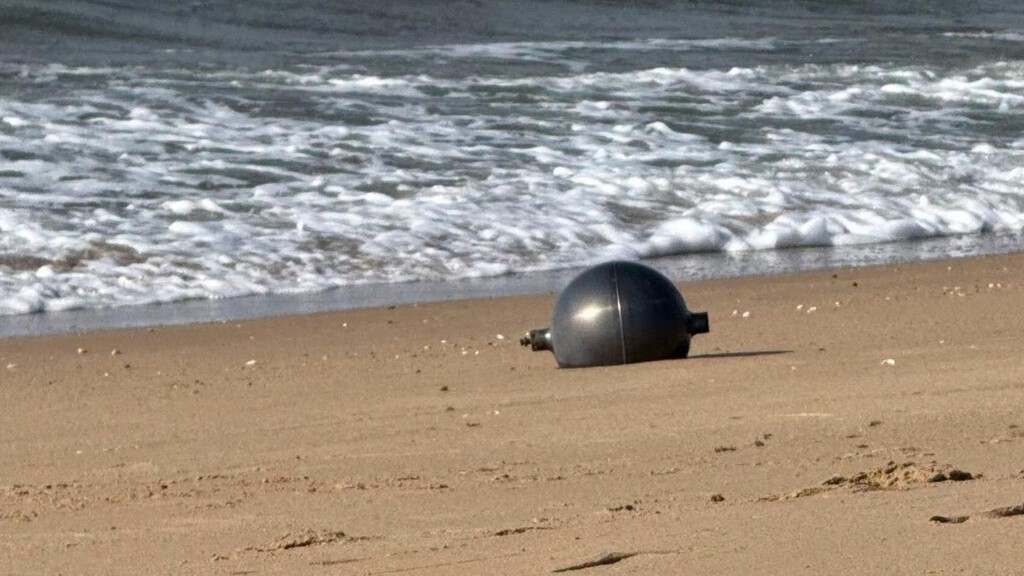
What Are the Six Spheres Found on Forrest Beach?
The spheres are pressure vessels used in space rockets to store gases and propellants during launch or in-orbit operations. Preliminary inspections suggest they are compatible with debris from a foreign launch vehicle that recently reentered the atmosphere.
Authorities are still working to definitively identify the vehicle they came from, but the evidence strongly points to space hardware rather than something alien.
Why Pressure Vessels Survive Reentry
These tanks are built from high-strength materials like titanium or composite overwrap to withstand the extreme pressures of launch. Their sturdy construction often allows them to survive the intense heat of reentry, landing relatively intact on Earth.
That's why they appear as intact spheres rather than fragmented scrap—a characteristic that initially confused onlookers.
The Skylab Precedent: When Space Debris Hit Australia Before
This isn't the first time Australia has been showered with space debris. In 1979, the Skylab space station disintegrated over Western Australia, scattering debris across the landscape.
The local authorities in Esperance famously fined NASA 400 Australian dollars for littering—a penalty born as a joke but now a curious episode in space exploration history.
The Skylab incident highlighted the unpredictable nature of reentry and the potential for debris to reach populated areas, though injuries are extremely rare.
How Common Is Space Debris Falling to Earth?
Most space debris burns up completely upon reentry, but larger components like pressure vessels can reach the ground. The Australian Space Agency regularly monitors reentry events and coordinates with international partners to track potentially hazardous objects.
While the chance of debris hitting a person is minuscule, the psychological impact of finding mysterious objects on a beach can be significant, as seen in Forrest Beach. The longer history behind the story is traced in Australia's Six Mystery Spheres Identified as Space Debris.
What to Do If You Find Suspected Space Debris
Authorities advise the public not to touch or move any suspicious objects. Instead, contact local emergency services, who can assess the situation and involve space agencies if necessary. The background to this story is set out in SpaceX Rocket Crashes into Moon: What It Means for Space Debris. A related thread runs through Recurrent Bacterial Vaginosis Causes Identified by Australian. Earlier coverage in Australia Flag Burning Laws and Australia Day Proposal shows how the argument developed.
In this case, the quick response of firefighters and hazardous materials teams ensured public safety and allowed experts to examine the spheres. A closer look at the same subject appears in Fake Customer Reviews in Australia: Legal or Not?. Anyone following the wider picture can start with Science: latest articles. The same theme surfaces in SpaceX Rocket to Hit Moon: NASA Collision Avoidance Plan, which takes a different angle.
Key Takeaways from the Forrest Beach Incident
- Six metal spheres found on an Australian beach are pressure vessels from a rocket, not alien artifacts.
- They likely came from a foreign launch vehicle that reentered the atmosphere recently.
- Such vessels can survive reentry due to their robust construction.
- The incident echoes the 1979 Skylab debris fall over Western Australia.
- Authorities remind the public to report suspicious objects rather than handle them.
Comparison of Notable Space Debris Events in Australia
| Event | Year | Location | Debris Type | Outcome |
|---|---|---|---|---|
| Skylab reentry | 1979 | Western Australia | Space station fragments | Debris scattered, NASA fined A$400 |
| Forrest Beach spheres | 2025 | Queensland | Rocket pressure vessels | Under investigation, no injuries |
The Forrest Beach case underscores the growing issue of space debris as more launches occur. While the objects turned out to be terrestrial in origin, they serve as a reminder of the crowded orbital environment. Context on how this played out before sits in Atomic-6 Space Armor: Satellite Shield Tested in Orbit. A companion piece, Ariane 6: Europe's Reliable Rocket Faces Costly Evolution Halt, approaches the same subject from another angle.
FAQ
What are the six spheres found on Forrest Beach?
They are pressure vessels from a space rocket, used to store gases and propellants. Authorities believe they came from a foreign launch vehicle that reentered the atmosphere.
Are the spheres dangerous?
They are not radioactive or explosive, but they could contain residual hazardous materials. The public should not handle them and should contact authorities if found.
Could the spheres be from aliens?
No, there is no evidence of extraterrestrial origin. The spheres are man-made space debris, consistent with rocket components.
How often does space debris fall in Australia?
Reentry events are relatively rare, but Australia's large landmass and coastlines increase the chance of debris landing there. The Skylab incident in 1979 is a famous example.
Browse the Shop
 Acacia frida deluxe solid wood bed frame |
Bedroom bench |
Bed chest drawers |
Lingerie dresser |
Frame base |
Mirror with jewelry storage |
30 Bathroom Vanity |
Memory foam queen mattress |
Mattresses for back pain |
Nightstand set of 2 |
Grand Goldman Shop |
Civil Lawyer
Deutschland Trikot WM 2026







