

In 19th century Granada, a man named Mariano Fernández Santiago became famous as the self-proclaimed Gypsy King, charging tourists for photographs with him. Known as Chorrojumo, he was a fixture on the Alhambra hill, dressed in vibrant traditional clothing and claiming to be the leader of the local Roma community. His story offers a fascinating glimpse into how tourism and myth-making shaped the image of Granada and its most famous monument.
The Man Who Called Himself the Gypsy King
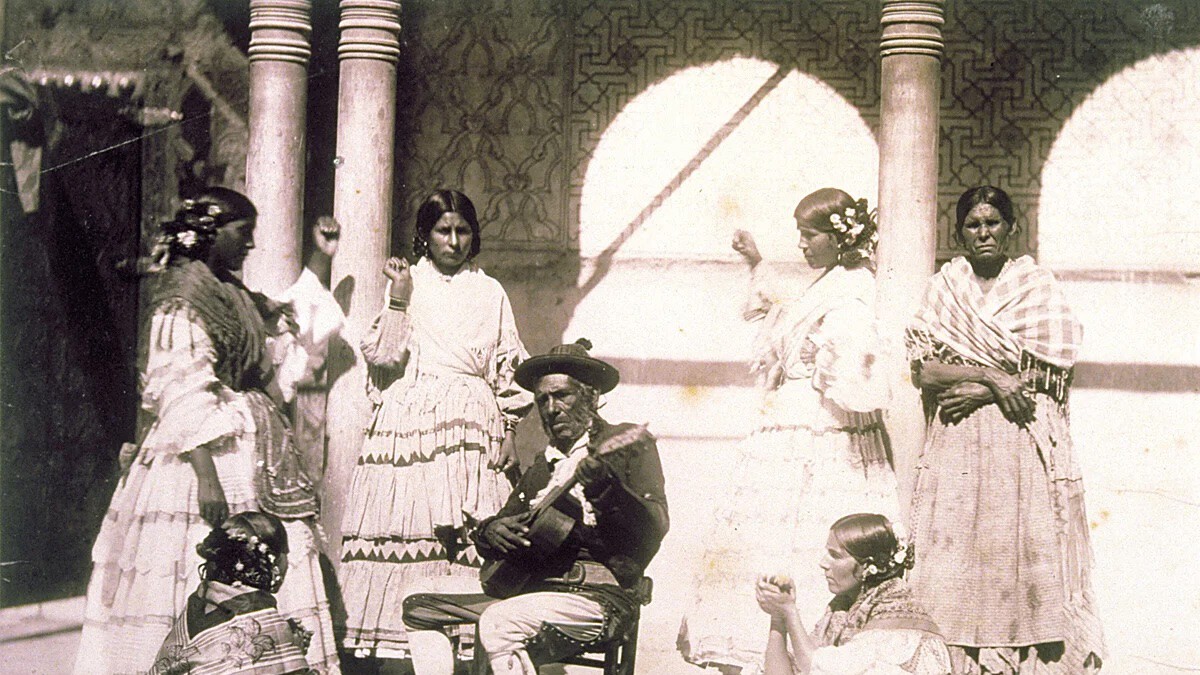
Anyone climbing to the Alhambra in the second half of the 19th century, often with Washington Irving's Tales of the Alhambra in hand, was likely to encounter a character who seemed to have stepped out of a romantic engraving. He wore a colorful scarf, a catite hat, a jacket with silver buttons, and a red sash. His name was Mariano Fernández Santiago, but everyone in Granada knew him as Chorrojumo.
Find Original, High-end Home Decor that spark conversation at Grand Goldman Shop.

He presented himself without shame as the "king of the gypsies," and his companions were, in his words, "his army." He was celebrated in poems and lived like a true dandy for most of his reign.
Origins and the Myth of His Birth
To make the myth more impressive, Chorrojumo claimed to have been born in the Alhambra itself. For a long time, this was widely believed. However, research by Gabriel Medina, reported by Granada Hoy, places his birth in Ítrabo in May 1838. Other sources, such as the University of Granada, suggest he was born in 1824, so the true date remains debated.
The nickname likely came from his first job at a forge in the Albaicín: he was called "Chorro de Humo" (stream of smoke), which in local dialect became Chorrojumo. Another version attributes it to the dark color of his skin. He worked as a horse trader and sheep shearer, and it is said that with his scissors he could draw motifs on... (truncated in source).
Chorrojumo as a Tourist Attraction
Chorrojumo understood the power of image and charged tourists to have their picture taken with him. In an era when photography was becoming popular among travelers, he offered them a piece of exotic Granada. Dressed in his striking attire, he posed for postcards and photographs, becoming one of the most recognizable figures of the city.
His presence was so influential that he was mentioned in travel books and newspapers. He even had a business card that read "Chorrojumo, King of the Gypsies." He was a savvy self-promoter, capitalizing on the romantic fascination with gypsies that was prevalent in Europe at the time. The background to this story is set out in Nor'easter Uncovers 19th-Century Shipwreck in Massachusetts. A related thread runs through Build a Classic 19th-Century Wooden Wardrobe: DIY Guide.
Why Chorrojumo Matters Today
Chorrojumo's story is more than a curiosity; it reflects how tourism and cultural stereotypes intersect. He was both a product and a creator of the romantic image of Granada. By playing the role of the Gypsy King, he gained fame and a degree of prosperity, but he also reinforced stereotypes about Roma people. Earlier coverage in Baby Auckland Inquest: 19th-Century Infant Killed with Twine shows how the argument developed. A closer look at the same subject appears in Trending: latest articles.
Today, his legacy is debated. Some see him as an entrepreneur who used the system to his advantage, while others view him as a symbol of the exoticization of Roma culture. Either way, his story is a reminder of the complex dynamics between tourism, identity, and power. Anyone following the wider picture can start with Spain's Grandchildren Law: How 1,000 Overseas Voters Inflate a Tiny Village. The same theme surfaces in Philips Hue Play Kit Review: Why It's a Game-Changer for Work, which takes a different angle.
Key Takeaways
- Chorrojumo was a 19th-century figure in Granada who called himself the Gypsy King.
- He charged tourists for photographs, becoming a popular attraction.
- His real name was Mariano Fernández Santiago, and his origins are disputed.
- He capitalized on the romantic fascination with gypsies and the Alhambra.
- His legacy highlights the intersection of tourism, culture, and stereotypes.
Chorrojumo's Life at a Glance
| Aspect | Details |
|---|---|
| Real Name | Mariano Fernández Santiago |
| Nickname | Chorrojumo (from "Chorro de Humo") |
| Claimed Title | King of the Gypsies |
| Birthplace (claimed) | Alhambra, Granada |
| Birthplace (research) | Ítrabo, Granada (1838) or 1824 |
| Occupation | Horse trader, sheep shearer, tourist attraction |
| Famous For | Posing for photos with tourists |
FAQ
Who was Chorrojumo?
Chorrojumo was the nickname of Mariano Fernández Santiago, a 19th-century resident of Granada who proclaimed himself the "King of the Gypsies" and became a popular tourist attraction by posing for photographs.
Why did Chorrojumo call himself the Gypsy King?
He likely adopted the title to capitalize on the romantic fascination with gypsies and to create a memorable persona that would attract tourists. It also gave him a sense of authority within his community.
Where was Chorrojumo born?
Chorrojumo claimed to have been born in the Alhambra, but research suggests he was born in Ítrabo in 1838, while other sources say 1824. The exact date and place remain uncertain.
How did Chorrojumo become famous?
He became famous by dressing in traditional clothing and positioning himself on the Alhambra hill, where he charged tourists for photographs. His image appeared on postcards and in travel literature, cementing his fame.
Browse the Shop
 Acacia frida deluxe solid wood bed frame |
Bedroom bench |
Bed chest drawers |
Lingerie dresser |
Frame base |
Mirror with jewelry storage |
30 Bathroom Vanity |
Memory foam queen mattress |
Mattresses for back pain |
Nightstand set of 2 |
Grand Goldman Shop |
Civil Lawyer
Deutschland Trikot WM 2026










