

China's CiADS nuclear reactor, an accelerator-driven system (ADS), is poised to revolutionize energy production by achieving up to 100 times greater efficiency than traditional reactors. This next-generation technology, developed over 15 years, aims to turn nuclear waste into a valuable fuel source, potentially providing green energy for 1,000 years. As Western nations debate nuclear strategies, China's rapid advancement signals a major shift in the global energy landscape.
What Is the CiADS Nuclear Reactor?
The CiADS (China Initiative Accelerator-Driven System) is a groundbreaking nuclear reactor that uses a particle accelerator to drive a subcritical reactor. Unlike conventional reactors, which rely on a self-sustaining chain reaction, CiADS employs an external neutron source to maintain the reaction. This design enhances safety and allows the reactor to transmute long-lived nuclear waste into shorter-lived isotopes, drastically reducing the environmental impact of nuclear energy.
Find Original Home Decor sparking conversation at Grand Goldman Shop.

Developed by the Institute of Modern Physics under the Chinese Academy of Sciences, CiADS represents a significant leap in nuclear technology. The system is designed to operate with a high degree of efficiency, extracting far more energy from the same amount of uranium compared to traditional light-water reactors.
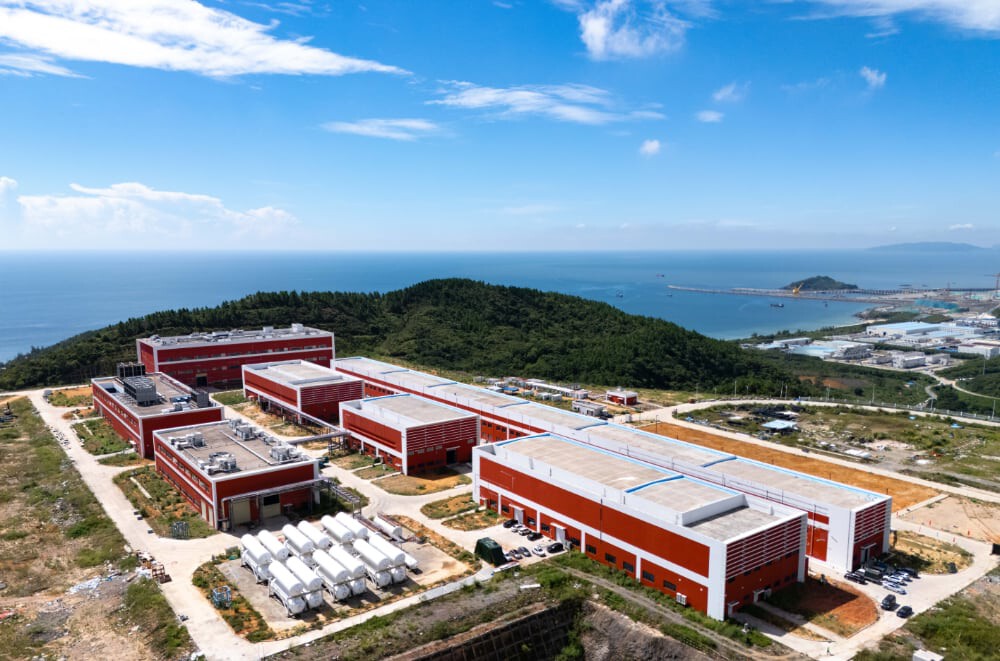
How Does an Accelerator-Driven System Work?
At the heart of CiADS is a powerful particle accelerator that fires protons at a heavy metal target (such as lead or tungsten) at 0.8 times the speed of light. This collision produces a shower of neutrons through a process called spallation. These neutrons then bombard the surrounding nuclear fuel, sustaining a fission chain reaction without the need for control rods to moderate the reaction.
The subcritical design means the reactor cannot sustain a chain reaction on its own; it relies on the accelerator to provide the necessary neutrons. If the accelerator stops, the reaction ceases almost immediately, offering an inherent safety feature. This makes ADS reactors less prone to meltdowns and more controllable than conventional systems.
Why CiADS Is 100 Times More Efficient
The efficiency of CiADS stems from its ability to utilize nuclear fuel more completely. Traditional reactors use only about 1% of the energy potential in uranium, leaving the rest as waste. In contrast, ADS reactors can burn a much larger fraction of the fuel, including actinides and other long-lived isotopes, through transmutation. This process not only extracts more energy but also reduces the volume and toxicity of nuclear waste.
Moreover, the system can be fueled with spent nuclear fuel from conventional reactors, effectively recycling waste. This closed fuel cycle could extend the availability of nuclear fuel for centuries, aligning with China's goal of sustainable energy independence.
China's Nuclear Ambitions and Global Implications
China's push for advanced nuclear technology is part of a broader strategy to dominate the global energy market. Recently, the country approved 10 new conventional reactors, but CiADS represents a leapfrog technology that could give China a competitive edge in exporting nuclear expertise. As Europe and the United States grapple with aging infrastructure and public opposition, China's accelerated development of ADS could position it as a leader in next-generation nuclear energy.
The CiADS project also supports China's ambitions in space exploration and other high-energy-demand industries. By securing a nearly limitless supply of clean energy, China aims to fuel its economic growth while reducing carbon emissions. The background to this story is set out in Achieving Good Health in a Broken US Medical System. A related thread runs through Energy Utilities: latest articles. Earlier coverage in Nuclear Power Construction Costs: Why China Outpaces the West shows how the argument developed.
Challenges and What to Watch Next
Despite its promise, CiADS faces technical hurdles. The accelerator must operate reliably at high power for extended periods, and the materials must withstand intense radiation damage. Additionally, the cost of building and operating an ADS reactor is currently higher than conventional reactors, though economies of scale could change that. A closer look at the same subject appears in BonÀrea's Deposit Return System Makes Plastic Recycling Work. Anyone following the wider picture can start with Russia's REMIX Nuclear Fuel Recycles Waste Up to Five Times. The same theme surfaces in Chinese Team's CO2 Power Plan for Mars Colonization, which takes a different angle.
China plans to complete a demonstration CiADS unit by 2030, with commercial deployment thereafter. If successful, this technology could be exported to other countries, reshaping global nuclear energy markets. Observers should watch for milestones in accelerator reliability and fuel cycle efficiency. Context on how this played out before sits in China's Carbonology Turns CO2 Into Fuel at Competitive Cost. A companion piece, China's CiADS Nuclear Reactor: 100x More Efficient Energy, approaches the same subject from another angle.
- CiADS uses a particle accelerator to drive a subcritical reactor, enhancing safety.
- The system can transmute nuclear waste, reducing long-lived radioactivity.
- Efficiency gains come from burning a higher fraction of uranium fuel.
- China aims to complete a demonstration unit by 2030.
- CiADS could provide energy for 1,000 years using existing waste stockpiles.
| Feature | Traditional Reactor | CiADS Reactor |
|---|---|---|
| Efficiency | ~1% uranium utilization | Up to 100x more efficient |
| Waste Management | Long-lived waste | Transmutes waste to shorter-lived isotopes |
| Safety | Requires control rods | Subcritical, inherently safe |
| Fuel | Enriched uranium | Spent fuel and actinides |
| Timeline | Operational now | Demo by 2030 |
FAQ
What is the CiADS nuclear reactor?
CiADS is an accelerator-driven system that uses a particle accelerator to produce neutrons for a subcritical reactor. It is designed to transmute nuclear waste and generate energy more efficiently than traditional reactors.
How does CiADS achieve 100 times more efficiency?
CiADS can burn a much larger fraction of nuclear fuel, including waste products, through transmutation. This extracts more energy from the same amount of uranium and reduces waste volume.
Is CiADS safe?
Yes, the subcritical design means the reactor cannot sustain a chain reaction without the accelerator. If the accelerator stops, the reaction stops, providing an inherent safety feature.
When will CiADS be operational?
China plans to complete a demonstration CiADS unit by 2030, with commercial deployment expected in the following years.
Browse the Shop
 Acacia frida deluxe solid wood bed frame |
Bedroom bench |
Bed chest drawers |
Lingerie dresser |
Frame base |
Mirror with jewelry storage |
30 Bathroom Vanity |
Memory foam queen mattress |
Mattresses for back pain |
Nightstand set of 2 |
Grand Goldman Shop |
Civil Lawyer
Deutschland Trikot WM 2026







