

What exactly is a heat wave? In Spain, the answer depends on the Agencia Estatal de Meteorología (AEMET), which uses a specific golden rule to declare one. Despite summers feeling like one long heat wave, AEMET's data shows that only three heat waves were officially recorded in Peninsular Spain and the Balearic Islands in summer 2025, and two in the Canary Islands.
The key is that these were long heat waves that gave little respite. The concept of a heat wave is somewhat diffuse: it is not described the same way in every country, and even within a single country, definitions can vary. Yet by any definition, heat waves are becoming more frequent and intense, making action on global warming essential.
Find Original Home Decor sparking conversation at Grand Goldman Shop.

What Is a Heat Wave? A Global Perspective
There is no single definition of a heat wave. Broadly, it can be considered a prolonged period of extreme temperatures for a specific region. Each country has its own definition, usually based on historical criteria. Even institutions have very specific definitions: the World Health Organization (WHO) and the World Meteorological Organization (WMO) define a heat wave as a period of unusually hot and dry or humid weather that lasts more than two days.
However, that definition is too general for operational purposes. National meteorological services adapt it to their local climate, which is why a heat wave in Spain is not the same as one in Norway or India.
AEMET's Golden Rule for Declaring a Heat Wave in Spain
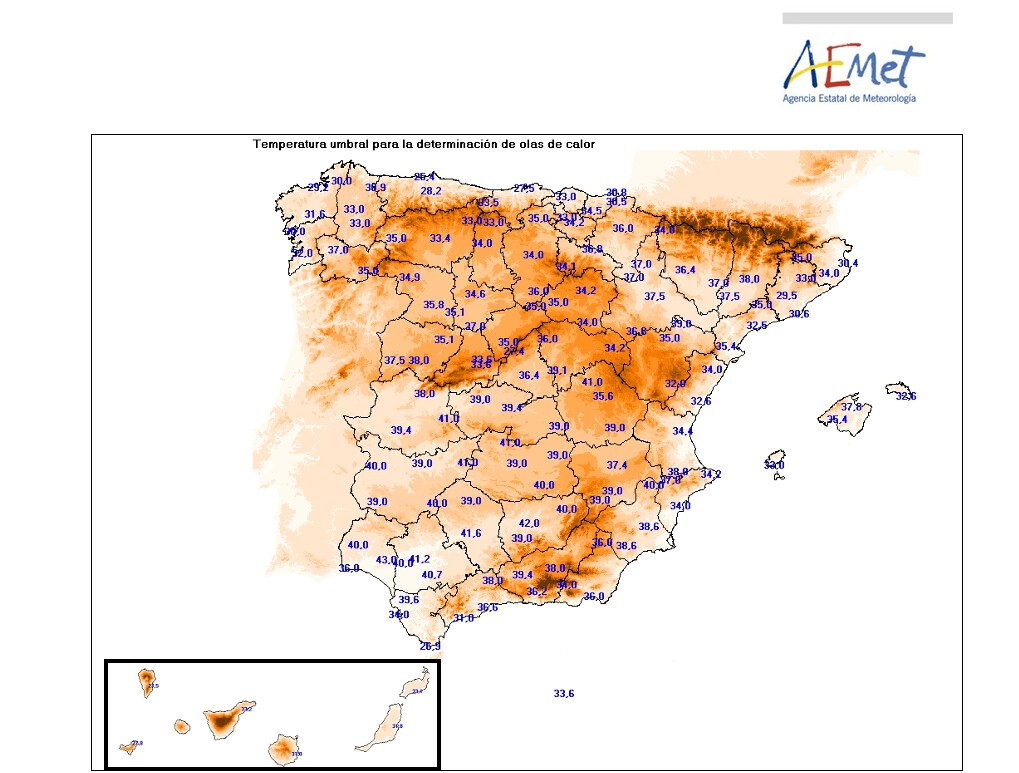
AEMET uses a precise criterion to declare a heat wave in Spain. The golden rule is based on maximum daily temperatures and their persistence. Specifically, AEMET considers a heat wave to occur when maximum temperatures exceed a certain threshold for at least three consecutive days.
But what is that threshold? It is not a fixed number for the whole country. Instead, AEMET uses percentile-based thresholds that vary by region and month. For each observatory, the threshold is set at the 95th percentile of daily maximum temperatures for the summer months (July and August) during the reference period 1971-2000. This means that temperatures must be in the top 5% of historically recorded values for that location and time of year.
Additionally, the heat wave must affect a significant area. AEMET requires that at least 10% of the weather stations in a region meet the criteria. This prevents isolated hot spots from being classified as a heat wave.
Why the 95th Percentile?
Using the 95th percentile ensures that the definition is statistically robust and adapted to local climate. It also allows for comparisons across regions and over time. As the climate warms, the threshold itself may shift, but the methodology remains consistent.
Summer 2025: Fewer Heat Waves, But Longer
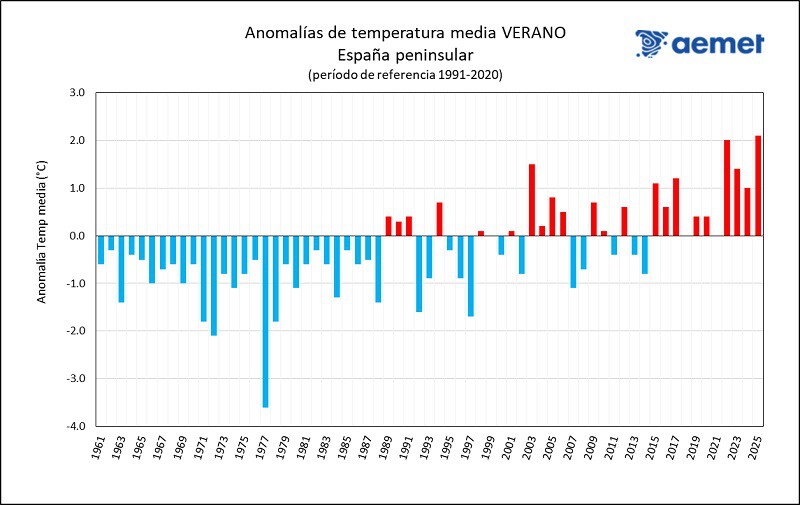
In summer 2025, AEMET recorded only three heat waves in Peninsular Spain and the Balearic Islands, and two in the Canary Islands. This may come as a surprise, given the perception of an endless heat wave. The explanation is that these heat waves were long-lasting, with little relief between them.
This pattern is consistent with climate change projections: heat waves are becoming less frequent but more intense and prolonged. The 2025 summer illustrates that a small number of heat waves can still produce a significant impact. The background to this story is set out in Spain's Fourth Heat Wave: AEMET Alerts Extreme Temperatures Amid Fire Crisis. A related thread runs through Spain Heat Wave Forecast: Meteorologists Warn of Brutal 45°C. Earlier coverage in Spain Faces Worst-Case Heat Wave Scenario as Climate Hotspot shows how the argument developed.
Key Takeaways
- AEMET declares a heat wave when maximum temperatures exceed the 95th percentile for at least three consecutive days.
- The threshold is region-specific and based on historical data (1971-2000).
- At least 10% of weather stations in a region must meet the criteria.
- Summer 2025 had only three heat waves in mainland Spain and the Balearics, and two in the Canaries, but they were long.
- Heat waves are becoming more intense and prolonged due to global warming.
Comparison of Heat Wave Definitions
| Organization/Country | Definition | Threshold |
|---|---|---|
| AEMET (Spain) | Maximum temperatures exceed 95th percentile for ≥3 consecutive days, affecting ≥10% of stations in a region | 95th percentile (1971-2000) |
| WMO/WHO | Period of unusually hot and dry or humid weather lasting >2 days | Varies |
| Other countries | Varies; often based on temperature anomalies or absolute thresholds | Varies |
Why This Matters for You
Understanding AEMET's definition helps you interpret weather warnings and prepare for extreme heat. When a heat wave is declared, it triggers public health alerts and emergency plans. It also informs sectors like energy, agriculture, and tourism. A closer look at the same subject appears in Extreme Heat Survival Depends on Air Conditioning Access. Anyone following the wider picture can start with Spain Heatwave Alert: AEMET Warns of Intense Heat Return. The same theme surfaces in Heat Waves Are Reshaping Spain's Tourism Industry Fast, which takes a different angle.
Moreover, as heat waves become more frequent and intense, knowing the criteria can help you understand climate trends and the need for adaptation measures. The distinction between a hot spell and an official heat wave is not just semantic; it has real implications for safety and policy. Context on how this played out before sits in Decathlon Handheld Fan: Beat Heat Waves for Under $30. A companion piece, Spain's AEMET Forecast: No Autumn in Sight as Heat Persists, approaches the same subject from another angle.
FAQ
What is the golden rule AEMET uses to declare a heat wave?
AEMET declares a heat wave when maximum temperatures exceed the 95th percentile for at least three consecutive days, affecting at least 10% of weather stations in a region. The percentile is based on data from 1971-2000.
Why were there only three heat waves in Spain in summer 2025?
Despite the perception of constant heat, AEMET's criteria are strict. The three heat waves in mainland Spain and the Balearics were long-lasting, giving little respite, which made the summer feel like one continuous heat wave.
How does AEMET's definition differ from the WMO's?
The WMO defines a heat wave as a period of unusually hot and dry or humid weather lasting more than two days. AEMET's definition is more specific, using statistical thresholds and area coverage to account for Spain's climate variability.
Are heat waves becoming more frequent in Spain?
While the number of heat waves may not increase dramatically, they are becoming more intense and longer-lasting. This aligns with global warming trends, which are expected to continue.
Browse the Shop
 Acacia frida deluxe solid wood bed frame |
Bedroom bench |
Bed chest drawers |
Lingerie dresser |
Frame base |
Mirror with jewelry storage |
30 Bathroom Vanity |
Memory foam queen mattress |
Mattresses for back pain |
Nightstand set of 2 |
Grand Goldman Shop |
Civil Lawyer
Deutschland Trikot WM 2026







