

Earth has a mysterious companion called Kamo'oalewa, a small asteroid that has been traveling alongside our planet for millions of years. Its origin has puzzled scientists, but new research is bringing us closer to answers. A recent study published in Icarus has assigned probabilities to different origin scenarios, suggesting that Kamo'oalewa is more likely a fragment from the Moon than an escaped asteroid from the main belt.
Kamo'oalewa, officially known as (469219) Kamo'oalewa, is a quasi-satellite of Earth—a type of co-orbital object that takes the same amount of time as Earth to complete one orbit around the Sun. This means it stays near our planet over many years, effectively acting as a companion. The asteroid measures between 24 and 107 meters in diameter, making it relatively small compared to other near-Earth objects.
Find Original Home Decor sparking conversation at Grand Goldman Shop.

What Is Kamo'oalewa and Why Is It Important?
Kamo'oalewa is one of the most well-known co-orbitals of Earth. It was discovered in 2016 by the Pan-STARRS telescope in Hawaii. The name Kamo'oalewa is of Hawaiian origin and refers to a celestial object that moves in a way that resembles a swinging motion. This object is particularly interesting because it is easily accessible from Earth, making it a potential target for future robotic missions.
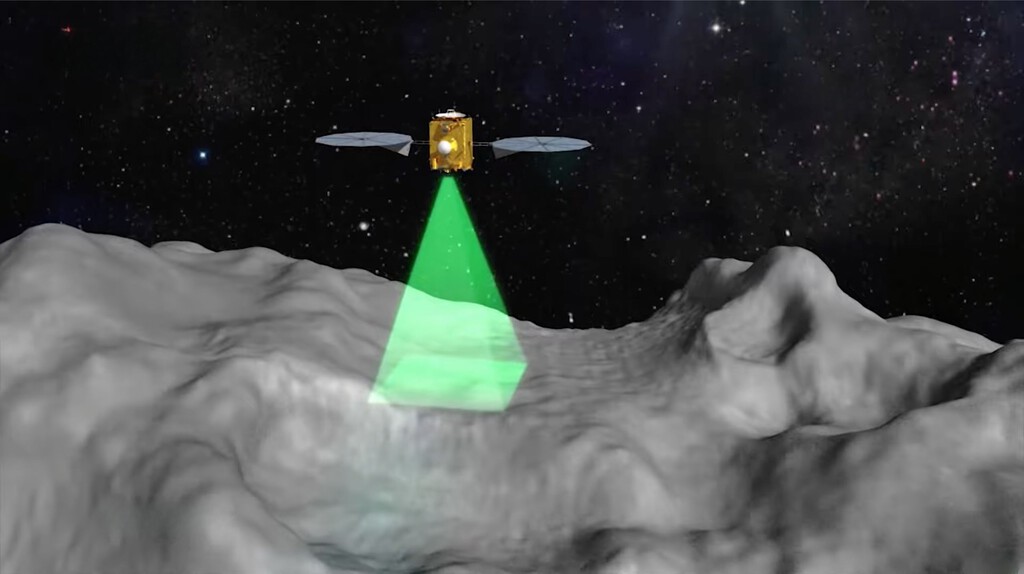
Studying Kamo'oalewa can provide insights into the dynamics of near-Earth space and the origins of small bodies in our solar system. Its composition, as revealed by spectral analysis, shows a high abundance of silicates, which are common in lunar rocks. This has led scientists to hypothesize that it may have originated from the Moon.
The Two Leading Origin Theories
There are two main hypotheses for the origin of Kamo'oalewa. The first is that it escaped from the asteroid belt, a region between Mars and Jupiter where many small bodies reside. The second is that it is a fragment of the Moon, ejected into space after a meteorite impact on the lunar surface.
Previous studies have suggested that Kamo'oalewa's spectral signature matches that of lunar samples, particularly those from the Giordano Bruno crater. This crater, located on the far side of the Moon, was formed by a massive impact about 800 years ago. The impact could have thrown debris into space, some of which may have become co-orbitals of Earth.
However, the new study, led by researchers at the University of Arizona, has used computer simulations to model the dynamical evolution of Kamo'oalewa and similar objects. They found that the probability of a lunar origin is higher than that of an asteroid belt origin, but the uncertainty remains significant.
What the New Study Found
The researchers simulated the orbital evolution of thousands of test particles to see how likely it is for material from the Moon or the asteroid belt to end up in a co-orbital state with Earth. They considered factors such as the gravitational influence of planets and the Yarkovsky effect, which is a subtle force that can alter the orbits of small asteroids over time.
Their results indicate that lunar ejecta have a higher chance of becoming co-orbitals than asteroids from the main belt. Specifically, they estimated that the probability of Kamo'oalewa originating from the Moon is about 70%, while the probability of an asteroid belt origin is around 30%. These probabilities are based on current observational data and modeling, but they are not definitive.
Key Takeaways from the Research
- Kamo'oalewa is a quasi-satellite of Earth, meaning it shares a similar orbit and stays near our planet over long periods.
- Spectral analysis shows a silicate-rich composition, which is consistent with lunar material.
- The new study assigns a 70% probability to a lunar origin and a 30% probability to an asteroid belt origin.
- The Giordano Bruno crater impact is a plausible source for lunar ejecta that could become co-orbitals.
- Future missions to Kamo'oalewa could provide definitive answers by returning samples for analysis.
Comparison of Origin Hypotheses
| Hypothesis | Probability | Supporting Evidence | Challenges |
|---|---|---|---|
| Lunar origin | ~70% | Silicate-rich composition matches lunar samples; dynamical simulations favor lunar ejecta | Requires a recent impact to eject material; exact source crater not confirmed |
| Asteroid belt origin | ~30% | Some asteroids have similar spectral properties; dynamical pathways exist | Low probability of reaching co-orbital state; composition less consistent |
What's Next for Kamo'oalewa Research?
To definitively determine the origin of Kamo'oalewa, scientists need more data. Ground-based telescopes can only provide limited information. A dedicated mission to study the asteroid up close would be ideal. China's space agency has announced plans for a mission to Kamo'oalewa, called ZhengHe, which is scheduled to launch in the mid-2020s. The mission aims to return samples from the asteroid to Earth, which would allow scientists to analyze its composition in detail. The background to this story is set out in China's Tianwen-2 Mission to Reach Kamo'oalewa Asteroid. A related thread runs through China's Tianwen-2 Probe Reaches Kamo'oalewa Asteroid After 400 Days.
In the meantime, astronomers continue to observe Kamo'oalewa with telescopes such as the Large Binocular Telescope (LBT) and the Lowell Discovery Telescope (LDT). These observations help refine our understanding of its physical properties and orbit. Earlier coverage in Science: latest articles shows how the argument developed. A closer look at the same subject appears in Elon Musk's Lunar Catapult: Moon as Satellite Factory.
The mystery of Kamo'oalewa's origin is not just an academic question. It has implications for our understanding of how material moves around the solar system and how the Moon's history is recorded in its ejecta. It also highlights the importance of studying near-Earth objects, which could be resources for future space exploration or potential hazards. Anyone following the wider picture can start with Japanese Scientists Create Lunar Fertilizer Using Air and Plasma. The same theme surfaces in Star Catcher's $88M Space Power Grid to Recharge Satellites, which takes a different angle.
FAQ
What is Kamo'oalewa?
Kamo'oalewa is a small asteroid that is a quasi-satellite of Earth. It orbits the Sun in a way that keeps it near Earth for many years. It was discovered in 2016 and is officially designated (469219) Kamo'oalewa.
Why do scientists think Kamo'oalewa came from the Moon?
Spectral analysis shows that Kamo'oalewa has a silicate-rich composition similar to lunar rocks. Additionally, dynamical simulations suggest that material ejected from the Moon by impacts has a relatively high chance of becoming a co-orbital of Earth.
What is the Giordano Bruno crater?
The Giordano Bruno crater is a young impact crater on the far side of the Moon. It was formed by a massive impact about 800 years ago. Some scientists believe that Kamo'oalewa could be a fragment ejected from this crater.
Will we ever know for sure where Kamo'oalewa came from?
A definitive answer will likely require a sample-return mission. China plans to launch the ZhengHe mission to Kamo'oalewa in the mid-2020s, which aims to return samples for laboratory analysis. Until then, scientists rely on remote observations and modeling.
Browse the Shop
 Acacia frida deluxe solid wood bed frame |
Bedroom bench |
Bed chest drawers |
Lingerie dresser |
Frame base |
Mirror with jewelry storage |
30 Bathroom Vanity |
Memory foam queen mattress |
Mattresses for back pain |
Nightstand set of 2 |
Grand Goldman Shop |
Civil Lawyer
Deutschland Trikot WM 2026







