

Einstein's theory of general relativity has been validated once again by the black hole image data from the Event Horizon Telescope (EHT). After six years of processing images of the supermassive black hole at the center of galaxy Messier 87 (M87*), researchers have concluded that the observations align with Einstein's predictions. This milestone not only confirms the original 2017 image but also reinforces the robustness of general relativity in extreme gravitational environments.
The Journey to the First Black Hole Image
The EHT collaboration released the first-ever image of a black hole in 2019, based on observations taken in 2017. The image showed a bright ring of hot plasma surrounding a dark central shadow—the signature of a black hole's event horizon. However, some researchers questioned the image's reliability, prompting the EHT to conduct further observations.
Find Original, High-end Home Decor that spark conversation at Grand Goldman Shop.
In 2018, the EHT added the Greenland Telescope (GLT) to its array and captured a second image of M87*. This new image, published in 2024, took six years to process but provided independent confirmation of the first. The persistence of the black hole's shadow size across both images strongly supports the predictions of general relativity.
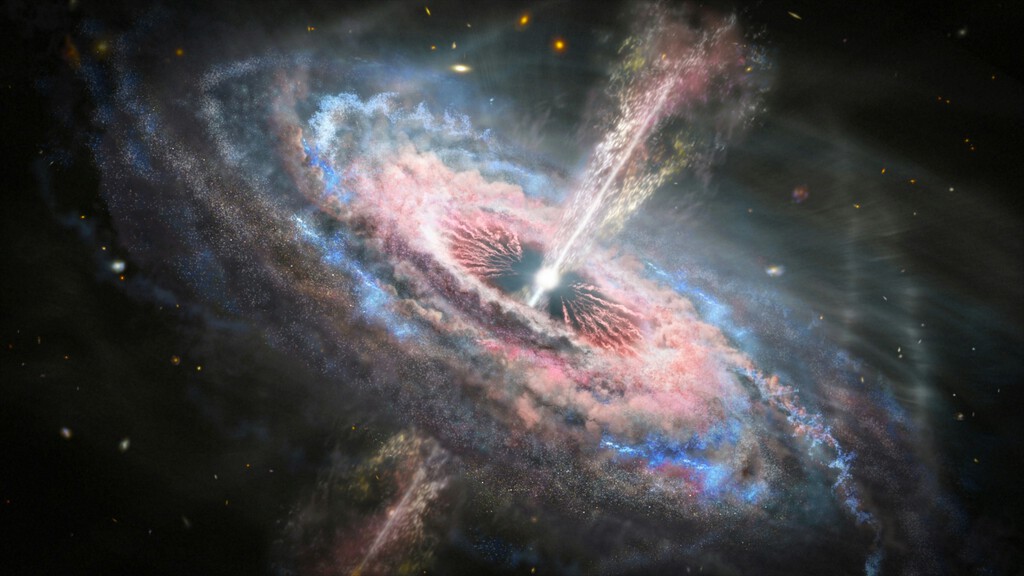
How the Event Horizon Telescope Works
To resolve the shadow of a black hole, the EHT needed a telescope with an effective diameter of about 10,000 kilometers—roughly the size of Earth. Instead of building such a massive instrument, the EHT used very-long-baseline interferometry (VLBI) to combine data from radio telescopes and antennas worldwide.
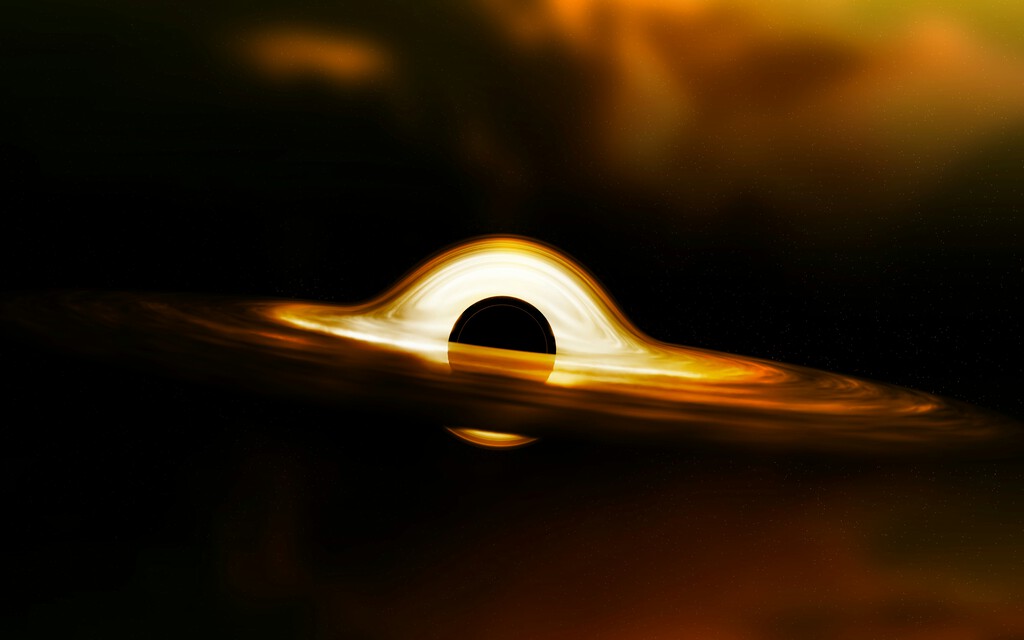
During a week-long observing campaign in 2017, the EHT collected 250 petabytes of data. Processing this immense dataset took years, but it yielded the first image. The addition of the GLT for the 2018 campaign provided a crucial independent check.
Key Findings from the Second Image
The second image of M87*, taken just over a year after the first, shows the same central shadow size and orientation. This consistency is a powerful test of general relativity: the theory predicts that the shadow's size depends only on the black hole's mass, which is stable over human timescales.
- Consistent shadow size: The dark central region remains about 42 microarcseconds across, matching predictions.
- Independent confirmation: The 2018 data were processed separately, ruling out systematic errors in the original image.
- Validation of Einstein's theory: The results are consistent with general relativity's description of light bending around a massive object.
- Improved calibration: The GLT added new baselines, enhancing image fidelity.
- Long-term monitoring: The EHT plans continued observations to study the black hole's variability.
Comparison of the 2017 and 2018 Observations
| Observation | Year | Telescopes Used | Data Volume | Processing Time |
|---|---|---|---|---|
| First image | 2017 | 8 stations | ~4 petabytes | ~2 years |
| Second image | 2018 | 9 stations (incl. GLT) | ~6 petabytes | ~6 years |
The table highlights the increased complexity of the 2018 campaign, which included the GLT and required more extensive processing. Despite the challenges, the second image corroborated the first, solidifying confidence in the EHT's results.
Why This Matters for Physics
General relativity has passed every test so far, but black holes offer the most extreme gravitational fields. Confirming that the shadow's size matches predictions in this regime further validates Einstein's theory. It also rules out alternative theories of gravity that predict different shadow sizes.
Moreover, the success of the EHT demonstrates the power of global collaboration and advanced data processing. The project involved hundreds of researchers and required innovative algorithms to handle the enormous datasets. The background to this story is set out in Einstein's 90-Year Math Puzzle Solved by Spanish Researcher. A related thread runs through Black Hole Star Discovery: New Cosmic Object Found. Earlier coverage in EU Return Hubs Risk Creating a Human Rights Black Hole shows how the argument developed.
What's Next for Black Hole Research
The EHT is not stopping at M87*. In 2022, it released the first image of Sagittarius A*, the black hole at the center of our Milky Way. Future observations will aim to capture dynamic changes in the black hole's accretion disk and test general relativity even more precisely. A closer look at the same subject appears in Europe’s Return Hubs Risk Creating a Human Rights Black Hole. Anyone following the wider picture can start with Black Holes Burp Mystery Solved by Scientists. The same theme surfaces in Black Hole Plasma Jets Seen at 13 Times Light Speed, which takes a different angle.
Plans include adding more telescopes to the array, such as the Kitt Peak National Observatory and the African Millimeter Telescope, to improve resolution and sensitivity. These upgrades will enable researchers to study the black hole's environment in unprecedented detail. Context on how this played out before sits in Fastest Known Star in Milky Way Discovered Orbiting Black Hole.
FAQ
What is the black hole image that confirms Einstein's theory?
The image refers to the Event Horizon Telescope's observations of the supermassive black hole M87*. The second image, taken in 2018 and published in 2024, confirmed the first and validated general relativity's predictions.
How long did it take to process the black hole images?
The first image took about two years to process, while the second image took six years due to the inclusion of additional data and more complex analysis.
Why is the black hole shadow size important for general relativity?
General relativity predicts that the shadow's size depends only on the black hole's mass. Observing a consistent size across different times confirms the theory and rules out alternative gravity models.
What telescopes are part of the Event Horizon Telescope?
The EHT is a global network of radio telescopes, including the Atacama Large Millimeter/submillimeter Array (ALMA), the Greenland Telescope, and others. The array operates as a single virtual telescope using interferometry.
Browse the Shop
 Acacia frida deluxe solid wood bed frame |
Bedroom bench |
Bed chest drawers |
Lingerie dresser |
Frame base |
Mirror with jewelry storage |
30 Bathroom Vanity |
Memory foam queen mattress |
Mattresses for back pain |
Nightstand set of 2 |
Grand Goldman Shop |
Civil Lawyer
Deutschland Trikot WM 2026







