

The Valencia housing talks have failed after 40 days, leading to the dismantling of the encampment in Plaza del Ayuntamiento. The second negotiation table with government officials did not proceed, prompting protesters to remove their tents. This outcome highlights the deepening housing crisis in Spain and the challenges of reaching political consensus.
Background: How the Valencia Housing Protest Began
On October 3, demonstrations for housing rights took place in about 50 cities across Spain. In Valencia, the march ended with police charges near the Palau de les Arts, where a real estate congress was being held. That same afternoon, some protesters set up tents in Plaza del Ayuntamiento, inspired by the Sol encampment in Madrid, which had been active since September 26 and ended on November 3.
Find Original Home Decor sparking conversation at Grand Goldman Shop.

The Valencia encampment quickly grew, becoming a focal point for demands for affordable housing and rent regulation. It mirrored similar actions in other Spanish cities, where activists have been calling for stronger tenant protections.
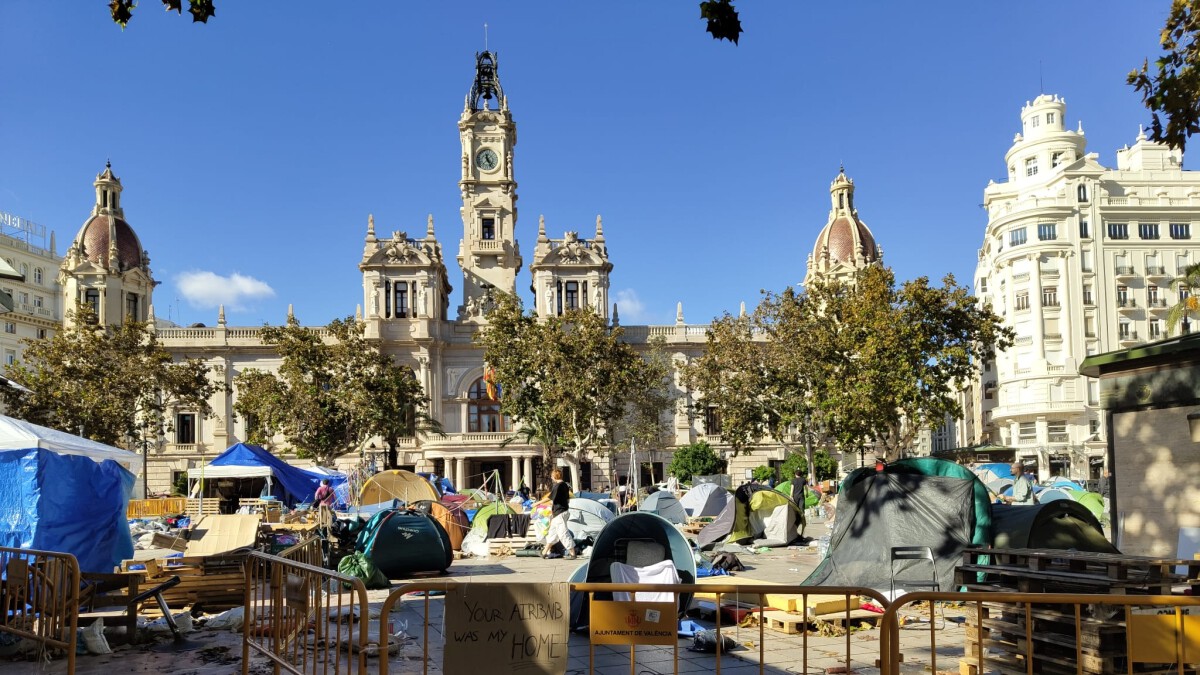
Demands of the Valencia Housing Encampment
The protesters had two main demands: first, that Valencia be declared a tensioned housing zone, allowing for rent caps; and second, that the regional government take immediate action to curb rising rents. These demands reflect broader frustrations with speculative real estate practices and the lack of affordable housing in urban areas.
The encampment also sought to raise awareness about the difficulties faced by young people and low-income families in accessing housing. Despite widespread support, the negotiations with authorities failed to yield concrete results.
The Second Negotiation Table Fails
The second negotiation table, which protesters had set as a condition for ending the encampment, did not move forward. According to sources, disagreements over the agenda and the participation of certain stakeholders led to the collapse of talks. This failure prompted the encampment to begin disassembling on the morning of the 40th day.
The breakdown underscores the gap between grassroots movements and institutional politics. While protesters demand urgent measures, authorities argue that housing policies require careful planning and legal frameworks. The background to this story is set out in Barcelona Cuts Power to Plaza Catalunya Protest Camp Over Safety. A related thread runs through Barcelona Rent Control: Why Rents Fell 4.4% but Supply Is Shrinking. Earlier coverage in Portugal Housing Crisis: Police Dismantle Protest Camps in Lisbon shows how the argument developed.
Impact on the Community and Future Prospects
The end of the encampment does not mean the end of the housing struggle. Activists vow to continue pressuring officials through other means, including local assemblies and electoral campaigns. The failure of negotiations may also influence public opinion ahead of upcoming regional elections. A closer look at the same subject appears in Trending: latest articles. Anyone following the wider picture can start with 3D-Printed Prefab Homes: A Partial Fix for Spain's Housing Crisis. The same theme surfaces in Spain Housing Market 2026: Sales Fall but Prices Keep Rising, which takes a different angle.
For residents of Valencia, the housing crisis remains acute, with rents continuing to rise and evictions still occurring. The encampment succeeded in putting the issue on the political agenda, but tangible solutions are yet to be seen. Context on how this played out before sits in Rodri's Verdict Exposes Valencia Crisis: Woeful Season Analysis. A companion piece, Rising Add-On Utility Fees: How They Lead to Tenant Evictions, approaches the same subject from another angle.
Key Takeaways from the Valencia Housing Protest
- The encampment lasted 40 days and was inspired by similar protests in Madrid.
- Protesters demanded that Valencia be declared a tensioned housing zone to cap rents.
- The second negotiation table failed, leading to the dismantling of the camp.
- Housing activists plan to continue their struggle through other channels.
- The crisis highlights the need for effective housing policies in Spanish cities.
Comparison of Encampment Estimates and Outcomes
| Date | Estimated Tents | Key Event |
|---|---|---|
| October 3 | Initial setup | Protest and police charges |
| October 12 | Over 400 | Encampment grows |
| October 16 | Over 700 | Municipal spokesperson reports |
| November 3 | Over 600 | Sol encampment ends |
| November 12 | Dismantling | Negotiations fail |
FAQ
Why did the Valencia housing encampment end?
The encampment ended because the second negotiation table with authorities failed to take place. Protesters had conditioned their departure on this meeting, and when it did not happen, they began dismantling the camp.
What were the main demands of the protesters?
They demanded that Valencia be declared a tensioned housing zone to allow rent caps and urged the regional government to take immediate action against rising rents.
How many people participated in the encampment?
Estimates vary: at its peak, there were over 700 tents according to municipal sources, but the number of individuals is unclear as tents often housed multiple people.
What happens next for housing activists in Valencia?
Activists plan to continue their struggle through local assemblies and political pressure, aiming to keep housing on the public agenda.
The Valencia housing talks failure serves as a stark reminder of the complexities involved in addressing urban housing crises. As the city moves forward, the need for dialogue and effective policy remains paramount.
Browse the Shop
 Acacia frida deluxe solid wood bed frame |
Bedroom bench |
Bed chest drawers |
Lingerie dresser |
Frame base |
Mirror with jewelry storage |
30 Bathroom Vanity |
Memory foam queen mattress |
Mattresses for back pain |
Nightstand set of 2 |
Grand Goldman Shop |
Civil Lawyer
Deutschland Trikot WM 2026







