

Legalize-es has transformed access to Spanish legislation by converting over 12,000 laws and reforms into Markdown files hosted on GitHub, making legal search easier than ever. This innovative project, created by computer engineer Enrique López, addresses the common frustration of navigating the Boletín Oficial del Estado (BOE) and regional bulletins.
What is Legalize-es?
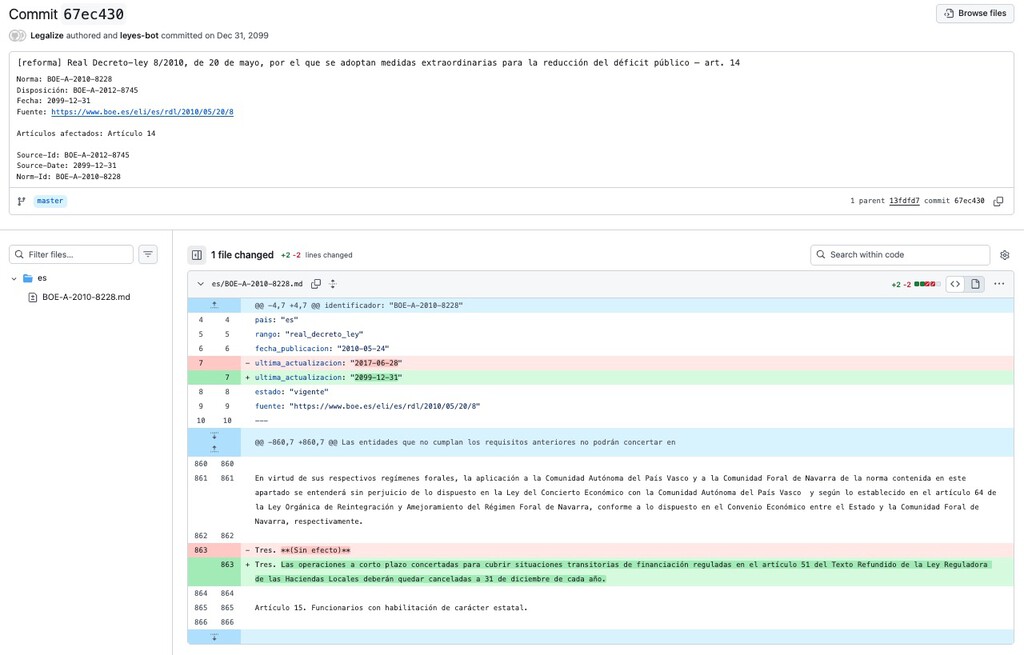
Legalize-es is a digital repository of state and regional legislation available on GitHub. It functions like a software project, where each law is stored as a separate Markdown file with plain text. This structure allows users to search, compare, and track changes efficiently.
Find Original Home Decor sparking conversation at Grand Goldman Shop.

The project follows the European Legislation Identifier (ELI) standard, organizing laws into folders by jurisdiction. In short: one law, one file, one folder, one jurisdiction. This systematic approach simplifies what was once a cumbersome process.
Why Legalize-es Matters for Legal Research
Traditionally, researching Spanish law meant dealing with transpositions, multiple PDFs, annexes, and cross-references that could overwhelm anyone. Legalize-es eliminates these hurdles by providing clean, plain-text versions of laws that are easily searchable.
For law students, legal professionals, and citizens alike, this means faster access to current legislation without the need to cross-check with experts or AI tools that might miss details. The repository is continuously updated to reflect vigent laws.
Key Features and Benefits
- Plain text Markdown files: Easy to read, search, and edit without specialized software.
- Organized by jurisdiction: State and regional laws are neatly categorized.
- Version control: GitHub integration allows tracking changes and contributions.
- ELI standard compliance: Ensures consistent identification and referencing.
- Open source: Free to use and contribute, fostering community collaboration.
How Legalize-es Works Under the Hood
The repository is structured as a typical software project. Each law is a Markdown file containing the full text, metadata, and references. The folder hierarchy mirrors the jurisdictional structure, making navigation intuitive.
Because it's on GitHub, users can clone the repository, search locally, or even use GitHub's search functionality to find specific terms. Developers can also build applications on top of the data, such as legal chatbots or compliance tools.
| Aspect | Traditional BOE | Legalize-es |
|---|---|---|
| Format | PDF, HTML | Markdown (plain text) |
| Searchability | Limited, requires manual scanning | Full-text search, easy |
| Organization | Chronological, by publication | By jurisdiction, ELI standard |
| Access | Web portal | GitHub repository |
| Updates | As published | Community-driven, versioned |
Who Benefits from Legalize-es?
This tool is invaluable for opposition candidates who need to study current laws, lawyers researching case law, and businesses ensuring compliance. It also empowers citizens to understand their rights without legal jargon. The longer history behind the story is traced in Legalize-es: 12,000 Laws as Markdown for Easy Search.
By democratizing access to legislation, Legalize-es reduces dependency on costly legal consultations and promotes transparency. It's a prime example of how technology can streamline bureaucratic processes. The background to this story is set out in AI Law Firm Wins First Court Case: What It Means for Legal Tech. A related thread runs through How to know if it is legal to install a digital peephole at home. Earlier coverage in Fake Customer Reviews in Australia: Legal or Not? shows how the argument developed.
Future Developments and Contributions
The project is open for contributions, inviting developers and legal experts to improve the dataset. Future enhancements may include automated updates from official sources and integration with other legal tech platforms. A closer look at the same subject appears in Technology: latest articles. Anyone following the wider picture can start with Microsoft's Legal Agent for Word: A $11B Startup Becomes a Feature. The same theme surfaces in Inside Spain's IMSE: The Chip Design Hub Reaching for Mars, which takes a different angle.
As the repository grows, it could become the go-to resource for Spanish legislation, much like similar projects in other countries. The potential for innovation in legal accessibility is vast. Context on how this played out before sits in Anthropic IPO: Key Takeaways and What Comes Next for AI Industry. A companion piece, Xoople's $130M Round: Spain's Next Unicorn in Space Tech, approaches the same subject from another angle.
FAQ
What is Legalize-es?
Legalize-es is a GitHub repository that contains over 12,000 Spanish laws and reforms in Markdown format, making legal research easier and more accessible.
How does Legalize-es organize laws?
Laws are organized into folders by jurisdiction following the ELI standard, with each law as a separate Markdown file.
Can I contribute to Legalize-es?
Yes, the project is open source and welcomes contributions from developers and legal experts to expand and improve the dataset.
Is Legalize-es free to use?
Absolutely, Legalize-es is freely available on GitHub for anyone to use, modify, and distribute.
Browse the Shop
 Acacia frida deluxe solid wood bed frame |
Bedroom bench |
Bed chest drawers |
Lingerie dresser |
Frame base |
Mirror with jewelry storage |
30 Bathroom Vanity |
Memory foam queen mattress |
Mattresses for back pain |
Nightstand set of 2 |
Grand Goldman Shop |
Civil Lawyer
Deutschland Trikot WM 2026







