

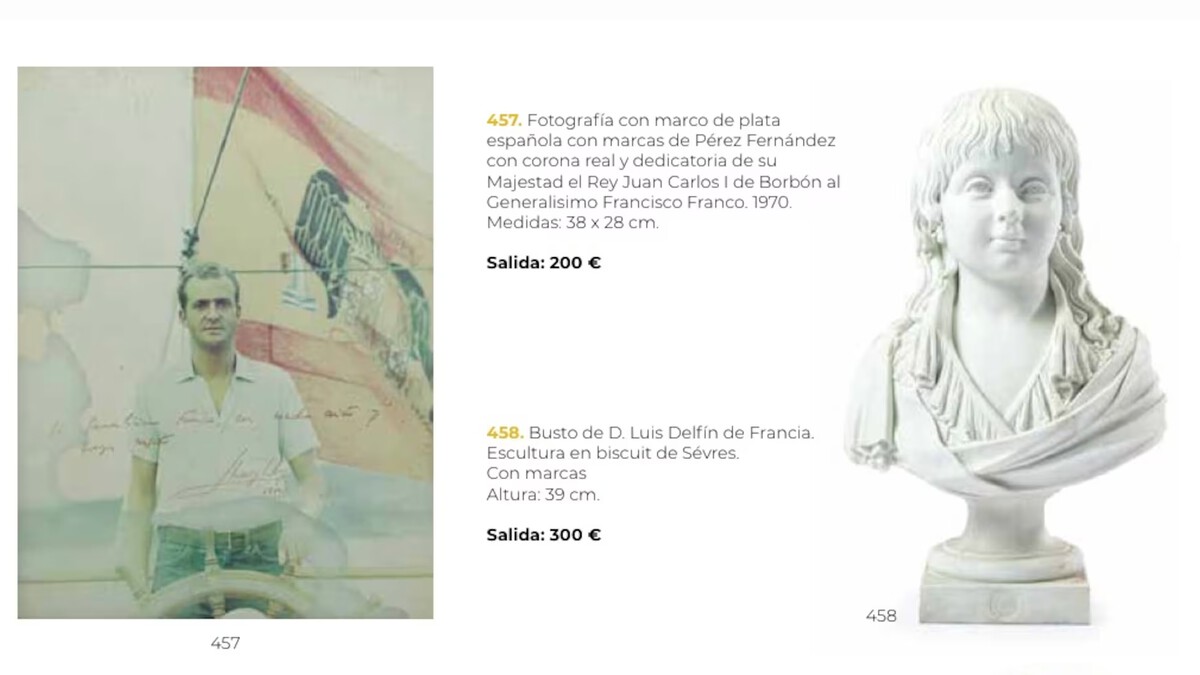
The recent auction of items belonging to Francisco Franco from the Pazo de Meirás has ignited a fierce debate in Spain, with Franco memorabilia selling for far more than expected and provoking outrage among those who see it as an immoral spectacle. The sale, organized by Magna Art Auctions in Madrid, featured 689 lots with starting prices between 20 and 5,000 euros, and all sold items exceeded their initial valuations.
The first session on Tuesday the 27th lasted from 5 pm to 11:30 pm, with 250 lots awarded for 247,500 euros, excluding the buyer's premium. By the end of the second session, total revenue had surpassed 460,000 euros, with more items still to be auctioned. The high prices reflect a continued demand for artifacts associated with the dictator, whose regime spanned from the 1936 coup against the democratic Second Republic until his death in 1975.
Find Original Home Decor sparking conversation at Grand Goldman Shop.

What Was Sold and for How Much
Many of the most sought-after items had Franco's name in the catalog or a personal dedication. A silver metal bird, just 20 centimeters tall, jumped from 90 to 275 euros after competitive bidding. Bidders joked that "the big bird" had resisted sale, highlighting the absurdity of some lots. An 18th-century Indian ceramic piece sold for 550 euros, despite an attendee estimating its value at 3,000 euros minimum.
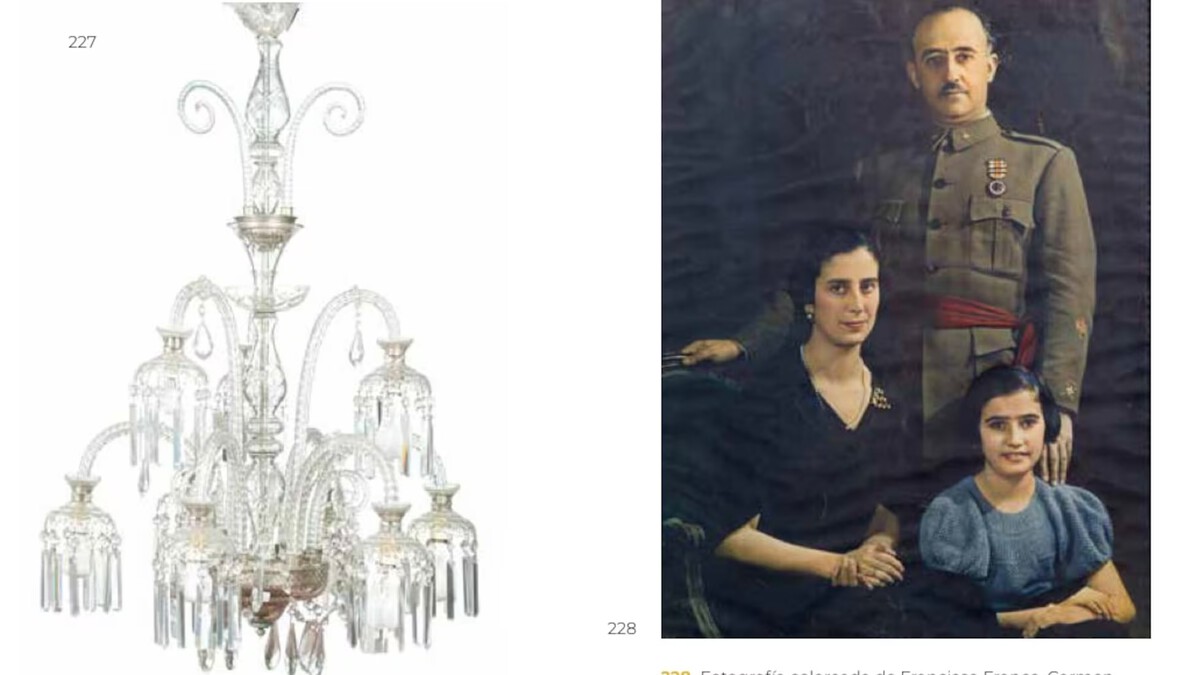
The auction also included items from the Salvat library, a collection that Franco's heirs removed from the Pazo de Meirás. While the exact contents of the library are not detailed, its association with Franco adds historical significance and controversy. The sale has been described as an "immoral spectacle" by critics, who argue that profiting from memorabilia of a dictator is ethically problematic.
Why This Auction Matters
The auction underscores the ongoing fascination with Franco's legacy in Spain, despite efforts to confront the country's authoritarian past. The high prices indicate that there is a market for such items, driven by collectors, historians, and possibly nostalgics. This raises questions about how Spain deals with its history and whether such sales should be allowed or regulated.
The Pazo de Meirás itself has been a focal point of controversy. The property, once Franco's summer residence, was reclaimed by the Spanish state in 2020 after a legal battle with the dictator's heirs. The auction of items from the pazo is seen by some as a continuation of the family's attempt to profit from Franco's legacy, even after losing the property.
Ethical and Legal Implications
The sale has sparked ethical debates about the commodification of dictatorial memorabilia. While legal, many argue that it glorifies Franco and disrespects the victims of his regime. The Spanish government has not commented on the auction, but previous efforts to remove Franco's remains from the Valley of the Fallen and rename streets indicate a shift toward confronting the past. Context on how this played out before sits in Franco Memorabilia Auction at Pazo de Meirás Sparks Controversy.
Legal experts note that auctions of historical items are generally protected, but there are calls for stricter regulations on items associated with human rights abuses. The lack of specific laws allows such sales to proceed, leaving it to public opinion and market forces to shape the outcome. The background to this story is set out in Trending: latest articles. A related thread runs through The Improbable Origin of Spain's Menú del Día: A Franco-Era Tourism Strategy.
Who Is Affected and What to Watch Next
The auction affects various groups: historians concerned about the preservation of artifacts, victims' families who see it as an insult, and collectors who view it as a legitimate purchase. The Spanish public remains divided, with some seeing it as a private matter and others as a public affront. Earlier coverage in Extremadura Monastery Reveals 1491 Columbus Meeting Site shows how the argument developed. A closer look at the same subject appears in The First Beach Bar in History Was Born from a Shipwreck and a Looting.
Moving forward, watch for potential legal challenges or government intervention. The auction's success may encourage further sales of Franco-related items, and the debate over how to handle such memorabilia is likely to intensify. As Spain continues to grapple with its history, the auction serves as a reminder that the past is never truly past. Anyone following the wider picture can start with Brian Jones Letter Recruiting Charlie Watts for Rolling Stones Hits. The same theme surfaces in Botticelli's Venus Muse: New Clue to Simonetta Vespucci's Death, which takes a different angle.
FAQ
What items were auctioned from the Pazo de Meirás?
The auction included 689 lots, such as a silver metal bird, an 18th-century Indian ceramic, and items from Franco's library. Many items had Franco's name or dedication, attracting high bids.
How much did the Franco auction raise?
The first session raised 247,500 euros for 250 lots, and by the end of the second session, total revenue exceeded 460,000 euros, with more items still to be sold.
Why is the auction controversial?
Critics argue that profiting from Franco memorabilia is immoral and glorifies a dictator. The sale has sparked debates about Spain's handling of its authoritarian past and the commodification of history.
What happens next with the remaining items?
The remaining lots will be auctioned in subsequent sessions. The success may lead to further sales, and there could be legal or governmental responses to address public outrage.
Browse the Shop
 Acacia frida deluxe solid wood bed frame |
Bedroom bench |
Bed chest drawers |
Lingerie dresser |
Frame base |
Mirror with jewelry storage |
30 Bathroom Vanity |
Memory foam queen mattress |
Mattresses for back pain |
Nightstand set of 2 |
Grand Goldman Shop |
Civil Lawyer
Deutschland Trikot WM 2026







