

The menú del día, Spain's beloved fixed-price lunch menu, has an improbable origin tied to the Franco dictatorship's push to attract foreign tourists in the 1960s. What many see as a simple dining convenience actually began as a strategic move to boost tourism and modernize Spain's image abroad.
Beyond sectors, markets, or countries, most businesses share a common dream: the coveted "three Bs"—good, pretty, and cheap. In Spain, hospitality has come close with the menú del día, a format that has made eating out easier and more affordable for 60 years.
Find Original, High-end Home Decor that spark conversation at Grand Goldman Shop.
For a reasonable price—or at least lower than ordering à la carte—restaurants offer combos of several dishes, a drink, and coffee or dessert. How did this formula become so popular? The answer lies in the dictatorship.
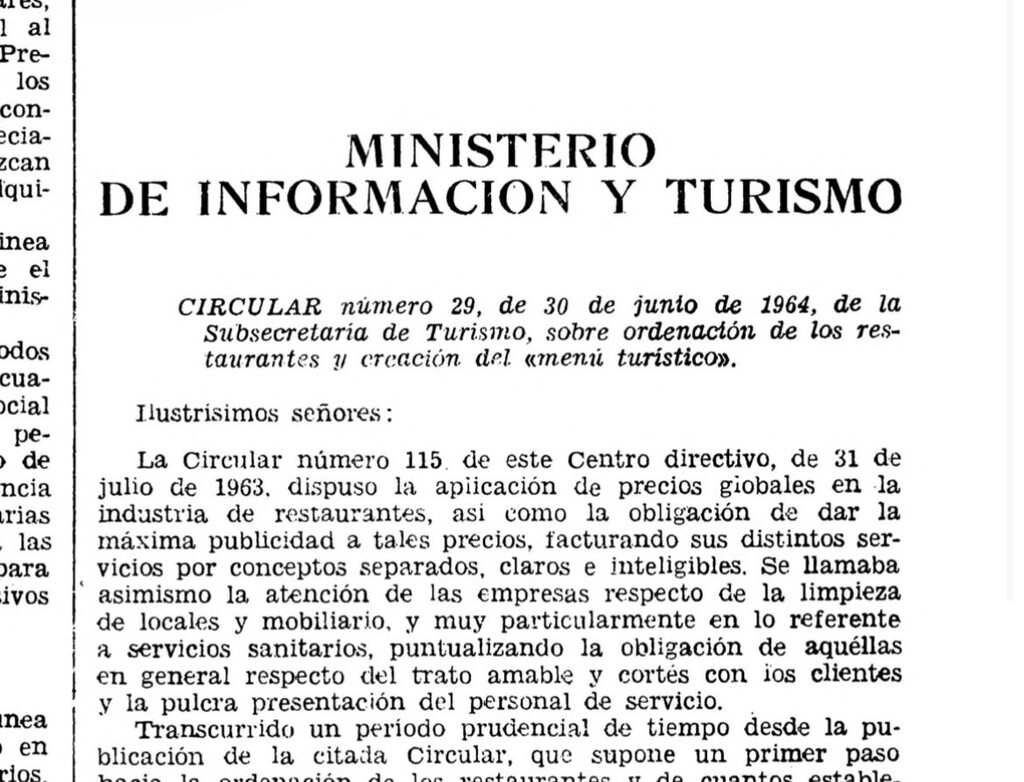
The Origins of the Menú del Día
Chroniclers who have delved into its history often place the genesis of the Spanish menu in the 1960s. But to be fair, we should go back much further. In 1611, Francisco Martínez Montiño already included menus in his treatise Arte de Cocina, and it is known that in the 19th century, Enrique de Brunswick, a Bavarian aristocrat, accompanied his banquets with complete lists specifying the order of dishes served.
Was he the creator of the 'menu'? It seems not, although everything depends on what we mean by 'menu' and how flexible we are willing to be with the term.
Franco's Tourism Strategy and the Birth of a Tradition
In the 1960s, Spain was opening up to the world after years of isolation. The Franco regime saw tourism as a way to bring in foreign currency and improve the country's international image. To attract foreign visitors, the government promoted the idea of a fixed-price menu that included several courses, a drink, and coffee or dessert.
This initiative was designed to offer tourists a predictable and affordable dining experience, making Spain an attractive destination for budget-conscious travelers from Europe. The menú del día quickly became a staple in restaurants across the country, especially in tourist areas.
The format was simple: for a set price, diners could choose from a selection of appetizers, main courses, and desserts, often with bread and a beverage included. This not only appealed to foreigners but also to locals who wanted a quick, economical lunch.
Why the Menú del Día Became an Institution
Over the decades, the menú del día evolved from a tourist gimmick into a cherished Spanish tradition. Its popularity stems from several factors:
- Affordability: It offers a complete meal at a price lower than ordering à la carte.
- Convenience: Diners don't have to spend time choosing from an extensive menu.
- Variety: It typically includes multiple courses, providing a balanced meal.
- Social aspect: It encourages people to take a break and enjoy lunch with colleagues or friends.
- Cultural identity: It has become a symbol of Spanish hospitality and lifestyle.
Today, the menú del día is not just a meal; it's a social institution. It reflects the Spanish approach to dining—relaxed, social, and value-oriented.
The Menú del Día in Modern Spain
Despite changes in dining habits and the rise of fast food, the menú del día remains popular. Many restaurants still offer it, especially during weekday lunches. However, its format has adapted to modern tastes, with options for vegetarians and healthier choices.
The tradition has also faced challenges, such as rising food costs and changing work schedules. Yet, it endures as a testament to Spain's ability to blend tradition with practicality. Context on how this played out before sits in Cueva del Viento: Tenerife's 27,000-Year-Old Lava Tube With 190 Species.
Interestingly, the menú del día has also influenced other countries. In some Latin American nations, similar fixed-price lunch menus exist, though their origins may differ. The background to this story is set out in Trending: latest articles. A related thread runs through Móstoles-Navalcarnero Train: 22 Years, €162M Wasted, Now Revived.
Comparing Menú del Día Across Regions
While the menú del día is a Spanish institution, similar concepts exist worldwide. Here's a quick comparison: Earlier coverage in Pico 4 Ultra VR Headset Deal: Save Big on 4K-Ready VR shows how the argument developed. A closer look at the same subject appears in Philips 65-Inch QLED TV with Ambilight Drops to Record Low Price at Carrefour.
| Country | Name | Typical Components | Price Range |
|---|---|---|---|
| Spain | Menú del día | Appetizer, main, dessert, drink | €10-€20 |
| France | Menu du jour | Starter, main, dessert | €15-€25 |
| Italy | Menù del giorno | Primo, secondo, contorno | €12-€22 |
| Mexico | Comida corrida | Soup, rice, main, tortillas | MX$80-150 |
As the table shows, the Spanish version is particularly comprehensive, often including a drink and coffee, making it excellent value. Anyone following the wider picture can start with Van Gogh's Starry Night May Depict Real July 1889 Sky, Study Finds. The same theme surfaces in iOS 27 Launches Today, but EU Users Miss Out on Siri AI, which takes a different angle.
FAQ
What is the menú del día?
The menú del día is a fixed-price lunch menu offered by many Spanish restaurants. It typically includes a starter, main course, dessert or coffee, and a drink, all for a set price.
When did the menú del día originate?
While the concept of menus dates back centuries, the modern menú del día emerged in the 1960s during the Franco dictatorship as a way to attract foreign tourists.
Why is the menú del día important in Spain?
It offers an affordable, convenient dining option and has become a social and cultural institution, reflecting the Spanish lifestyle of taking time for a relaxed lunch.
Is the menú del día still popular today?
Yes, it remains popular, especially for weekday lunches. Many restaurants continue to offer it, adapting to modern tastes and dietary preferences.
Browse the Shop
 Acacia frida deluxe solid wood bed frame |
Bedroom bench |
Bed chest drawers |
Lingerie dresser |
Frame base |
Mirror with jewelry storage |
30 Bathroom Vanity |
Memory foam queen mattress |
Mattresses for back pain |
Nightstand set of 2 |
Grand Goldman Shop |
Civil Lawyer
Deutschland Trikot WM 2026







