

Almost every watch you can buy uses one of three glasses over the dial: mineral crystal, sapphire crystal, or a synthetic plastic called acrylic (also sold as Hesalite or Plexiglas). The choice matters more than most buyers expect, because the crystal is the part of the watch you look at every day and the part most exposed to damage. A sapphire watch that survives years of desk edges and door frames can look better at year five than a cheaper mineral model that has collected a haze of fine scratches.
This guide sticks to the practical differences: how hard each glass is, how it fails, what anti-reflective coatings do, and which watch families actually use which crystal. We have not lab-tested these watches, and we do not pretend otherwise. What follows is based on published hardness scales, manufacturer specifications and the everyday experience of owning both types.
Find Original Home Decor sparking conversation at Grand Goldman Shop.


How we chose
We picked real, currently sold watch families that let you compare crystal types at different price points, rather than cherry-picking one hero model. The criteria were straightforward: the crystal type must be specified by the maker rather than guessed, the watch must be in regular production, and the family should be easy to find through a normal retail or second-hand search. We favoured watches where the crystal is a genuine selling point — domed sapphire, double anti-reflective coating, box-shaped mineral — because that is where the difference is most visible. We also included a couple of tool watches where a harder crystal is not automatically the right answer, since impact resistance matters as much as scratch resistance. No prices are quoted, because they move constantly and vary by region and strap option.
Comparison table
| Product | Best for | Key feature | Verdict |
|---|---|---|---|
| Seiko 5 Sports | First mechanical watch on a budget | Hardlex mineral crystal, recessed bezel | The classic argument for mineral done well |
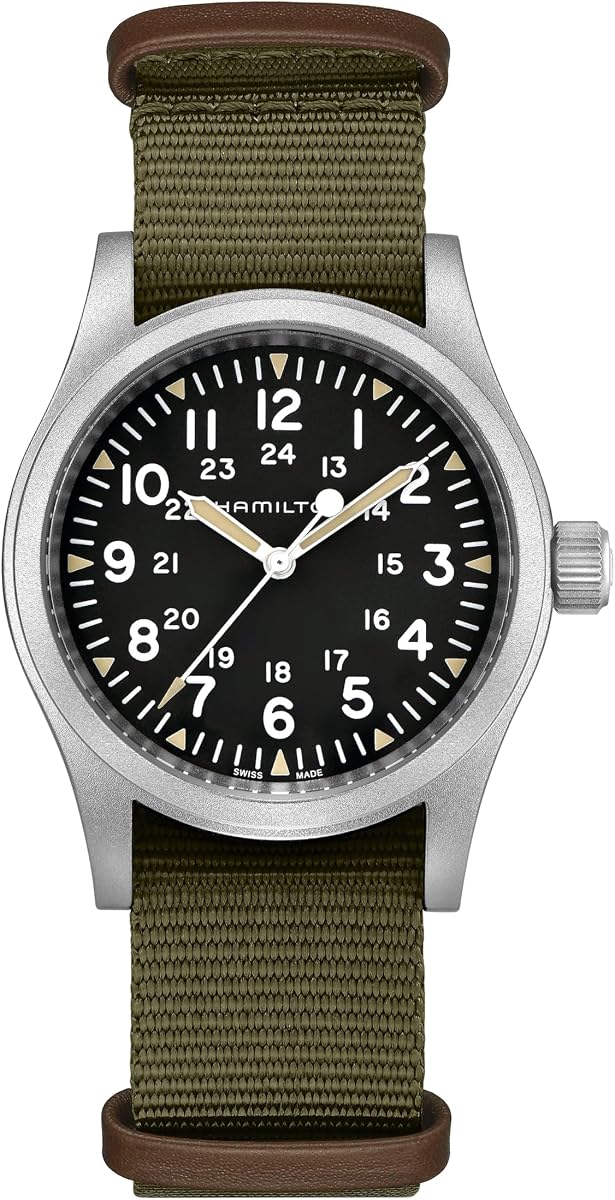
| Hamilton Khaki Field Mechanical | Everyday field watch | Sapphire crystal on a slim case | Sapphire without the bulk or the fuss |
| Tissot PRX | Smart-casual integrated bracelet | Flat sapphire, clean AR treatment | Shows how sapphire suits a flat, modern design |
| Casio G-Shock GW-M5610 | Rough handling and impact | Mineral glass behind a raised resin bezel | Proof that geometry can beat hardness |
| Orient Bambino | Dress watch on a tight budget | Domed mineral crystal | Warm vintage look, scratch-prone surface |
| Certina DS Action Diver | Serious water sports | Sapphire with strong AR coating | Hard crystal where it counts most |
| Timex Weekender | Cheap, cheerful, replaceable | Flat mineral glass | Acrylic-like charm at a throwaway price point |
| Watch crystal polishing kit | Reviving a scratched mineral crystal | Abrasive paste and polishing cloths | Useful for mineral and acrylic, useless on sapphire |

Seiko 5 Sports
- Uses Seiko's Hardlex, a hardened mineral glass that resists light knocks better than plain mineral
- The bezel usually sits slightly proud of the crystal, so the glass is partly shielded
- Enormous range of cases, dials and straps, so you can judge the crystal in person cheaply
- Replacement crystals are widely available if the worst happens
Hardlex is a useful middle ground: harder than ordinary mineral glass, still softer than sapphire, and noticeably less brittle than sapphire under a sharp impact. On a watch with a raised bezel, the crystal rarely takes the first hit anyway. This is the family to look at if you want to understand why so many affordable mechanical watches get away with mineral glass and still look decent after a few years.
It suits buyers who want a tough, inexpensive mechanical watch and accept that the glass may eventually show fine marks. Skip it if you cannot live with any scratches at all, or if you spend your days leaning on a keyboard with your wrist down.
Hamilton Khaki Field Mechanical
- Sapphire crystal on a thin, hand-wound case that stays comfortable all day
- No date, no clutter, so the glass is the main interface with the dial
- Matte finish hides case wear, keeping attention on the crystal
- Wide strap compatibility, which matters if you swap bands often
This is the clearest demonstration that sapphire no longer belongs only to expensive watches. The crystal is flat and unobtrusive, and the watch keeps a slim profile because sapphire can be made thin without losing hardness. If you have only owned mineral glass, the first months with this watch are quietly revealing: no swirl marks, no polishing sessions.
It is for the buyer who wants one simple watch that stays looking new. Skip it if you need high water resistance ratings or a rotating bezel for timing.

Tissot PRX
- Flat sapphire suits the angular, integrated-bracelet design
- Clean anti-reflective treatment keeps the dial legible at angles
- Available in several sizes, so the crystal proportions differ between models
- Popular enough that spare parts and servicing are straightforward
Flat sapphire on a flat case is the least fussy combination in watches. There is no dome to catch light oddly, and the AR coating does most of the work in keeping reflections down. The PRX family shows how much of a watch's perceived quality comes from a clear, unmarked window rather than from the movement inside.
Buy it if you want a sharp everyday watch with a bracelet and no crystal anxiety. Skip it if you specifically want a domed, vintage-style crystal, which behaves quite differently.
Casio G-Shock GW-M5610
- Mineral glass is recessed behind a raised resin bezel
- The bezel absorbs impacts that would chip a harder, more brittle crystal
- Solar charging and radio timekeeping keep maintenance minimal
- Replacement bezels and glass are inexpensive and easy to source
This watch is the best counter-argument to the idea that sapphire is always better. Sapphire is hard, but hardness comes with brittleness: a sharp, hard impact can chip or crack it, and a cracked sapphire is a real repair. Casio's approach is to protect a softer glass with geometry instead. For a watch that gets knocked against door frames and gym equipment, that trade can make more sense.
It suits anyone whose watch takes abuse and who values function over crystal prestige. Skip it if you wear a watch mostly at a desk and want a scratch-free surface for years.
Orient Bambino
- Domed mineral crystal gives a warm, vintage look that sapphire struggles to match cheaply
- Dress-watch proportions keep the glass small and less exposed
- Excellent value for a mechanical dress watch
- Light scratches can often be polished out with a mild abrasive
Domed mineral is the traditional choice for affordable dress watches, and the Bambino shows why: the curve catches light in a way flat sapphire does not. The trade-off is real. Mineral glass picks up fine scratches, and a domed surface is harder to polish evenly than a flat one. If you wear a dress watch a few times a week, that is manageable. If you wear it daily, expect to notice marks.
It is for buyers who want vintage character on a budget and will treat the watch gently. Skip it if you want a crystal that looks untouched after years of daily wear.
Certina DS Action Diver
- Sapphire crystal with a strong anti-reflective coating on the inside
- Built for water sports, where clarity matters more than vintage warmth
- Robust case design protects the crystal edges
- Swiss-made positioning without the premium-brand markup
On a dive watch, sapphire earns its keep. You are looking at the dial in poor light, often with water on the glass, and a scratched crystal ruins legibility fast. Internal AR coating avoids the problem of exterior coatings wearing off, which is a genuine annoyance on cheaper sapphire watches.
Buy it if you actually swim, snorkel or dive with your watch and want a clear dial for years. Skip it if you prefer a lighter, thinner watch for everyday office wear.

Timex Weekender
- Flat mineral glass keeps the watch inexpensive enough to replace
- Loud, legible dial that works well with quick-change straps
- Simple enough that a scratched crystal is not a crisis
- A useful baseline for comparing crystal quality
Not every watch needs to be an heirloom. The Weekender is a reminder that mineral glass exists for a reason: it is cheap, easy to shape and perfectly adequate on a watch you might replace in a couple of years. The crystal will scratch, and the watch will still tell the time.
It is for casual buyers and strap collectors who want a low-stakes watch. Skip it if you want a single watch to keep for a decade.
Watch crystal polishing kit
- Restores clarity to mineral and acrylic crystals with fine abrasives
- Works well on flat surfaces, less so on steep domes
- Does nothing to sapphire, which is the point
- Cheap way to extend the life of a budget watch
If you own a mineral-crystal watch, a polishing kit is a sensible small purchase. Fine scratches and haze can often be worked out by hand, restoring most of the original clarity. Deep gouges will not disappear, and coated crystals need care so you do not polish through the coating. On sapphire, save your effort: the abrasive is not hard enough to change the surface.
It is for owners of mineral or acrylic watches who want to keep them presentable. Skip it if your watch has sapphire, or if the damage is a chip rather than a scratch.
Buying guide
Hardness, brittleness and how each crystal fails
On the Mohs hardness scale, mineral glass sits around 5 to 6, sapphire around 9, and acrylic around 3. That ordering explains scratch resistance: sapphire shrugs off keys, coins and desk edges that mark mineral glass, and acrylic marks if you look at it wrong. Hardness is not the whole story, though. Sapphire is more brittle, so a sharp impact on an exposed edge can chip it, and replacing sapphire costs more than replacing mineral. Mineral glass tends to scratch rather than shatter, which is why cheap tool watches often use it behind a protective bezel. Acrylic can be polished back to clarity with toothpaste-grade abrasives, which is why some military and vintage-style watches still use it.
What anti-reflective coatings actually do
A bare sapphire crystal reflects a lot of light, and a highly reflective crystal can make a dial harder to read than a slightly scratched mineral one. Inner AR coating is the safest option: it reduces glare without exposing the coating to wear. Outer coatings improve legibility further but can pick up fine marks of their own, and those marks cannot be polished out the way glass scratches can. If a specification lists double AR coating, check whether both layers are on the inside, because that is the more durable arrangement.
Matching the crystal to how you wear the watch
If your watch lives under a shirt cuff and near a keyboard, sapphire is the low-maintenance choice. If it goes to the gym, the workshop or the beach, a recessed mineral crystal behind a sturdy bezel may survive better, and replacement is cheaper when it does not. For dress watches, a domed mineral or acrylic crystal gives a warmer look that flat sapphire rarely matches at the affordable end. Also consider the strap and box: a watch you store loosely in a drawer with keys will collect marks regardless of crystal type, so a simple watch box or roll with individual slots does more for long-term condition than most buyers expect.
FAQ
Is sapphire crystal always better than mineral?
No. Sapphire is far more scratch-resistant, but it is more brittle and more expensive to replace. On a watch that takes sharp impacts, a protected mineral crystal can be the more practical choice. Sapphire wins on long-term clarity for desk-bound wear; mineral wins on cost and impact tolerance.
Can you polish scratches out of sapphire crystal?
Not by hand with ordinary kits. Sapphire is close to diamond in hardness, so removing scratches needs specialist diamond abrasives and proper equipment. In practice, sapphire is treated as a replace-if-damaged part, and light surface marks are usually coating wear rather than glass damage.
Why do some expensive watches still use mineral glass?
Usually for impact resistance, cost control on entry models, or a specific design goal such as a domed vintage profile. Some tool watches use mineral glass deliberately because a chipped sapphire would be a costly failure in the field.
Does anti-reflective coating wear off?
External coatings can wear or mark over time, especially on watches worn hard. Internal coatings, applied to the underside of the crystal, are protected from contact and last far longer. This is why specifications that mention inner AR coating are worth noting.
Is acrylic the same as mineral crystal?
No. Acrylic is a plastic, softer than both mineral and sapphire, and it scratches very easily. Its advantages are that it can be polished back to clarity, it resists shattering, and it gives a warm look associated with vintage watches. Mineral glass is a hardened glass and sits between acrylic and sapphire on hardness.
Does the crystal affect water resistance?
The crystal itself is part of the sealing system, held against a gasket in the case. A chipped or cracked crystal compromises water resistance immediately, whatever the material. If a crystal is damaged, keep the watch away from water until it is replaced.
Sapphire is the right default for most everyday watches, and the families above show it is no longer a premium-only feature. But mineral glass still earns its place on impact-prone tool watches and budget dress pieces, where protection, cost and character matter more than a flawless surface. Match the crystal to how you actually wear the watch, and you will be happier than if you simply buy the hardest glass available.
As an Amazon Associate we earn from qualifying purchases.







